Unknown's avatar

The Lucky Ones

I recently finished reading The Lucky Ones: My Passionate Fight for Farm Animals. What a great read! I hope you read it too. In the book, author Jenny Brown tells the story of how she started Woodstock Farm Animal Sanctuary.

the lucky ones book

It’s more than just an account of founding and running a sanctuary though. The story starts when Jenny was a kid. It chronicles her cancer diagnosis, her rebellious teens, and her awakening to the food system and the cruelty billions of animals endure in the name of taste buds.

I enjoyed reading about Brown’s first career in television production and how her video skills and veganism merged into a foray into undercover video work at stockyards.

The book has heartbreaking moments but her humor kept me reading. I was in awe of her bravery and compassion.

Like many vegans, one animal is often the catalyst for change. Jenny’s cat Boogie, and the love they shared, influenced the authors shift from typical food consumer to vegan activist.

Throughout the book, I also got to learn about some of the animals at Woodstock Farm Animal Sanctuary too. I loved learning about them and reading the “happy endings.” It tempered the cruel realities most farmed animals face.

As with any memoir, the author can’t invent the ending. This is real life. However, I’m glad it’s a love story too. I was rooting for Jenny Brown and I enjoyed the personal plotlines as well as the information about animals and running a sanctuary.

The Lucky Ones is a page-turner and I’ve given copies as gifts to a few people. It will open people’s eyes to factory farming, small-scale farming, and the myths of humane slaughter in a way that a conversation might not.

Unknown's avatar

Another reason stop eating shrimp

I reviewed some vegan alternatives to seafood by Sophie’s Kitchen a few weeks ago. In addition to singing the praises of their products, I listed a few reasons why eating sealife isn’t a great idea:

  • Harvesting wild animals–like calamari, shrimp and some types of cod–is done with trawling, a process that basically rakes up all life forms the sea floor, killing everything, and creating dead zones.
  • For every pound of shrimp, 10 pounds of bycatch (species people weren’t trying to catch) are killed.
  • Farmed fish is usually raised in water treated with pesticides and antibiotics.
  • It takes two pounds of wild fish to feed one pound of farmed shrimp.

But I’ve learned something new that I can add to the list: eyestalk ablation.

Eyestalk ablation is as gross as it sounds. It’s the process of removing one or both eyestalks from female shrimps and prawns–and it’s done in almost every shrimp reproduction facility in the world! The goal of ablation is to stimulate the female shrimp to develop mature ovaries and spawn.

In the wild, shrimp sexually mature shrimp with eyes by Tomasz Sienickion their own, but captive conditions prevent them from developing mature ovaries. Even the types of shrimp that could develop ovaries and spawn in captivity have their eyestalks removed because it increases egg production. There’s detailed info online about the how and why behind the phenomenon.

The science behind ablation isn’t the interesting part. I’m saddened to learn of yet another way humans manipulate animals for profit. Apparently tiger prawns can regenerate their eyestalks, but that’s not the point.

We don’t need to eat shrimp or prawns. In fact, it’s better we don’t (as bottom feeders, they’re actually toxic). They’re another example of species that are exploited. They may not be cute or cuddly, but they don’t deserve to be mutilated and blinded–just so people can eat them at cocktail parties!

Knowing about this form of cruelty makes me say “bring on the vegan options!”

Unknown's avatar

Why vegans don’t eat eggs

When I was a vegetarian, I ate eggs and I drank milk. “They’re byproducts,” I’d say. “The chickens and cows don’t get hurt.” I was convinced of this. Then I read Diet for a New America and found out how wrong I was. I cut out eggs and dairy immediately.

So what’s wrong with eggs?chicks

It starts at the hatcheries–the places that breed chickens and incubate eggs. Hatcheries are where factory farms, free-range operations, and even “urban farmers” get their chicks.

The boys – On day one, all male chicks are killed. They’re ground up alive, gassed, or dumped in the trash and left to die. The boys, you see, have no value. They won’t lay eggs, and they’re not meaty broilers like their cousins. They are useless to the egg industry.

That’s enough for me to ditch eggs. But wait, there’s more:

Confinement – On factory farms hens are crammed into tiny battery cages. Each bird has less “floor space” than an iPad (except, unlike an iPad, she has to stand on wire). In these conditions, hens will become frustrated and crazy and will sometimes hurt each other.

Debeaking – To prevent injuries, chickens are, well, injured. When they’re still babies, they have the ends of their beaks seared off with a hot blade. Even free-range set-ups will often have debeaked hens. A lot of so-called free-range farms are really just cageless, not roomy. They’re cramped warehouses that may or may not have outdoor access.hens in battery cages

An unhealthy environment – These “farms” stink to high heaven and the air is so polluted that the ammonia will burn your eyes (if they let you in). My mom saw first-hand what a small-scale battery-cage farm looks like. You can read about her experience on her guest post at Honk if you’re Vegan.

Physical stress – In nature, a hen will lay a clutch of eggs (maybe 10 or 12) in a nest, where she will sit on them for three weeks until her chicks hatch. She won’t lay eggs again until her young can fend for themselves, so she gets a break from laying. But on egg farms, hens have their eggs taken away so they keep laying. It’s stressful on their bodies and depletes them of calcium, which often causes osteoporosis. Up to a quarter of battery hens experience bone breaks during their short lives.

Willow at Woodstock Farm Animal Sanctuary

This rescued hen, Willow, is safe now (picture (c) Woodstock Farm Animal Sanctuary)

To get the most eggs from indoor hens, some farms practice forced molting. Farm operators stop feeding hens for a week or two, which causes them to shed their feathers and simulate the fall season, when they would normally stop laying eggs. After an induced period of “rest,” in which they lose about a third of their body weight, they begin to lay again. This practice is banned in some countries. Where it does exists (like the USA), it coaxes another laying season out of already taxed birds.

Hens are social, nurturing and smart–when in a natural setting. But to the egg industry, they’re a commodity–valuable only when they’re making someone money. So after a year or two, when hens lay fewer eggs, they’re slaughtered.

The egg industry is inherently cruel. Over 95% of birds come from factory farms. Even those who are “treated well” have lost their brothers. And most, even those from hobby farms and urban coops, are sold, or killed when they lose their value.

Animals deserve to live their own lives. A hen’s worth is not tied to what she can give me. And there are so many egg alternatives. There’s no need for cruelty.

That’s why vegans don’t eat eggs.

Unknown's avatar

We Animals

Last summer, as part of a Kickstarter fundraiser, I contributed to getting the book We Animals printed. For my donation, I received a copy of the book, which arrived in December.

We Animals is a gorgeous, hardcover photo book by award-winning photographer Jo-Anne McArthur. She also wrote the accompanying text that explains the circumstances in each picture. It’s beautifully written.

we animals book cover

McArthur spent years travelling the globe, documenting the plight of animals in human environments. She covers animals raised for food, clothing, used in entertainment and research, as well as rescued animals.

Her photos draw viewers in and help make a connection to the animal subjects in them. The photos aren’t all easy to view, but they all tell a story that needs to be shared. If they must endure it, the least we can do is acknowledge it.

Bearing witness–observing but not necessarily being able to help–is a key part of the book. McArthur travelled to factory farms, fur ranches and zoos. What can one do other than promise those animals that they will not be forgotten–that their message will be shared and that someone will fight for them and others like them?

Every animal lover should own a copy of this book. Mine is on the coffee table and is a great conversation starter when guests come over.

Jo-Anne McArthur is the subject of the documentary The Ghosts in Our Machine, by Liz Marshall. When I get a chance to watch that, you can bet I’ll share my thoughts with you.

Unknown's avatar

No warm fuzzies with angora

I’ve often wondered about angora production. The soft, fuzzy sweaters, mitts and hats that pop up in stores each fall seem so cozy. I’ve never bought angora though.

Angora can refer to cats, goats, ferrets, but it’s the angora rabbit that people use for wool. To get angora, the animals don’t need to be killed, which is why many people don’t think about it as a cruel industry. Angora can be combed, shorn, or plucked.

What? Yes, I wrote that. Plucked! Shearing results in shorter hair, so often plucking is preferred. Angora molt every few months, and in theory, pulling loose hair from a rabbit shouldn’t hurt, but as with everything, care and welfare is abandoned when volume goes up and there’s money to be made.

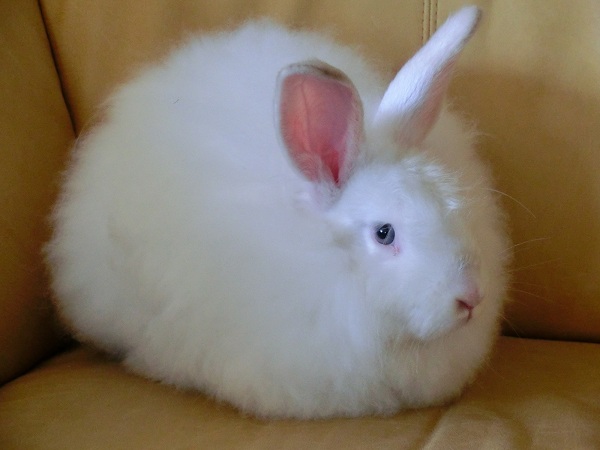
Angora Rabbit from http://commons.wikimedia.org/wiki/File:White_Satin_Angora_Rabbit.jpgNinety percent of angora comes from China, where there are no animal welfare standards and no oversight into the angora industry. Recent undercover video shows rabbits screaming in pain as they’re plucked. I didn’t even know rabbits could scream. It’s heartbreaking. And after being plucked, they lie in shock in their filthy cages. After 3 to 5 years of this abuse, they’re killed). You can read more about the developments here (the video is embedded but won’t play automatically, so you don’t have to watch it).

If 90% of angora comes from these conditions, it makes sense that 90% of the angora in the stores is cruelly sourced. Frankly, even shearing doesn’t look humane to me. In this video, a woman boasts about how well her rabbits are treated, but she ties up one rabbit’s legs, stretches him and rotates him like a spit pig (minus the skewer).

The video isn’t graphic per se, but it’s not how I would like to be handled on a quarterly basis. Kind or cruel, why should they live in cages to be wool-making machines? Rabbits need to forage and burrow. It’s another example of commodification. These rabbits are slaves for our fashion and treated like nothing more than money-making machines.

animals are not fabric

To quote the slogan on my new favorite sweater (from The Tree Kisser’s website), animals are not fabric.

If you want to help, here’s how:

  • Don’t wear or buy angora.
  • Ask the stores you shop at not to carry angora.
  • Sign the petitions linked to in this article and tell stores like The Gap and Zara to stop carrying angora

(Update: Zara and The Gap, along with Tommy Hilfiger and Calvin Klein, suspended further angora purchases pending investigation. H&M and ASOS have vowed to stop selling it permanently. Pressure works! Keep on these retailers. They make money from us, so we have a say!).

Unknown's avatar

6 ways to help animals this season

It’s December already and that means it’s the season of giving. In the spirit of Christmas, here are a few ways you can help animals:

Become vegan – Not eating animals is the number one thing you can do to help them. If you’re an animal lover, start your plan to transition to veganism today! You can find links on the right that will take you to sites that offer starter kits with recipes and nutritional info.

Don’t give animals as gifts – A dog or a cat is a ten to twenty year commitment. Giving an animal as a gift is giving someone a boatload of responsibility–and expenses! If someone isn’t ready for that, it’s likely their new animal will end up in a shelter. If you know someone really is ready for a companion animal, consider giving a gift certificate to a pet supply store. They’ll definitely need it when they have to feed and care for their new animal.

Adopt, don’t shop – If you’re planning to add an animal to your household, and all family members are on board, visit local shelters, rescue groups, or check out the nationwide network on petfinder.com. Contrary to what some people think, purebred and young animals are available for adoption. Then again, older animals are usually calmer and house-trained. They’re often a great choice.

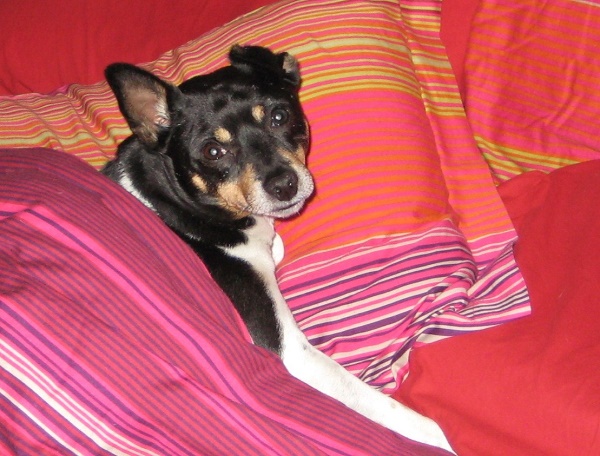
Rescued animals are great, but they'll steal your heart--and your bed.

Give to charities that don’t exploit animalsGiving livestock to a poor family in a developing nation might sound noble but it’s a burden for people who can barely feed themselves. Instead of giving to organizations that give animals, consider supporting ones like Vegfam, Trees for Life, or Plenty. These groups work with local communities to provide plant-based meals, education, disaster relief, and clean water.

Sponsor an animal – What do you give someone who has everything? How about sponsoring an animal in their name? You can choose from farm animals, rescued primates, dogs and cats, or wild animals at a number of sanctuaries. Every animal rescue group needs funds, and many offer official sponsor programs, like Pig Peace, PAWS, Farm Sanctuary, Chimpanzee Sanctuary NW, Soi Dog (Thai street dog rescue), and the Performing Animal Welfare Society.

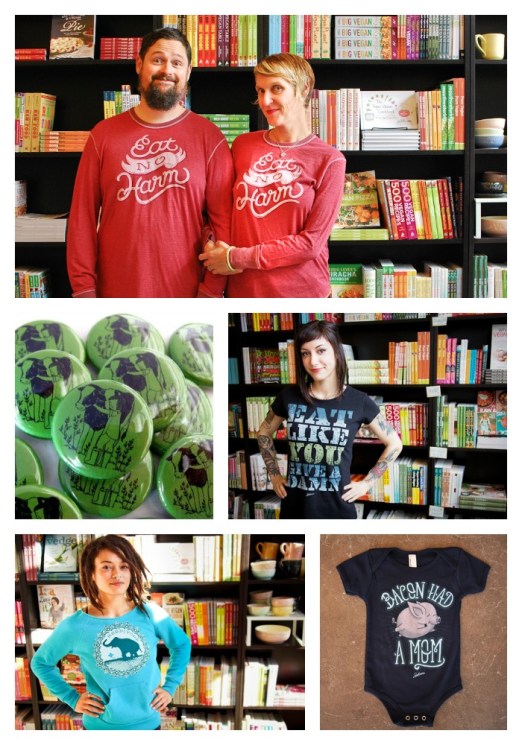
Give swag – Message gear is a fun way to give to someone, support a great cause, and spread the pro-animal message. If you know someone who supports animal causes, why not give them something from those groups? From chimpanzee wine, message mugs, cookbooks and vegan slogan T’s, there’s something for everyone.

photos (c) Herbivore

These are my ideas for helping animals during the holiday season (not that we have to limit ourselves to just December). Do you have any other ideas?

Unknown's avatar

Making a wish with a wishbone

Have you ever wondered why people fight over the chance to break a wishbone?

A wishbone is the front of a bird’s breastbone: the furcula. It’s formed by the connection of two clavicles. The superstition, where two people grab either end of the dried bone and pull to see who gets the larger pieces, has a long history.

As early as the 15th Century, and before turkeys were introduced to Europe, geese bones were used to foresee the future and predict the upcoming winter. Wars were waged based on the bones’ predictions.

Clergy in the 17th Century even tried to tried to stop people from using the bones as a form of superstition. Despite their best efforts, the practice continued–and was brought over to America.

Now, the wishbone is less about prediction and more about making a wish. It’s even called the merry-making bone. But make no bones about it. There’s nothing merry about killing a turkey.

If you want to see if you get a “lucky break” or a “bad break” without including a carcass at your thanksgiving meal, you’ve got options. I suppose a v-shaped twig would work. My husband and I tried a similar tug-o-war with two grapes and a stem and it was also successful (he got the bigger piece, and hence the opportunity to make a wish).

grape wishbone

There’s even a company that sells synthetic wishbones for families who want more than just one wishbone per meal. Their site specifically mentions that their product is suitable for vegetarians.

So no matter how you break it, you can have a fun Thanksgiving, keep the traditions you like, and ditch the cruelty.

Happy Thanksgiving!

Unknown's avatar

Cruelty-free Thanksgiving

Last year, I attended the Feast for the Turkeys at Pasado’s Safe Haven. This year, the event is already sold out. To make up for disappointment, Hubby surprised me with reservations to a prix fix vegan Thanksgiving meal at Plum Bistro. That’s not until next week though. In the meantime, I’ll show you what last year’s event was like.

guestcard

Instead of having turkey, the turkeys had us! Butterball was the official host, but Stacie, our lovely guide, took us on the tour. First stop: Turkeys, of course!

turkeys

Turkeys are gentle and kind. It’s not true that if it rains and they look up, they drown. On the contrary, they’re smart birds who protect each other, “talk” to their friends (including people), and are loving parents to their little ones. I got to pet Butterball–what soft feathers! As smart as she is, I’m not sure she noticed that I color-coordinated with her today.

At Pasado's

Next, we met these little piggies, who were rescued from a fire. They loved eating the popcorn, carrots, apples, and bananas we brought.

mini pigs

While I was taking their picture, look who snuck up on me! (You might recognize that mug from my banner.)

goat

I gave him a carrot, and he was happy. As we fed the goats and sheep, I spied a rooster, well, roosting.

roosting rooster

I found lots of chickens in the coop next door. The white ones are rescued laying hens. To think they used to live in cages with no more room to move than if they were standing on an iPad. They love their freedom now! And they’ll never end up in a pot.

chickens

They loved eating lettuce and grapes. Look at that blur–she sure was a fast one!

feeding the fowl

This photo doesn’t show how big these two pigs are. They’re each over 600 pounds! Splash, on the left, saw her siblings slaughtered and escaped certain death by swimming across a river where a startled, but loving woman took her in until she could find a proper home for the pig. Nora, on the right, was rescued from a horder and was starving. They’re both happy, healthy, and safe now.

Splash and Nora

The cows loved the carrots I brought for them, but they look a little suspicious of me, don’t you think?

Eddie Cheddar

cow

After an amazing tour, we toasted the animals with a glass of bubbly and went inside for a feast!

I got teary-eyed as our hosts read the menu: Autumn vegetable samosas with plum chutney, carrot miso spread on baguettes, and baked chickpeas; red kuri squash and coconut soup with cashew cream and beet reduction; massaged kale salad with pomegranate, hazelnuts and pears; parsnip apple puree, root vegetable latkes, orange balsamic glazed Brussels sprouts, and maple baked tempeh with apple cider glaze; pumpkin cake with chocolate-hazelnut ganache.

feast

I was overcome with emotion because as we dined on our vegan meal, rescued animals were snuggling in their stalls in the barns next door. Animals that would have been pork chops, turkey cutlets or hamburgers. I wished for peace for all living creatures and longed for every restaurant and household to serve delicious, cruelty-free meals like this.

What a wonderful time! I hope you take a tour of Pasado’s or a similar sanctuary in your area. They’re amazing places.

Unknown's avatar

Why not wool?

I’ve never liked the feel of wool next to my skin. It’s too itchy! But I couldn’t understand why vegans didn’t wear it. Sheep need to be shorn, right? And unlike fur, they’re not killed for their wool. Or are they?

A few years ago, after researching about wool, I changed my stance. Wool isn’t welcome in my home.

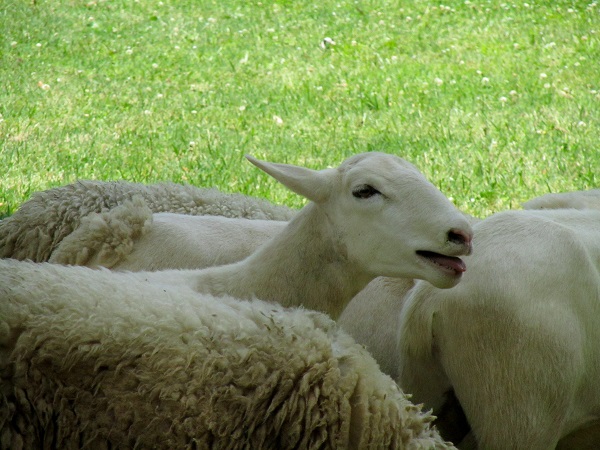
bleating sheep

Wild sheep grow only enough wool to keep warm (and they can shed it). Domesticated sheep have been bred for their wooly coats and do require shearing. Often, sheep who aren’t shorn before the weather is too hot will die of heat exhaustion. And if they’re shorn too early, they’ll die from exposure. About a million sheep a year die this way.

Sheep, like merinos, are bred to have lots of wrinkly skin (more area to grow wool on). As a result of their wrinkles, they suffer from skin infections. Flies lay eggs in their folds and maggots literally eat the sheep alive. Ranchers have found a way to combat this: mulesing, a process where large strips of flesh are cut off the sheep’s backsides. About 100 million sheep have this process done to them every year–without anesthetic!

Also performed without painkillers: castration, dehorning and tail docking.

Sheep are shorn by laborers who are paid by volume, not the hour. And in their hurry to work quickly, sheep are often rough-handled and injured. And when sheep stop producing as much wool as ranchers need to keep profits up, the sheep are killed for their flesh. In Australia, sheep are often shipped alive to the Middle East so they can be sold and butchered there. Many don’t even survive the cramped, long journey by sea.

In theory, one can raise a few sheep and sheer them humanely. In reality, the scale of operations–farms with hundreds of thousands of sheep–means there isn’t time or resources to care for the sheep. Dead sheep are a cost of doing business. It’s great that sheep aren’t usually confined to factory farm, like pigs, chickens and cows, but they roam land in habitats that they aren’t native to and often destroy habitat for native species. In Australia, some indigenous species are becoming endangered as a result of sheep grazing.

Don’t get fleeced! Whether for carpets or clothing, skip the wool (which is pricy, shrinks, attracts moths, retains odors and isn’t hypoallergenic) and try humane alternatives:

  • Cottonsheep
  • Bamboo
  • Hemp
  • Tencel (biodegradable)
  • PolarTec (made from recycled plastic)
  • Poly fleece
  • Synthetic shearling
  • Rayon
  • Linen

Resources:

Unknown's avatar

I can look at you

Franz Kafka, the German writer, once said, “Now I can look at you in peace; I don’t eat you anymore.”

I feel the same way. I abhor cruelty and I’m overwhelmed by the suffering in the world. The non-stop murder of animals in slaughterhouses around the world is truly hard to fathom. Of course it upsets me. But I feel like I’m not part of that system.

Instead of contributing to cruelty, I’m working hard to help animals. I know I can never do enough, so I’m not writing this with superiority. I owe the animals an apology too. But I can look at them. I can acknowledge them. I feel peace knowing that, to paraphrase Leonardo Da Vinci and quote the slogan on the back of one of my Herbivore shirts, “my body is not a graveyard.”

I had a real-life experience of the sentiment behind the quote when I was at a farmers market this past spring with friends. I saw an adorable lamb tethered to a stall. My first reaction was to run over and talk to him and pet him. I knew the vendor was promoting free-range “humane” meat, but in that moment, I just loved that little lamb.

Andy

I knew I couldn’t save him and I knew his life would be short. I asked his name, expecting a cold, cruel remark along the lines of “dinner.” The farmer told me the lamb’s name was Andy.

I was still overjoyed in the moment and in the experience of seeing Andy, that I put his future out of my head. I called to my friend. I wanted her to see Andy too. “No.” She told me flatly as she kept on walking. An odd response from a normally bubbly woman.

When I finished talking to Andy and taking his picture, I showed my friend the photos I’d taken. She told me she didn’t want to look at Andy because she eats lamb.

That was profound! The Kafka quote jumped into my head. Kafka was referring to a fish, but the sentiment is the same. I’m not contributing to cruelty. I’m not guilty. As a kid, if I did something dishonest at school, I wouldn’t look the teacher in the eye. This was the same thing. My friend couldn’t look Andy in the eye. She was betraying him.

Even if I could have whisked Andy away, there are millions of other animals just like him. Sweet innocents who are commoditized and valued for the taste of their flesh. But they have the desire to live and enjoy life just like we do. In our ability to suffer, we are all the same.

I don’t mean to vilify my friend. She loves cats and dogs, and there’s compassion in her heart. Like many people, she’s compartmentalized the way she views animals and divided them into categories of “pets” and “food.” But her guilt is chipping away at the lines. If my friend wants to look at lambs like Andy, she can. She just needs to stop eating them and start respecting them as sentient beings.

My hope for all animals is that people go vegan. Do it for Andy.