Unknown's avatar

No warm fuzzies with angora

I’ve often wondered about angora production. The soft, fuzzy sweaters, mitts and hats that pop up in stores each fall seem so cozy. I’ve never bought angora though.

Angora can refer to cats, goats, ferrets, but it’s the angora rabbit that people use for wool. To get angora, the animals don’t need to be killed, which is why many people don’t think about it as a cruel industry. Angora can be combed, shorn, or plucked.

What? Yes, I wrote that. Plucked! Shearing results in shorter hair, so often plucking is preferred. Angora molt every few months, and in theory, pulling loose hair from a rabbit shouldn’t hurt, but as with everything, care and welfare is abandoned when volume goes up and there’s money to be made.
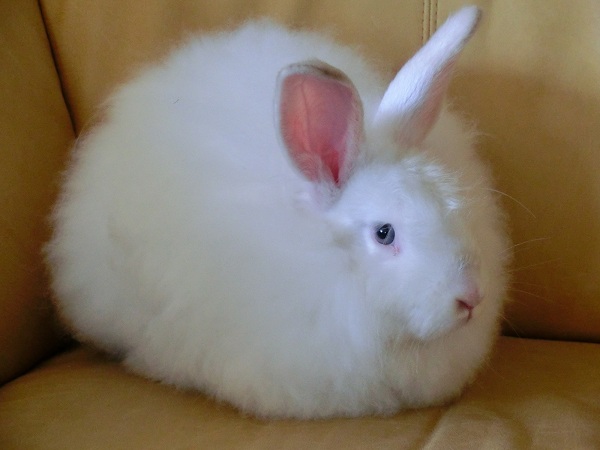
Angora Rabbit from http://commons.wikimedia.org/wiki/File:White_Satin_Angora_Rabbit.jpgNinety percent of angora comes from China, where there are no animal welfare standards and no oversight into the angora industry. Recent undercover video shows rabbits screaming in pain as they’re plucked. I didn’t even know rabbits could scream. It’s heartbreaking. And after being plucked, they lie in shock in their filthy cages. After 3 to 5 years of this abuse, they’re killed). You can read more about the developments here (the video is embedded but won’t play automatically, so you don’t have to watch it).

If 90% of angora comes from these conditions, it makes sense that 90% of the angora in the stores is cruelly sourced. Frankly, even shearing doesn’t look humane to me. In this video, a woman boasts about how well her rabbits are treated, but she ties up one rabbit’s legs, stretches him and rotates him like a spit pig (minus the skewer).

The video isn’t graphic per se, but it’s not how I would like to be handled on a quarterly basis. Kind or cruel, why should they live in cages to be wool-making machines? Rabbits need to forage and burrow. It’s another example of commodification. These rabbits are slaves for our fashion and treated like nothing more than money-making machines.

animals are not fabric

To quote the slogan on my new favorite sweater (from The Tree Kisser’s website), animals are not fabric.

If you want to help, here’s how:

  • Don’t wear or buy angora.
  • Ask the stores you shop at not to carry angora.
  • Sign the petitions linked to in this article and tell stores like The Gap and Zara to stop carrying angora

(Update: Zara and The Gap, along with Tommy Hilfiger and Calvin Klein, suspended further angora purchases pending investigation. H&M and ASOS have vowed to stop selling it permanently. Pressure works! Keep on these retailers. They make money from us, so we have a say!).
Unknown's avatar

6 ways to help animals this season

It’s December already and that means it’s the season of giving. In the spirit of Christmas, here are a few ways you can help animals:

Become vegan – Not eating animals is the number one thing you can do to help them. If you’re an animal lover, start your plan to transition to veganism today! You can find links on the right that will take you to sites that offer starter kits with recipes and nutritional info.

Don’t give animals as gifts – A dog or a cat is a ten to twenty year commitment. Giving an animal as a gift is giving someone a boatload of responsibility–and expenses! If someone isn’t ready for that, it’s likely their new animal will end up in a shelter. If you know someone really is ready for a companion animal, consider giving a gift certificate to a pet supply store. They’ll definitely need it when they have to feed and care for their new animal.

Adopt, don’t shop – If you’re planning to add an animal to your household, and all family members are on board, visit local shelters, rescue groups, or check out the nationwide network on petfinder.com. Contrary to what some people think, purebred and young animals are available for adoption. Then again, older animals are usually calmer and house-trained. They’re often a great choice.

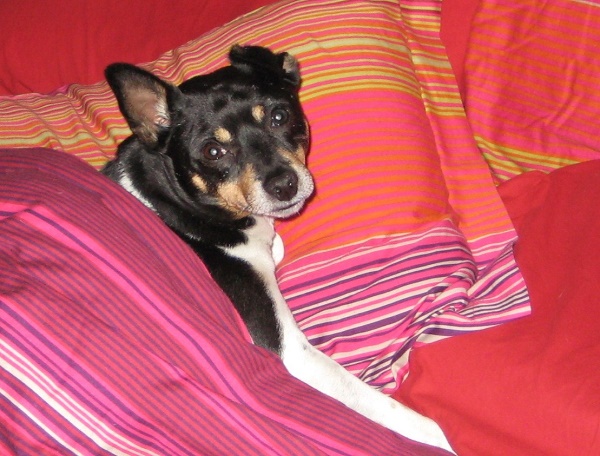
Rescued animals are great, but they'll steal your heart--and your bed.

Give to charities that don’t exploit animalsGiving livestock to a poor family in a developing nation might sound noble but it’s a burden for people who can barely feed themselves. Instead of giving to organizations that give animals, consider supporting ones like Vegfam, Trees for Life, or Plenty. These groups work with local communities to provide plant-based meals, education, disaster relief, and clean water.

Sponsor an animal – What do you give someone who has everything? How about sponsoring an animal in their name? You can choose from farm animals, rescued primates, dogs and cats, or wild animals at a number of sanctuaries. Every animal rescue group needs funds, and many offer official sponsor programs, like Pig Peace, PAWS, Farm Sanctuary, Chimpanzee Sanctuary NW, Soi Dog (Thai street dog rescue), and the Performing Animal Welfare Society.

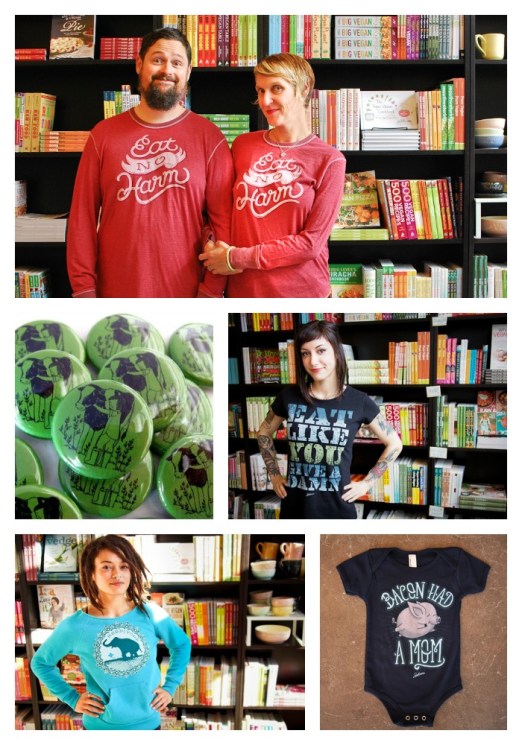
Give swag – Message gear is a fun way to give to someone, support a great cause, and spread the pro-animal message. If you know someone who supports animal causes, why not give them something from those groups? From chimpanzee wine, message mugs, cookbooks and vegan slogan T’s, there’s something for everyone.

photos (c) Herbivore

These are my ideas for helping animals during the holiday season (not that we have to limit ourselves to just December). Do you have any other ideas?

Unknown's avatar

Making a wish with a wishbone

Have you ever wondered why people fight over the chance to break a wishbone?

A wishbone is the front of a bird’s breastbone: the furcula. It’s formed by the connection of two clavicles. The superstition, where two people grab either end of the dried bone and pull to see who gets the larger pieces, has a long history.

As early as the 15th Century, and before turkeys were introduced to Europe, geese bones were used to foresee the future and predict the upcoming winter. Wars were waged based on the bones’ predictions.

Clergy in the 17th Century even tried to tried to stop people from using the bones as a form of superstition. Despite their best efforts, the practice continued–and was brought over to America.

Now, the wishbone is less about prediction and more about making a wish. It’s even called the merry-making bone. But make no bones about it. There’s nothing merry about killing a turkey.

If you want to see if you get a “lucky break” or a “bad break” without including a carcass at your thanksgiving meal, you’ve got options. I suppose a v-shaped twig would work. My husband and I tried a similar tug-o-war with two grapes and a stem and it was also successful (he got the bigger piece, and hence the opportunity to make a wish).

grape wishbone

There’s even a company that sells synthetic wishbones for families who want more than just one wishbone per meal. Their site specifically mentions that their product is suitable for vegetarians.

So no matter how you break it, you can have a fun Thanksgiving, keep the traditions you like, and ditch the cruelty.

Happy Thanksgiving!

Unknown's avatar

Cruelty-free Thanksgiving

Last year, I attended the Feast for the Turkeys at Pasado’s Safe Haven. This year, the event is already sold out. To make up for disappointment, Hubby surprised me with reservations to a prix fix vegan Thanksgiving meal at Plum Bistro. That’s not until next week though. In the meantime, I’ll show you what last year’s event was like.

guestcard

Instead of having turkey, the turkeys had us! Butterball was the official host, but Stacie, our lovely guide, took us on the tour. First stop: Turkeys, of course!

turkeys

Turkeys are gentle and kind. It’s not true that if it rains and they look up, they drown. On the contrary, they’re smart birds who protect each other, “talk” to their friends (including people), and are loving parents to their little ones. I got to pet Butterball–what soft feathers! As smart as she is, I’m not sure she noticed that I color-coordinated with her today.

At Pasado's

Next, we met these little piggies, who were rescued from a fire. They loved eating the popcorn, carrots, apples, and bananas we brought.

mini pigs

While I was taking their picture, look who snuck up on me! (You might recognize that mug from my banner.)

goat

I gave him a carrot, and he was happy. As we fed the goats and sheep, I spied a rooster, well, roosting.

roosting rooster

I found lots of chickens in the coop next door. The white ones are rescued laying hens. To think they used to live in cages with no more room to move than if they were standing on an iPad. They love their freedom now! And they’ll never end up in a pot.

chickens

They loved eating lettuce and grapes. Look at that blur–she sure was a fast one!

feeding the fowl

This photo doesn’t show how big these two pigs are. They’re each over 600 pounds! Splash, on the left, saw her siblings slaughtered and escaped certain death by swimming across a river where a startled, but loving woman took her in until she could find a proper home for the pig. Nora, on the right, was rescued from a horder and was starving. They’re both happy, healthy, and safe now.

Splash and Nora

The cows loved the carrots I brought for them, but they look a little suspicious of me, don’t you think?

Eddie Cheddar

cow

After an amazing tour, we toasted the animals with a glass of bubbly and went inside for a feast!

I got teary-eyed as our hosts read the menu: Autumn vegetable samosas with plum chutney, carrot miso spread on baguettes, and baked chickpeas; red kuri squash and coconut soup with cashew cream and beet reduction; massaged kale salad with pomegranate, hazelnuts and pears; parsnip apple puree, root vegetable latkes, orange balsamic glazed Brussels sprouts, and maple baked tempeh with apple cider glaze; pumpkin cake with chocolate-hazelnut ganache.

feast

I was overcome with emotion because as we dined on our vegan meal, rescued animals were snuggling in their stalls in the barns next door. Animals that would have been pork chops, turkey cutlets or hamburgers. I wished for peace for all living creatures and longed for every restaurant and household to serve delicious, cruelty-free meals like this.

What a wonderful time! I hope you take a tour of Pasado’s or a similar sanctuary in your area. They’re amazing places.

Unknown's avatar

Why not wool?

I’ve never liked the feel of wool next to my skin. It’s too itchy! But I couldn’t understand why vegans didn’t wear it. Sheep need to be shorn, right? And unlike fur, they’re not killed for their wool. Or are they?

A few years ago, after researching about wool, I changed my stance. Wool isn’t welcome in my home.

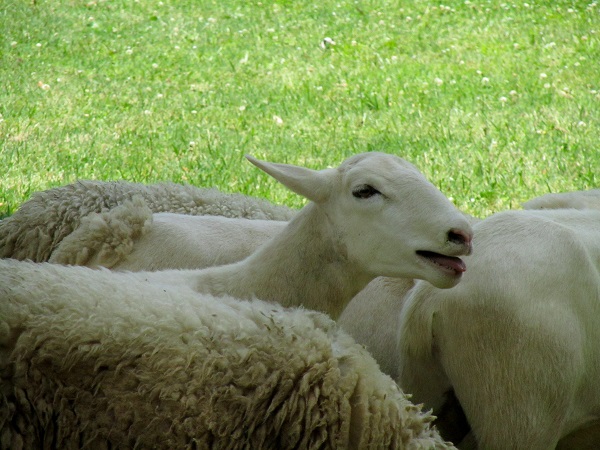
bleating sheep

Wild sheep grow only enough wool to keep warm (and they can shed it). Domesticated sheep have been bred for their wooly coats and do require shearing. Often, sheep who aren’t shorn before the weather is too hot will die of heat exhaustion. And if they’re shorn too early, they’ll die from exposure. About a million sheep a year die this way.

Sheep, like merinos, are bred to have lots of wrinkly skin (more area to grow wool on). As a result of their wrinkles, they suffer from skin infections. Flies lay eggs in their folds and maggots literally eat the sheep alive. Ranchers have found a way to combat this: mulesing, a process where large strips of flesh are cut off the sheep’s backsides. About 100 million sheep have this process done to them every year–without anesthetic!

Also performed without painkillers: castration, dehorning and tail docking.

Sheep are shorn by laborers who are paid by volume, not the hour. And in their hurry to work quickly, sheep are often rough-handled and injured. And when sheep stop producing as much wool as ranchers need to keep profits up, the sheep are killed for their flesh. In Australia, sheep are often shipped alive to the Middle East so they can be sold and butchered there. Many don’t even survive the cramped, long journey by sea.

In theory, one can raise a few sheep and sheer them humanely. In reality, the scale of operations–farms with hundreds of thousands of sheep–means there isn’t time or resources to care for the sheep. Dead sheep are a cost of doing business. It’s great that sheep aren’t usually confined to factory farm, like pigs, chickens and cows, but they roam land in habitats that they aren’t native to and often destroy habitat for native species. In Australia, some indigenous species are becoming endangered as a result of sheep grazing.

Don’t get fleeced! Whether for carpets or clothing, skip the wool (which is pricy, shrinks, attracts moths, retains odors and isn’t hypoallergenic) and try humane alternatives:

  • Cottonsheep
  • Bamboo
  • Hemp
  • Tencel (biodegradable)
  • PolarTec (made from recycled plastic)
  • Poly fleece
  • Synthetic shearling
  • Rayon
  • Linen

Resources:

Unknown's avatar

I can look at you

Franz Kafka, the German writer, once said, “Now I can look at you in peace; I don’t eat you anymore.”

I feel the same way. I abhor cruelty and I’m overwhelmed by the suffering in the world. The non-stop murder of animals in slaughterhouses around the world is truly hard to fathom. Of course it upsets me. But I feel like I’m not part of that system.

Instead of contributing to cruelty, I’m working hard to help animals. I know I can never do enough, so I’m not writing this with superiority. I owe the animals an apology too. But I can look at them. I can acknowledge them. I feel peace knowing that, to paraphrase Leonardo Da Vinci and quote the slogan on the back of one of my Herbivore shirts, “my body is not a graveyard.”

I had a real-life experience of the sentiment behind the quote when I was at a farmers market this past spring with friends. I saw an adorable lamb tethered to a stall. My first reaction was to run over and talk to him and pet him. I knew the vendor was promoting free-range “humane” meat, but in that moment, I just loved that little lamb.

Andy

I knew I couldn’t save him and I knew his life would be short. I asked his name, expecting a cold, cruel remark along the lines of “dinner.” The farmer told me the lamb’s name was Andy.

I was still overjoyed in the moment and in the experience of seeing Andy, that I put his future out of my head. I called to my friend. I wanted her to see Andy too. “No.” She told me flatly as she kept on walking. An odd response from a normally bubbly woman.

When I finished talking to Andy and taking his picture, I showed my friend the photos I’d taken. She told me she didn’t want to look at Andy because she eats lamb.

That was profound! The Kafka quote jumped into my head. Kafka was referring to a fish, but the sentiment is the same. I’m not contributing to cruelty. I’m not guilty. As a kid, if I did something dishonest at school, I wouldn’t look the teacher in the eye. This was the same thing. My friend couldn’t look Andy in the eye. She was betraying him.

Even if I could have whisked Andy away, there are millions of other animals just like him. Sweet innocents who are commoditized and valued for the taste of their flesh. But they have the desire to live and enjoy life just like we do. In our ability to suffer, we are all the same.

I don’t mean to vilify my friend. She loves cats and dogs, and there’s compassion in her heart. Like many people, she’s compartmentalized the way she views animals and divided them into categories of “pets” and “food.” But her guilt is chipping away at the lines. If my friend wants to look at lambs like Andy, she can. She just needs to stop eating them and start respecting them as sentient beings.

My hope for all animals is that people go vegan. Do it for Andy.

Unknown's avatar

It’s World Vegan Day!

Happy World Vegan Day!

November 1st is a day to celebrate being vegan. If you’re not a vegan, try it–even for just today!

vegan starterNovember is also World Vegan Month. It’s a perfect time test the waters and pledge to cut out meat, milk, and eggs. One way to start your vegan journey is by ordering a vegan starter pack. Several organizations have free info packs to help you get started with food and lifestyle changes (click the image of the lamb on the left to see a list). The packs include things like recipes, nutritional info, and compelling reasons to go vegan (like saving animals, improving your health, and helping the environment). Being vegan is a life-changing (and life-saving) decision!

World Vegan Day was started in 1994 to celebrate The Vegan Society’s 50th anniversary. The Vegan Society formed in the UK in 1944. That was the year that the term “vegan” was coined and defined.

Vegans come in all shapes and sizes and walks of life. It’s hard to generalize who a vegan is. Here is a bit of information about what vegans strive for:

Vegans abstain from animal products. Food wise, that means meat (including fish), eggs, and dairy. Veganism extends to other areas as well. Vegans don’t wear animal products (fur, leather, wool, silk, feathers, or any other item from an animal), or use household products containing animal ingredient or products tested on animals. Vegans don’t support captive animals acts like those in the circus or SeaWorld.

Vegans view animals as the sentient beings that they are, and not commodities to be exploited and used by humans.

So whether you’re just thinking about veganism or you’re well on your way, World Vegan Day is a great time to make a commitment to the animals, the earth, and your health.

Unknown's avatar

Visiting Pigs Peace Sanctuary

Last Saturday I had the chance to visit Pigs Peace, a sanctuary for abused and neglected animals. A hundred and ninety-one pigs now call the sanctuary home. They, and a few non-pigs, will get to spend the rest of their lives in peace. Old age is something most pigs never see, so living a long life is very special.

Pigs Peace

I went to the sanctuary because Jo Lombardi, a grief counselor, was offering a healing retreat for animal rights activists. Activists are often the people who see the things that others turn away from. We see the damage that others cause, and we know the dire situation that a lot of animals are in. That can be stressful, so having a safe place to talk among like-minded people was refreshing.

Jo is switching the focus of her practice to help animal activists exclusively. What a treat! She led us on guided meditation, a way to de-stress, and gave us materials so we could create an action plan and work toward balance in our lives. We were treated to vegan chili and snacks, and got a chance to share our stories with others.

After the retreat, sanctuary founder Judy Woods took us on a tour of the sanctuary.

A pig poses

We saw a group of pot-belly pigs rescued from a hording situation, we saw pigs who’d escaped slaughter and others who’d been rescued from neglect and abuse. The biggest pigs were 900 pounds! Unfortunately humans have been breeding pigs to be bigger and bigger. In the mid-1800s, a pig on a farm usually grew to 150 pounds.

One thing that struck me is how clean the farm was. It didn’t stink. The barn smelled like fresh hay. Pigs are naturally clean animals and don’t eliminate where they sleep. The barn was a place where the pigs could pile up, nest, cover up with hay, and get cozy. They did their business elsewhere. Of course pigs can’t sweat, so on hot days, you might find them cooling off in water or mud!

three pigs

I was also surprised by how hairy the pigs were. I always pictures “pink pigs” as being hairless. Well the “pink ones” had white hair. Others were brown, black, spotted or two-tone.

Pigs are smart! Smarter than dogs. They’re funny, playful, responsive, inquisitive, and a joy to watch.

We got to throw pumpkins to the pigs. They came running through the fields from all directions when Judy called them. And within a few minutes, two wheelbarrows full of pumpkins were gone!

pumpkins

Next up: Carrots. Judy rang the dinner bell and the pigs ran to the cement feeding area that we were busy littering with carrots. One again, the pigs ate them all–all 100 pounds of carrots!

carrots

One pig, a beautiful gray spotted one, would gather up as many carrots as she could. She walked far away, carrots spilling from her mouth the whole way, and then ate her “stash.” None of the other pigs did that, but she preferred to eat “buffet-style.”

spotted pig

If you ever get a chance to visit Pig Peace, I encourage you to. If you can’t get there, visit their website and look at all the pigs and read their stories. Judging by the amount we fed them, I’m guessing it’s not cheap to run a pig sanctuary. Pigs Peace is a 501(c)3 charitable organization, so consider making a donation.

In case it’s not obvious by now, I want to remind people that pigs are beautiful creatures who don’t belong on a dinner plate. I’m so sick of the cult of bacon. Bacon, pork chops, sausage–they’re all the same. It’s the flesh of a pig. And pigs deserve better than this. They deserve peace too!

And now for your viewing pleasure: pigs!

Unknown's avatar

Giving livestock isn’t charitable

Imagine, if you will, that you live in an impoverished community in an underdeveloped nation. Your one-room hut has a dirt floor without electricity or running water. You have to a make a fire just so you can cook. Food is scarce but you do your best to feed your children.

Then a western charity gives you a cow (or goat, or maybe a flock of chickens) so you can use this animal to improve your life. Sounds good, right?

Not so fast.

Ever raised a cow? Tried predator-proofing a chicken coop? Taking care of animals is hard to do. It’s a real burden, especially for people trying to raise a family and meet their basic needs.

cow in Africa

Livestock costs a lot. Animals get sick and require vet care, they drink a lot of water (water that might not be easily accessible), and they eat food that could be used to feed people. Animals eat more than they produce. Often the price of food for livestock is greater than the money families can get from selling milk or meat.

The chances of the animals getting good care (when people can’t give their families proper care) are slim. Sometimes animals are used as currency and are bartered away. Other times children are pulled out of school to tend to the animals.

Oxfam-funded drinking hole in East Africa

Eating high on the food chain isn’t wise. But western charities promoting western lifestyles and diets, would make you think it’s ideal. By introducing western eating habits, they’re introducing western diseases. The majority of people in countries where livestock is gifted are lactose intolerant anyway, so what good is a dairy cow?

The environmental costs of bringing more animals into a region are high too. Water pollution and waste runoff is one issue; desertization of land is another. Raising animals for food is a bigger contributor to global warming than all forms of transportation combined.

As a vegan, I care about animals. That’s why I can’t give money to charities that promote the mistreatment and slaughter of animals. I also care about people, which is why I don’t support charities that promote meat as an optimal food.

This holiday season, when you’re looking for ways to help others, look for organizations that promote ethical, sustainable ways to invest in communities. Here are a few:

Alternatives

  • Vegfam – Self-supporting, sustainable, plant-based food programs, and water resources.
  • Trees for Life – Fruit trees, books, education, clean water, and fuel-efficient stoves.
  • Plenty – Plant-based nutrition, healthcare, education, self-sufficiency, and disaster relief.
  • A Well-Fed World – Plant-based nutrition, education, farm animal rescue, and food sharing.
  • Kiva – Micro-loans for people to start small businesses and get themselves out of poverty.
  • SALEM – Education, shelter, environmental protection, nutrition information, and vegetarian meals.

Further reading

Unknown's avatar

Down with feathers

It’s fall. The weather is cooling off, and you want to get cozy. Dreaming of curling up under a down comforter? Thinking of sporting a down-filled jacket or vest? Think again.

Feathers in clothing or bedding are an oft-forgotten animal product. Many people don’t think about the way down and feathers from ducks, geese and chickens are harvested. Often, they’re slaughterhouse byproducts–and profitable ones! Sometimes, they’re even plucked from still-living birds.ducks

Not all countries live-pluck birds, but Hungary and China are two that do. Plucking is painful for the birds, who often undergo the process many times. Egg-laying geese must endure being plucked 5-15 times in their short lives–before they’re sent to slaughter. Geese raised for meat are killed much younger and are plucked about 4 times.

Birds are raised in crowded conditions and when it’s their turn for plucking, they’re caught and held down. The forceful plucking leaves their exposed skin raw, bruised and bloody. I can’t imagine someone yanking out the hair on my head, but that’s what it must feel like.

Even ostriches suffer from plucking. Their feathers are used for decorations, feather dusters, and boas. And roosters are raised and killed for so-called fashionable hair accessories–I’ll write a separate post about that soon.

Money from the sale of down and feathers lines the pockets of foie gras producers and companies that confine birds for their eggs and kill them for their meat. They’re not simply a byproduct.

Alternatives:

Fortunately, synthetic options are available–and they’re superior to down! So next time you’re looking for a sleeping bag, comforter or parka, make sure to avoid ones made with real feathers. Primaloft, Thermal R and Omni-Heat are examples of high-tech, synthetic materials that trap in heat and keep you warm. image of woman in pink parka c/o Vaute Couture

Patagonia, Marmot, Columbia and Northface are just some brands that carry coats made of those materials. But be sure to check the labels–not all the coats they carry are down-free. That’s why I particularly love Vaute Couture, an all-vegan fashion house with really warm wool- and down-free coats.

Most departments stores and specialty shops carry a variety of comforters. Ask for a synthetic option or check the labels before you buy so you–and the birds–can rest well.

Resources: