Unknown's avatar

Bird-brained: Animal name calling

Sly like a fox. Eagle eyes. Busy as a beaver.

There are a lot of animal-themed metaphors, similes and idioms in our vernacular. They’re so second-nature that I rarely notice myself saying them. Some expressions come from an animal’s natural characteristics and I don’t mind using them.
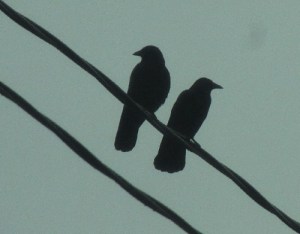
two crows

What’s wrong with being a night owl, for instance?

Other times, expressions belittle animals of have an inherently cruel theme. Yes, stick and stones may break bones, but words are powerful and I’m trying to adopt a more inclusive vocabulary. Not because it’s politically correct but because the way we talk affects the way we think. I’ve already written about animals and gender-specific pronouns, and now I’ve compiled a list of some expressions I’m trying to avoid:

  • Too chicken (to do/say something); chicken out
  • Pig, pig out, or eat like a pig
  • Ugly as a toad
  • More than one way to skin a cat
  • Chicken in every pot
  • Bleed like a stuck pig
  • Like a chicken with its head cut off
  • Kill two birds with one stone
  • Not enough room to swing a cat
  • Kill the fatted calf
  • So hungry I could eat a horse
  • No point beating a dead horse
  • A bird in the hand is worth two in the bush
  • Shooting fish in a barrel
  • Bigger fish to fry
  • Big enough to choke a hog
  • Don’t count your eggs before they’ve hatched
  • Like a lamb to slaughter

Here are some that I think are fun and appropriate:

  • When pigs fly
  • Gentle as a lamb
  • Have your tail between your legs
  • Water off a duck’s back
  • An elephant never forgets
  • Let sleeping dogs lie
  • It’s a dog’s life
  • Every dog has his day
  • Horse around
  • In the doghouse
  • Raining cats and dogs
  • Quick as a rabbit
  • Two shakes of a lamb’s tail
  • Eagle eyes
  • Sharp as a hawk
  • Birds of a feather flock together
  • Lion-hearted

I’m not going to go ape and bark up the wrong tree if you don’t take the bull by the horns, but can you think of other suitable or inappropriate expressions? Can you think of alternatives for the unsuitable ones?

Unknown's avatar

Fashion saves the birds

You might sometimes think that fashion has gone to the birds, but in the 1920s, it actually saved a few species.

You see, in the late 1800s, large, ornate hats were all the rage. Adorned with lace and pearls and feathers, some even had entire bird nests or cages incorporated into them! And a Victorian lady never left the house without a hat.

plumed hat

Hunters descended on the Florida Everglades in search of spoonbills, flamingos, herons, and egrets. These birds were favored for their plumes so they were killed by the millions. Conservationists tried to stop the massacre (around this time a few of them formed the National Audubon Society), but still the demand grew.

Eventually, feathers were worth more than double their weight in gold! That meant it was more lucrative (and easier) to kill birds than to pan for gold. In a time when a month’s rent was $10, the plumes of four birds would fetch $32.

birds shot for their feathers

Hunters shot every adult bird they could find, leaving orphaned chicks and unhatched eggs to die. Two generations of birds were wiped out because of a fashion trend.

Even after hunting was outlawed, the slaughter continued. One of the country’s first game wardens, Guy Bradley, was hired to patrol southern Florida and prevent poaching. He was murdered by a hunter while protecting the Everglades. Two other men–a game warden and a deputy sheriff–were killed soon after.

Egret

It seemed like nothing could save the birds and end the senseless bloodshed of human and animal life.

Then, the Jazz Age hit and flappers abandoned large hats for bobbed hair and smaller hats or headbands. As the demand for feathered hats diminished, bird populations began to recover.

bob cut

Perhaps the flappers didn’t choose a new style because they thought of the birds, but the shift in sartorial trends made a huge impact on animals. All it took was for people not to buy feathered hats. It’s a simple strategy that we can do today: decrease the demand to stop questionable practices.

Animal ingredients are in many articles of clothing. When you shop, you can look out for (and avoid buying) products containing fur, leather, wool, feathers, silk, coral, horns or bone.

Every time we buy something we’re voting with our dollars. Industries thrive or wither away because of consumer choices. That’s a powerful thing.

References:

Unknown's avatar

My vegan dog

My dog eats vegan dog food. Have I lost my mind? Am I forcing my beliefs on my poor dog? Not at all! Let me explain.

Frankie is an 11-year-old rat terrier. Ever since I adopted him when he was five, I was interested in feeding him the healthiest food I could find. I started with a high-quality, human-grade, fish-based food, thinking I’d be avoiding factory-farmed meat. But fish is often factory farmed too. And the oceans are being depleted, so wild-caught is just as bad. Fish are sentient beings and I couldn’t justify it.

Later, I made Frankie homemade vegan meals, to which I added Vegedog, a powdered supplement especially made for dogs. Frankie loved it, but planning his meals was a lot of work. Besides, Frankie will eat anything. Cheap kibble, human food, garbage, cat poo. I felt like my culinary skills were being taken for granted.

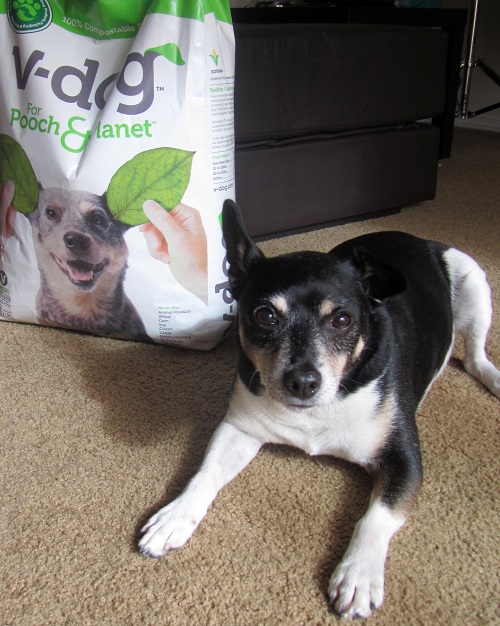
frankie with his v-dog

Then I found V-Dog, a cruelty-free kibble. It’s free of wheat, corn, soy, fillers, GMOs–and of course animal products. Frankie loves it. He has lots of energy, and “clean up” is better too (by which I mean, good in, good out).

As for me forcing my beliefs on Frankie, here’s how I see it. In the wild (well, dogs are domesticated, but you know what I mean) dogs wouldn’t be eating prepackaged food. They wouldn’t be chemical-laden, not-fit-for-human-consumption castoff meat bi-products from factory farms. Reality is, most commercial dog food is crap. The parts of the animals that people don’t eat are sent to rendering plants for pet food. The diseased animals, the ones with tumors, even roadkill and euthanized cats and dogs, can end up in dog food.

In the wild, Frank would be a scavenger, an omnivore. He loves watermelon, but he won’t turn down meat. For him it’s not a moral issue. For me it is. I had a hard time aligning my vegan values with the fact that I bought him meat-based food. Heck, some pet food companies even test on animals. Luckily with V-dog, I don’t have to compromise.

There are other vegetarian dog foods on the market (like Evolution, Ami Dog, and Natural Balance vegetarian formula) and if you have a dog, I’d encourage you to try a few and find one that suits him or her best. I chose V-Dog because it’s a vegan-owned business and is recommended by a host of organizations, from veterinarians to animal sanctuaries.

Resources:

Unknown's avatar

Farm Sanctuary message gear

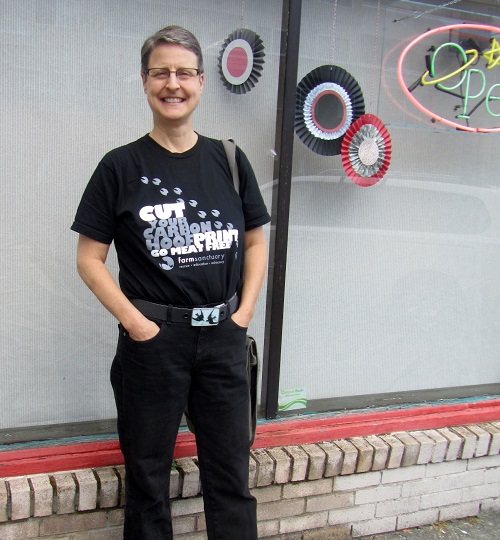
I recently met up with my friend Barb, of healthnik.org. We caught up over lunch at Araya’s, a vegan Thai restaurant in Seattle’s university district. Their all-you-can-eat buffet is not to be missed! After lunch, we walked a few doors down to Vegan Haven, Seattle’s only all-vegan grocery store. I got Barb to pose for me out front. It seemed like a good backdrop for a photo shoot featuring vegan wear.

Barb bought her belt at Vegan Haven. It’s made of recycled conveyor belt. She replaced the plain buckle with a unique bird buckle from the co-op in Mount Vernon.

Barb had just come back from New York State and told me about her experience visiting Farm Sanctuary.

Barb in FS gear

T-shirt: Farm Sanctuary
Jeans: Calvin Klein via Goodwill
Belt: Held Belts
Belt buckle: FluffyCo
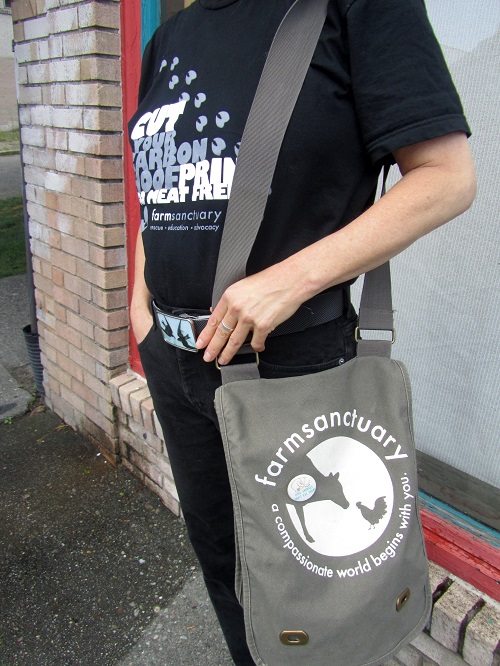
Bag: Farm Sanctuary

The tour was a very positive experience. She got to meet a lot of rescued animals and learn about each of their unique stories. While she was there, she picked up a few pieces of merch.

Barb is wearing a T-shirt from Farm Sanctuary with a vegan/environmental message: Reduce your carbon hoofprint: Go meat-free! Environmentalism and veganism go hand-in-hand. Factory farming is a bigger source of carbon emissions and pollution than all the transportation industries combined!

Barb also picked up a great shoulder bag. It looks perfect for carrying a couple of books or magazines. It would fit a camera nicely too, and probably is big enough for a tablet or iPad. Plus, the message is clear.

Shoulder bag

Barb was thoughtful and brought me a pin and magnet. The magnet is on my fridge. Look at that cute lamb!

lamb

I think everyone should visit a sanctuary. If you’re not vegan, you’ll see first-hand why ditching meat, milk, and eggs is a great idea. If you’re already vegan, you’ll be uplifted by seeing the ones who made it out–animals who were destined for the dinner table and were saved because of the hard work of the Farm Sanctuary people (and donations from its supporters).

Farm Sanctuary has locations in New York and California, but there are many other sanctuaries. Your area might even have one. If not, planning a trip near a sanctuary is a great reason to visit one.

Unknown's avatar

Gender-specific pronouns and animals

One step in learning to treat animals as sentient beings, not mere objects, is to use gender-specific pronouns. A dog is not a thing. Nor is a cow, eagle or mouse.

I’ve read numerous news stories about animals and for the most part, animals are called “it.”

  • The pig and its piglets were rescued – No, it’s her piglets. We know that because only females can give birth.
  • The steer broke its neck – No, it’s his neck (and the cowboy broke it). Steers are male.

If don’t know the gender of an animal I’m talking about, I assign one. In a story about two animals, one becomes he and one becomes she to make the distinction between the animals clear. “The raccoon chased the squirrel, who ran up a tree. She stayed in the tree for a while but he started pacing so she came down. He licked her forehead and they walked away together.”

Unlikely example aside, I believe gender-specific pronouns matter (and using one matters more than getting it right). This might even be why I give animals human names. My dog is Frankie. My cats are Alice and Margot.

rabbit

She likes eating my plants, but I don’t mind.

I tend to call dogs he and cats she because I speak a little German and in German cats are assigned a female pronoun (die Katze) while dogs are given a male pronoun (der Hund). This has less to do with sentience and more to do with grammar. In German a hat is masculine and banana is feminine (der Hut and die Banane).

Other languages like French and Spanish assign gender to animals and inanimate objects too so I’m really talking about English, where we know an animal is a he or a she but we say it.

Calling an animal he or she won’t stop cruelty. It won’t turn the world vegan either. But I think it’s a small step toward acknowledging that animals are thinking, feeling beings with a similar range of emotions to humans. They show fear, love, anger, frustration. They can be silly and funny or shy and reserved and we need to think of them as individuals not commodities.

Farm Sanctuary has a Someone, Not Something campaign that addresses this. They focus on farmed animals because we already tend to look at cats and dogs as family. Conversely, many people see cows, pigs and chickens as things to eat.

Next time you’re talking about animals, listen to yourself and see how you refer to them.

Unknown's avatar

Running of the bulls

It’s time again for another blood sport bath. Every summer from July 6th to 14th, the San Fermin Festival takes place in Pamplona, Spain. It’s a festival honoring Saint Fermin, a 3rd Century Roman who converted to Christianity.

Sadly, the festival revolves around the running of the bulls. Every morning bulls are forced onto slippery cobblestone streets filled with thousands of crazed revelers. As fireworks and explosives go off, the terrified animals run through a cordoned off section that creates a chute of sorts. The route leads to a bull ring, where they will be tortured and killed.

Photo credit: Bernard bill5 at nl.wikipedia

The festival is steeped in tradition related to transporting bulls to market. Today, it attracts stupid (mostly) men, many of them tourists, who think running among terrified animals makes them macho. It’s not brave or masculine. It’s shameful.

Many Spaniards oppose this cruelty. This year, animal rights activists from PETA UK and Spain’s Anima Naturalis joined forces to demonstrate against the barbaric practice. They stood in coffins (representing the 48 bulls that will be killed during the festival) to protest.

Photo credit: RAFA RIVAS/AFP/Getty Images

The San Fermin festival attracts thousands of tourists to watch the bull runs. Bull fighting is actually on the decline but tourism keeps it alive. When travelling, stay far away from bull fights and other forms of cruelty and vote with your dollar. Spain is a beautiful country so enjoy the scenery, hospitality, dance, art, architecture, nature and beaches instead.

Benjamin Zephaniah, writer and poet, says it best: “Tourists who participate in the run or visit  Pamplona simply to watch it contribute to the carnage. Every shared tapa, every cerveza, every  booked hotel room and balcony bolsters the killing. As long as the city makes money off the event, bulls will continue to suffer and die.”

The festival isn’t really about the saint behind the name. If a raucous drink-fest is what people are looking for, there are lots of ways to do that, from dance clubs in Ibiza to music festivals. At least at La Tomatina, animals aren’t involved, although throwing tomatoes around is a waste of good food.

In a fun 21st Century take on a cruel tradition, New Orleans has their own running of the bulls festival, where roller derby skaters from the Big Easy Rollergirls league play the part of bulls. You can run down the street and get knocked over by a derby player. Drink, sing, dance and no animals get killed! In fact, part of the proceeds from the event support Animal Rescue New Orleans.

There’s always a way to keep traditions alive with new, fun versions of outdated cruel practices. Last year 12,000 participants were chased by over 350 RollerBulls!

Unknown's avatar

A win for chimps

The National Institutes of Health (NIH) recently announced that it has accepted the Institute of Medicine’s recommendation of retiring over 300 of its chimpanzees. The US has been experimenting on chimpanzees for 90 years and is the last country in the industrialized world to do so. This news has been a long time coming.

Pumpkin, a 24-year-old chimpThe chimps’ similarity to humans makes them coveted for research, but it’s this very similarity that poses an ethical dilemma. Besides, chimps are different to many ways. They have different immunities and reactions to diseases and drugs. For example, if chimps are purposefully infected with HIV, they rarely even show symptoms of AIDS. We can’t help humans by using animal testing models.

Regardless of similarities and differences, no animals should be used as research subjects, so it’s a great piece of news that most of the chimps will be retired.

The news is mixed though. Fifty chimps will remain with NIH. They won’t be bred, but that’s not enough. These intelligent, self-aware beings deserve to live out their lives at a sanctuary like Chimpanzee Sanctuary NW. Each one is an individual with unique traits and should be given the right to live free from harm and experimentation. It’s the least we can do, even though we owe them far more than that.

Chimpanzee Sanctuary NW has written about the NIH decision. I’ll be on the lookout for petitions to free the remaining 50 and I’ll post links to one as soon as I find it.

Unknown's avatar

March to close all slaughterhouses

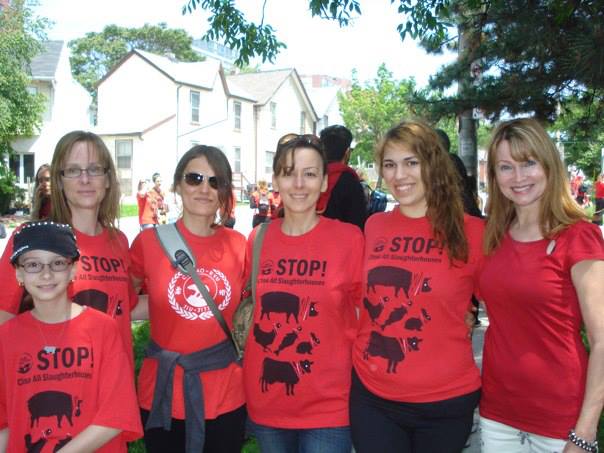
This past Saturday, several cities around the world marched to close all slaughterhouses: Paris, Toulouse, London, Istanbul, Houston, San Diego, Zagreb, Rio de Janeiro, Sao Paulo, Perth, Florence, and Toronto. My mom joined in the Toronto march.

vegan women

Compassionate protesters (my 61-year-old mom is on the right — her first demo!)

The Toronto march started at a city park, wove through the streets and ended at one of Toronto’s slaughterhouses (it’s not called Hogtown for nothing). I imagine emotions ran high at the site of the building where 6000 pigs die each weekday.

The march was organized with four tenets:

  • Because oppression, living conditions and slaughter cause immense suffering to animals
  • Because meat production is destroying our planet and our health
  • Because eating animal products is not necessary
  • Because sentient beings should not intentionally be mistreated or killed

The food industry is the largest contributor of animal exploitation, abuse and death but most people condone it through their dollars and their diets. The abuse goes on behind closed doors–literally. We’re not supposed to see it.

MTCAS demo

The marchers show what the meat industry tries to hide

Animals raised for food have a nightmarish existence. Confined, castrated, de-horned, debeaked, injected with hormones and antibiotics, and finally shipped to a house of horrors, where they see, hear, and smell other animals dying all around them before they too are killed.

The animal rights movement is part of a greater social justice movement. People need to speak up for injustices, and that’s exactly what they did on June 15th, all around the world. They marched to raise awareness and be a voice for the voiceless.

Robert Caine and my mom

Speaker Robert Caine and my mom met after the march

When we stop viewing animals as commodities and start seeing them as individuals with the right to live free from exploitation, it’s a no-brainer.

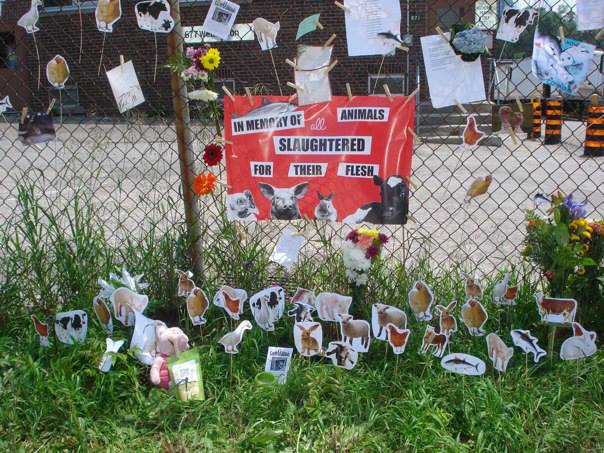
memorial

A memorial to slaughtered animals marked the entrance to the slaughterhouse

The best part about this cause is that the solution is right in front of us. It’s healthy and delicious and easy to do: adopt a plant-based diet.

vegan friends

The people in the march were a cross-section of society. They came from all classes, ages, genders, political leanings and beliefs. Animal abuse is something everyone can do something about.

a little protester

Compassion starts at a young age–don’t suppress it!

Each year, 60 billion land animals and 1,000 billion water animals are killed for humans. It’s staggering to think about. It’s cruel and unnecessary. By changing to a vegan diet you can save about 100 animals a year. This makes a difference. It adds up. Animals matter.

new friends

The message is simple and powerful: Go vegan!

I hope Seattle has a march next year so I can join too and speak up for those who can’t.

Unknown's avatar

Help protect chimpanzees

Good news on the horizon: The US Fish and Wildlife Service is proposing that chimpanzees in the US be added to the federal endangered species list.

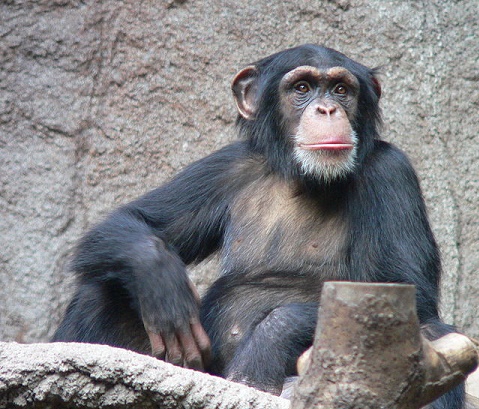
chimp on wikimediaRight now, wild chimps are listed as endangered while their captive cousins are listed as only threatened. This means people can breed, sell, ship, and experiment on captive chimps in the US.

Adding captive chimps to the endangered species list would change that and would help chimps in zoos, circuses, and in the entertainment industry.

Changing their status will prevent chimps from being used in invasive medical testing procedures and from being taken across state lines. It would also ban the international commerce of chimps.

The Humane Society, Chimpanzee Sanctuary NW, and The Jane Goodall Institute all back the proposal.

You can read the press release from Chimpanzee Sanctuary NW and an article by the Washington Post for more about the chimps’ plight.

Take Action!

The US Fish and Wildlife Service is taking public feedback about the issue. Please visit this Humane Society page, add your comments, and sign the petition asking US Fish and Wildlife Service to help all chimpanzees by applying Endangered Species Act protections to captive chimpanzees.

Thank you!

Unknown's avatar

Film review: Blackfish

I was lucky to snag a ticket to a showing of Blackfish at the Seattle International Film Festival. Blackfish reveals the complicated life of Tilikum, an orca born in the wild off the coast of Iceland. As a young whale, Tilikum was forcibly separated from his mother and sent to perform at a marine park in Victoria BC. He’s been in captivity since 1983 and is currently confined at SeaWorld in Florida.

The documentary reveals the frustrations Tilikum has endured and how he’s been picked on by other whales in his pool, cooped up in a dark “garage” of sorts during off seasons, and forced to perform year in and year out.

Orcas similar to Tilikum

Out of his frustrations, grew an aggression that wild orcas don’t display toward humans. Tilikum has killed three people, two of which were trainers.

The movie shows the horrors of wild capture and captive breeding. It documents the unnatural acts orcas are forces to perform in front of clueless audiences. The charade SeaWorld conducts is shameful. They lead people into believing these beautiful whales somehow enjoy their time in captivity and are safe and happy.

On the contrary, an orca’s life in captivity is extremely short. They live on average for 9 years from the time they are captives–regardless of how old they were when they entered captivity. In the wild, male orcas can live about 60 years; females up to 100.

Orcas, also called killer whales, live in family units called pods. Each pod speaks a different “language.” They live with or near their pod for their whole lives and travel about 100 miles a day. They are extremely social and have highly developed emotions. To see families separated and grief-stricken and captive whales isolated in concrete pools was heartbreaking. But the film is an important movie to watch.

Blackfish will be released in NY and LA later this summer, and more widely after that. CNN Documentaries is distributing the film on TV in the fall.

It’s a terrific resource and the things you’ll learn apply to all captive marine animals. Sadly, SeaWorld is one of the better marine parks. There are many more orcas who languish is worse conditions, including many at Canada’s Marineland.

What to do

First of all, never go to a marine park like SeaWorld or Marineland. Ask your friends not to go and talk to schools about canceling field trips to marine parks. Marine parks exist for one reason, and one reason alone: making money. Vote with your dollars and spend your time and money somewhere else.

Look at the websites below for information about how to help. Two orcas, Morgan and Lolita, are great candidates for release.

Resources

Blackfish website – Information about the movie, including the trailer and upcoming screenings.

Orca Network – Information about whales in the Pacific Northwest, creating safe whale habitats, and the Free Lolita campaign.

Voice of the Orcas – Interview and current event about conservation and activism.

Miami Sea Prison – Information about captive orcas and the fight to release Lolita, the last surviving whale from the L Pod hunt in 1970.

Free Morgan Foundation – The campaign to release Morgan, an orca currently in captivity in The Netherlands.

Marineland Animal Defense – A campaign to end animal captivity at Marineland in Niagara Falls Canada.