Unknown's avatar

Dining at Candle 79

I met up with my parents in New York this past August and every night, for over a week, we dined at terrific vegan places. The city is a wonderful place to eat meat-free.

The first thing I did when I started planning my vacation was make reservations for Candle 79, New York’s premier vegan oasis (yes, it says that on their website and it’s so true!). On our first night in the Big Apple. we left our condo in Harlem and went to Candle 79’s two-story location on the Upper East Side.
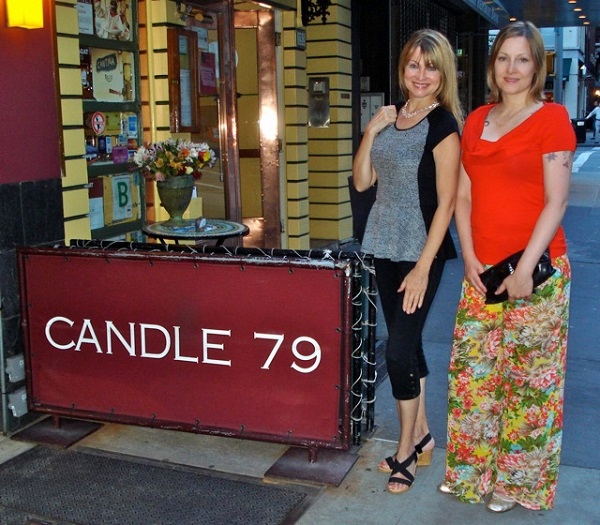
candle 79

I never thought I’d forget the exact names of what we were eating, but I did. And being an organic, local, seasonal eatery means the menu changes often. So forgive my inaccuracies–and believe be when I share how delicious it all was!

First, we were treated to an amuse-bouche. A delightful teaser and hint of things to come. I tasted chickpeas and cucumber in a smooth creamy sauce.

amuse bouche

My parents split an order of spaghetti and wheat balls. It’s a classic simple dish but Candle 79 put their own unique twist on it and my parents couldn’t get enough!

spaghetti and wheat balls

I ate a seitan (or possible tempeh) cutlet with apples and beans. It was divine. The best part about eating in a vegan restaurant (aside from knowing it’s a cruelty-free place and everyone is not eating animals) is that I can order anything off the menu, no questions asked! So I asked very few questions and now I can’t tell you the specifics of what I ate (except I’d be eating there right now again if I could teleport).

seitan cutlet

Finally, we had chocolate peanut butter bliss for dessert.

pure bliss

Happy, healthy dining!

mom ans Jean

After our meal, we walked toward Central Park along Lexington, took in the quintessential New York streets, and caught a cab back to our place.

What a fantastic way to start a vacation. If you’re ever in New York, don’t miss the Candle 79 experience!

Unknown's avatar

Cruelty-free Thanksgiving

Last year, I attended the Feast for the Turkeys at Pasado’s Safe Haven. This year, the event is already sold out. To make up for disappointment, Hubby surprised me with reservations to a prix fix vegan Thanksgiving meal at Plum Bistro. That’s not until next week though. In the meantime, I’ll show you what last year’s event was like.

guestcard

Instead of having turkey, the turkeys had us! Butterball was the official host, but Stacie, our lovely guide, took us on the tour. First stop: Turkeys, of course!

turkeys

Turkeys are gentle and kind. It’s not true that if it rains and they look up, they drown. On the contrary, they’re smart birds who protect each other, “talk” to their friends (including people), and are loving parents to their little ones. I got to pet Butterball–what soft feathers! As smart as she is, I’m not sure she noticed that I color-coordinated with her today.

At Pasado's

Next, we met these little piggies, who were rescued from a fire. They loved eating the popcorn, carrots, apples, and bananas we brought.

mini pigs

While I was taking their picture, look who snuck up on me! (You might recognize that mug from my banner.)

goat

I gave him a carrot, and he was happy. As we fed the goats and sheep, I spied a rooster, well, roosting.

roosting rooster

I found lots of chickens in the coop next door. The white ones are rescued laying hens. To think they used to live in cages with no more room to move than if they were standing on an iPad. They love their freedom now! And they’ll never end up in a pot.

chickens

They loved eating lettuce and grapes. Look at that blur–she sure was a fast one!

feeding the fowl

This photo doesn’t show how big these two pigs are. They’re each over 600 pounds! Splash, on the left, saw her siblings slaughtered and escaped certain death by swimming across a river where a startled, but loving woman took her in until she could find a proper home for the pig. Nora, on the right, was rescued from a horder and was starving. They’re both happy, healthy, and safe now.

Splash and Nora

The cows loved the carrots I brought for them, but they look a little suspicious of me, don’t you think?

Eddie Cheddar

cow

After an amazing tour, we toasted the animals with a glass of bubbly and went inside for a feast!

I got teary-eyed as our hosts read the menu: Autumn vegetable samosas with plum chutney, carrot miso spread on baguettes, and baked chickpeas; red kuri squash and coconut soup with cashew cream and beet reduction; massaged kale salad with pomegranate, hazelnuts and pears; parsnip apple puree, root vegetable latkes, orange balsamic glazed Brussels sprouts, and maple baked tempeh with apple cider glaze; pumpkin cake with chocolate-hazelnut ganache.

feast

I was overcome with emotion because as we dined on our vegan meal, rescued animals were snuggling in their stalls in the barns next door. Animals that would have been pork chops, turkey cutlets or hamburgers. I wished for peace for all living creatures and longed for every restaurant and household to serve delicious, cruelty-free meals like this.

What a wonderful time! I hope you take a tour of Pasado’s or a similar sanctuary in your area. They’re amazing places.

Unknown's avatar

Wool-free winter wear

Whenever I write about what not to do/eat/wear, I like to provide alternatives so we have ideas for things we can consume. I recently wrote about what’s wrong with wool. Well, I’ve found some great, cruelty-free products that are made of wool alternatives and I have to share!

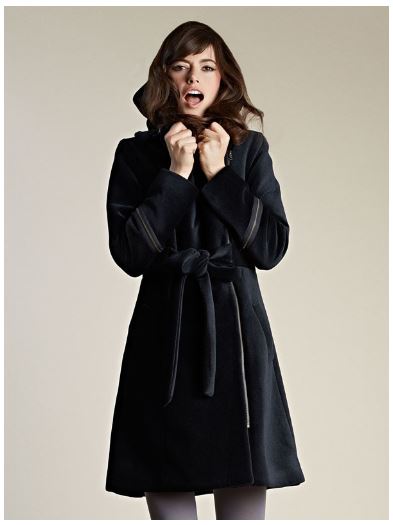
My favorite winter wear company is Vaute Couture. Vegan-owned, Vaute (pronounced vote) is the brain-child of model-turned-entrepreneur Leanne Mai-ly Milgart. Her men’s and women’s designs are made in New York’s garment district using recycled and recyclable fabrics that are windproof, snow- and rain-resistant, warmer than wool, and heat retaining.

Vaute is stylish too. They’re the first all-vegan line to show at New York’s prestigious Fashion Week–and they rocked it! The media picked up the story and vegan fashion went mainstream!

vaute image (c) Vaute Couture

I recently learned about another cool company, Hoodlamb. Based in Amsterdam, Hoodlamb makes men’s and women’s coats and other apparel from hemp–arguably the most environmentally friendly fabric out there. It’s strong and durable and requires no pesticides or fertilizer to grow. Hemp warms you up when you need it and keeps you cool when you’re hot.

Hoodlamb carries stylish, warm winter clothes with a conscience. Love the faux shearling linings!

hoodlamb image (c) Hoodlamb

For budget-conscious fashionistas, I recommend Lulu’s and Modcloth. They both carry a wide assortment of winter coats, many of which are wool-, down-, and leather-free. Not all their products are vegan, so read the descriptions before you buy.

Modcloth and Lulu’s focus on showcasing independent designers from around the world. That might not sit well with localvores, but if you’re like me and are primarily interested in animal-free clothes, you’ll find something adorable at these online retailers.

In fact, if you look around, you’ll find non-wool coats in other stores too. For example, American Apparel, known for their sweatshop-free made in LA clothes, carry some vegan winter items, like a wool-free cape and a unisex parka made with faux shearling.

American Apparel images (c) American Apparel

Do you have any other tips for finding cruelty-free winter wear?

Unknown's avatar

Why not wool?

I’ve never liked the feel of wool next to my skin. It’s too itchy! But I couldn’t understand why vegans didn’t wear it. Sheep need to be shorn, right? And unlike fur, they’re not killed for their wool. Or are they?

A few years ago, after researching about wool, I changed my stance. Wool isn’t welcome in my home.

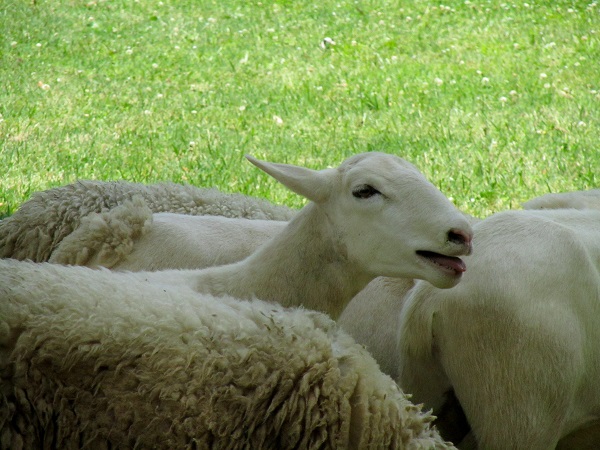
bleating sheep

Wild sheep grow only enough wool to keep warm (and they can shed it). Domesticated sheep have been bred for their wooly coats and do require shearing. Often, sheep who aren’t shorn before the weather is too hot will die of heat exhaustion. And if they’re shorn too early, they’ll die from exposure. About a million sheep a year die this way.

Sheep, like merinos, are bred to have lots of wrinkly skin (more area to grow wool on). As a result of their wrinkles, they suffer from skin infections. Flies lay eggs in their folds and maggots literally eat the sheep alive. Ranchers have found a way to combat this: mulesing, a process where large strips of flesh are cut off the sheep’s backsides. About 100 million sheep have this process done to them every year–without anesthetic!

Also performed without painkillers: castration, dehorning and tail docking.

Sheep are shorn by laborers who are paid by volume, not the hour. And in their hurry to work quickly, sheep are often rough-handled and injured. And when sheep stop producing as much wool as ranchers need to keep profits up, the sheep are killed for their flesh. In Australia, sheep are often shipped alive to the Middle East so they can be sold and butchered there. Many don’t even survive the cramped, long journey by sea.

In theory, one can raise a few sheep and sheer them humanely. In reality, the scale of operations–farms with hundreds of thousands of sheep–means there isn’t time or resources to care for the sheep. Dead sheep are a cost of doing business. It’s great that sheep aren’t usually confined to factory farm, like pigs, chickens and cows, but they roam land in habitats that they aren’t native to and often destroy habitat for native species. In Australia, some indigenous species are becoming endangered as a result of sheep grazing.

Don’t get fleeced! Whether for carpets or clothing, skip the wool (which is pricy, shrinks, attracts moths, retains odors and isn’t hypoallergenic) and try humane alternatives:

  • Cottonsheep
  • Bamboo
  • Hemp
  • Tencel (biodegradable)
  • PolarTec (made from recycled plastic)
  • Poly fleece
  • Synthetic shearling
  • Rayon
  • Linen

Resources:

Unknown's avatar

Vegan makeup on a budget

I like playing with makeup and changing my look. In the past, I’ve written about vegan makeup, but I happened to list brands that are pricy. For most of my life (and still today), I’ve been more of a bargain hunter. That’s why I’m happy to share with you some inexpensive brands that don’t test on animals!

Eyes, Lips, Face, or e.l.f, is a brand of cosmetics with a great price point. They sell loads of fun makeup and synthetic brushes too! Last holiday season, I treated myself to a 100-color eyeshadow palette. It’s a lot of fun. The pigment isn’t super intense so even the bold colors are wearable.

elp palette

I found it at a drug store for $10, which is well worth it for some makeup fun. The e.l.f. website specifically states, “We do NOT test on animals or endorse such practices. Our products do not contain animal derived ingredients.”

Jordana makes my favorite eyeliner in any price range. There’s a range of colors (the dark brown is my go-to, but I’ll branch out with brights sometimes). Their liners are self sharpening too, so you’ll always have a nice tip (without slivers–ouch!). I think these are less than $5 each. They sell lip liners too, as well as nail polish and other cosmetics, such as shadows. They’re made in the USA and available at your local drug store. Jordana’s website states that they do not test on animals or buy ingredients that were tested on animals. Some of their products contain animal ingredients, so read the labels!

Jordana eyeliners

Wet n Wild is another drug store brand that doesn’t test on animals. Thanks to Luminous Vegans for that tip! Wet n Wild sells formaldehyde-free nail polish, which is great news for a lot of us! The Wet n Wild website states, “As a Peta-certified, cruelty-free brand, we’re proud to say we have never and will never test on animals. We also make it a point to work with cruelty-free, third-party vendors. Wet n Wild loves our furry, scaly, and feathery friends!” Some of their makeup does contain carmine (a dye derived from insects). You can see which items are vegan and which aren’t on their FAQ.

wet and wild

It’s true that these aren’t vegan-owned companies, but for those of us on a budget, or who want to try out a makeup trend without spending a fortune, we have options. You can see PETA’s complete list for the latest info.

Do you know of other cruelty-free makeup for people on a budget?

Unknown's avatar

I can look at you

Franz Kafka, the German writer, once said, “Now I can look at you in peace; I don’t eat you anymore.”

I feel the same way. I abhor cruelty and I’m overwhelmed by the suffering in the world. The non-stop murder of animals in slaughterhouses around the world is truly hard to fathom. Of course it upsets me. But I feel like I’m not part of that system.

Instead of contributing to cruelty, I’m working hard to help animals. I know I can never do enough, so I’m not writing this with superiority. I owe the animals an apology too. But I can look at them. I can acknowledge them. I feel peace knowing that, to paraphrase Leonardo Da Vinci and quote the slogan on the back of one of my Herbivore shirts, “my body is not a graveyard.”

I had a real-life experience of the sentiment behind the quote when I was at a farmers market this past spring with friends. I saw an adorable lamb tethered to a stall. My first reaction was to run over and talk to him and pet him. I knew the vendor was promoting free-range “humane” meat, but in that moment, I just loved that little lamb.

Andy

I knew I couldn’t save him and I knew his life would be short. I asked his name, expecting a cold, cruel remark along the lines of “dinner.” The farmer told me the lamb’s name was Andy.

I was still overjoyed in the moment and in the experience of seeing Andy, that I put his future out of my head. I called to my friend. I wanted her to see Andy too. “No.” She told me flatly as she kept on walking. An odd response from a normally bubbly woman.

When I finished talking to Andy and taking his picture, I showed my friend the photos I’d taken. She told me she didn’t want to look at Andy because she eats lamb.

That was profound! The Kafka quote jumped into my head. Kafka was referring to a fish, but the sentiment is the same. I’m not contributing to cruelty. I’m not guilty. As a kid, if I did something dishonest at school, I wouldn’t look the teacher in the eye. This was the same thing. My friend couldn’t look Andy in the eye. She was betraying him.

Even if I could have whisked Andy away, there are millions of other animals just like him. Sweet innocents who are commoditized and valued for the taste of their flesh. But they have the desire to live and enjoy life just like we do. In our ability to suffer, we are all the same.

I don’t mean to vilify my friend. She loves cats and dogs, and there’s compassion in her heart. Like many people, she’s compartmentalized the way she views animals and divided them into categories of “pets” and “food.” But her guilt is chipping away at the lines. If my friend wants to look at lambs like Andy, she can. She just needs to stop eating them and start respecting them as sentient beings.

My hope for all animals is that people go vegan. Do it for Andy.

Unknown's avatar

It’s World Vegan Day!

Happy World Vegan Day!

November 1st is a day to celebrate being vegan. If you’re not a vegan, try it–even for just today!

vegan starterNovember is also World Vegan Month. It’s a perfect time test the waters and pledge to cut out meat, milk, and eggs. One way to start your vegan journey is by ordering a vegan starter pack. Several organizations have free info packs to help you get started with food and lifestyle changes (click the image of the lamb on the left to see a list). The packs include things like recipes, nutritional info, and compelling reasons to go vegan (like saving animals, improving your health, and helping the environment). Being vegan is a life-changing (and life-saving) decision!

World Vegan Day was started in 1994 to celebrate The Vegan Society’s 50th anniversary. The Vegan Society formed in the UK in 1944. That was the year that the term “vegan” was coined and defined.

Vegans come in all shapes and sizes and walks of life. It’s hard to generalize who a vegan is. Here is a bit of information about what vegans strive for:

Vegans abstain from animal products. Food wise, that means meat (including fish), eggs, and dairy. Veganism extends to other areas as well. Vegans don’t wear animal products (fur, leather, wool, silk, feathers, or any other item from an animal), or use household products containing animal ingredient or products tested on animals. Vegans don’t support captive animals acts like those in the circus or SeaWorld.

Vegans view animals as the sentient beings that they are, and not commodities to be exploited and used by humans.

So whether you’re just thinking about veganism or you’re well on your way, World Vegan Day is a great time to make a commitment to the animals, the earth, and your health.

Unknown's avatar

Giving livestock isn’t charitable

Imagine, if you will, that you live in an impoverished community in an underdeveloped nation. Your one-room hut has a dirt floor without electricity or running water. You have to a make a fire just so you can cook. Food is scarce but you do your best to feed your children.

Then a western charity gives you a cow (or goat, or maybe a flock of chickens) so you can use this animal to improve your life. Sounds good, right?

Not so fast.

Ever raised a cow? Tried predator-proofing a chicken coop? Taking care of animals is hard to do. It’s a real burden, especially for people trying to raise a family and meet their basic needs.

cow in Africa

Livestock costs a lot. Animals get sick and require vet care, they drink a lot of water (water that might not be easily accessible), and they eat food that could be used to feed people. Animals eat more than they produce. Often the price of food for livestock is greater than the money families can get from selling milk or meat.

The chances of the animals getting good care (when people can’t give their families proper care) are slim. Sometimes animals are used as currency and are bartered away. Other times children are pulled out of school to tend to the animals.

Oxfam-funded drinking hole in East Africa

Eating high on the food chain isn’t wise. But western charities promoting western lifestyles and diets, would make you think it’s ideal. By introducing western eating habits, they’re introducing western diseases. The majority of people in countries where livestock is gifted are lactose intolerant anyway, so what good is a dairy cow?

The environmental costs of bringing more animals into a region are high too. Water pollution and waste runoff is one issue; desertization of land is another. Raising animals for food is a bigger contributor to global warming than all forms of transportation combined.

As a vegan, I care about animals. That’s why I can’t give money to charities that promote the mistreatment and slaughter of animals. I also care about people, which is why I don’t support charities that promote meat as an optimal food.

This holiday season, when you’re looking for ways to help others, look for organizations that promote ethical, sustainable ways to invest in communities. Here are a few:

Alternatives

  • Vegfam – Self-supporting, sustainable, plant-based food programs, and water resources.
  • Trees for Life – Fruit trees, books, education, clean water, and fuel-efficient stoves.
  • Plenty – Plant-based nutrition, healthcare, education, self-sufficiency, and disaster relief.
  • A Well-Fed World – Plant-based nutrition, education, farm animal rescue, and food sharing.
  • Kiva – Micro-loans for people to start small businesses and get themselves out of poverty.
  • SALEM – Education, shelter, environmental protection, nutrition information, and vegetarian meals.

Further reading

Unknown's avatar

Vegan wine and cheese party

Moo-ve over dairy, there’s a new kid in town.

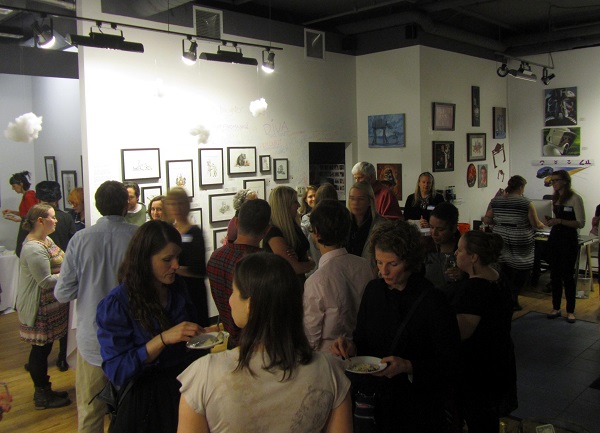
Last night I had the most amazing time at a vegan wine and cheese party that NARN put on at Ltd Art Gallery in Seattle’s Capitol Hill neighborhood. The event was a fundraiser for Precious Life Animal Sanctuary in Sequim, WA. We were really lucky to have Ralph and Caryl Turner, the sanctuary founders, at the event.

Ltd Gallery

We were treated to an array of non-dairy cheeses. I’m not talking about weak substitutes; I’m talking creamy, rich, tangy, flavorful spreads and slices that hold their own. I’ve already written about what’s wrong with dairy, so you know I was thrilled to taste cruelty-free cheeses. No cows harmed. For a lot of people, cheese is one of the hardest things to give up, and with options like these, you don’t have to.

The generous companies that donated cheese for the event included Wayfare, Treeline, Punk Rawk Labs and Field Roast. Additionally, Joyce Huesemann made several delicious spreads. Thank you all!

So what’s vegan cheese made from? Lots of things. It was a diverse grouping of cheese with ingredients like cashews, nutritional yeast, tofu, garlic, herbs, oatmeal, sesame seeds and macadamia nuts.

food collageAs for wine, it’s a much subtler offender. All wine is technically vegan–it’s grapes! However, many wineries use animal products like egg albumen (from egg whites), gelatin (from boiling animal parts), and isinglass (from fish bladder membranes) in the refining process. But there are vegan alternatives. Until recently, I hadn’t paid much attention to whether or not wine was vegan, but I like to vote with my dollars and choose companies who are striving for a better world.

That’s why I was happy to taste the delicious selections from The Vegan Vine and Frey Wine. These two vegan wine companies generously donated wine to the event. They had a delicious selection–from sangiovese to chardonnay. Perhaps I woke up without a headache today because these companies are organic and don’t add sulfites to their products.

And of course (probably because the organizers knew I was coming), there were other vegan wines too. You can use Barnivore to find out which of your favorite wines (and beer and spirits) are vegan.

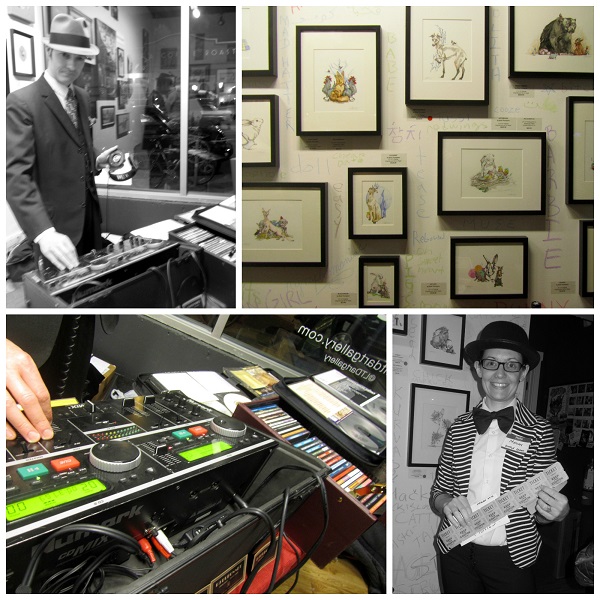
DJ and raffle queen collage

The best part of the evening was spending time with like-minded people and catching up with friends. We listened to swingin’ tunes by DJ Dubonnet and took in art by Siolo Thompson. The event was a hit–tickets went on sale in August and sold out in less than two days! I hope that means there will be more vegan wine and cheese events in my future. After all, the future is vegan!

Jean in Lois Eastlund dress

Unknown's avatar

Down with feathers

It’s fall. The weather is cooling off, and you want to get cozy. Dreaming of curling up under a down comforter? Thinking of sporting a down-filled jacket or vest? Think again.

Feathers in clothing or bedding are an oft-forgotten animal product. Many people don’t think about the way down and feathers from ducks, geese and chickens are harvested. Often, they’re slaughterhouse byproducts–and profitable ones! Sometimes, they’re even plucked from still-living birds.ducks

Not all countries live-pluck birds, but Hungary and China are two that do. Plucking is painful for the birds, who often undergo the process many times. Egg-laying geese must endure being plucked 5-15 times in their short lives–before they’re sent to slaughter. Geese raised for meat are killed much younger and are plucked about 4 times.

Birds are raised in crowded conditions and when it’s their turn for plucking, they’re caught and held down. The forceful plucking leaves their exposed skin raw, bruised and bloody. I can’t imagine someone yanking out the hair on my head, but that’s what it must feel like.

Even ostriches suffer from plucking. Their feathers are used for decorations, feather dusters, and boas. And roosters are raised and killed for so-called fashionable hair accessories–I’ll write a separate post about that soon.

Money from the sale of down and feathers lines the pockets of foie gras producers and companies that confine birds for their eggs and kill them for their meat. They’re not simply a byproduct.

Alternatives:

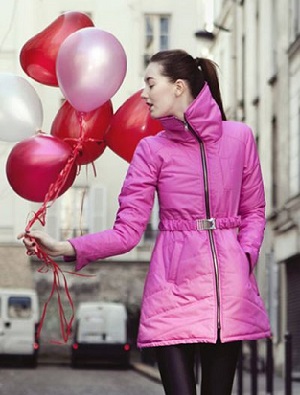
Fortunately, synthetic options are available–and they’re superior to down! So next time you’re looking for a sleeping bag, comforter or parka, make sure to avoid ones made with real feathers. Primaloft, Thermal R and Omni-Heat are examples of high-tech, synthetic materials that trap in heat and keep you warm. image of woman in pink parka c/o Vaute Couture

Patagonia, Marmot, Columbia and Northface are just some brands that carry coats made of those materials. But be sure to check the labels–not all the coats they carry are down-free. That’s why I particularly love Vaute Couture, an all-vegan fashion house with really warm wool- and down-free coats.

Most departments stores and specialty shops carry a variety of comforters. Ask for a synthetic option or check the labels before you buy so you–and the birds–can rest well.

Resources: