Unknown's avatar

The circus is in town

Last weekend, the Northwest Animal Rights Network held peaceful demonstrations in Kent, WA, the Ringling Bros. and Barnum & Bailey Circus. This weekend, we’ll be doing the same thing in Everett.

kent circus

This style of circus reeks of colonialism and is a throwback to Victorian times, when swindlers like Ringling, Barnum, and Bailey first got started. P.T Barnum was a money-grubbing showman who’s known for saying “there’s a sucker born every minute.” He promoted blackface minstrel shows and got away with exploiting animals, women, minorities, little people, people with health issues, and anyone else he could make a buck off.

These days at Ringling, only the animals are allowed to suffer.

Ringling will tell you (as they do on their site) that they provide excellent care for their animals and that the animals are ambassadors for their wild counterparts. However, there’s no denying that Ringling had to pay the largest fine for animal abuse in US history ($270,000) for violations of the Animal Welfare Act.

Ringling commercial

No matter how the animals are treated, here’s one thing I stand by: Wild animals don’t belong in circuses. They’re not here for our amusement. They don’t deserve to be caged and carted around, forced to perform 11 months a year, and beaten into submission (that’s essentially how one “trains” an elephant).

Seeing an elephant balance on her hind legs teaches me nothing about how they behave in the wild. I guarantee that bears don’t want to ride bikes, and tigers never line up to jump through fiery hoops. Circuses are bad for animals, and not safe for spectators.

If the circus comes to your town, find something else to do. I can think of at least 10 ideas:

  • Spend the day riding roller coasters
  • Ride your bike, go for a hike, or fly a kite
  • Two words: Go carts!
  • Catch that blockbuster film you’ve been wanting to see
  • Visit an animal sanctuary
  • Go to the beach
  • Attend a sporting event
  • See your favorite band in concert (or check out the symphony)
  • Spend the day at a flea market or craft fair
  • Take a cooking class
  • Go kayaking (or swimming–if you fall out)

Or, go to a circus–a circus that doesn’t exploit animals! Cirque du Soleil and other acrobatic, theatrical shows are exciting and showcase very talented humans–who aren’t enslaved, and actually like what they do!

What are you going to do instead of going to a circus with animals?
Unknown's avatar

Why Paleo diets belong in the Stone Age

The Paleolithic, or Caveman, diet has gotten a lot of press lately. It sounds similar to the Atkins diet of a few years ago (remember that?) with a few more fruits and veggies added in. Many proponents claim eating like early man is how we’re designed: Lots of lean meats (especially wild game) and no grains is what the doctor ordered. Or is it?

First the positives: The Paleo diet encourages people to avoid dairy and processed foods. Sounds healthy enough. But with about half its calories coming from animal protein, it’s not a wise option.

Making assumptions

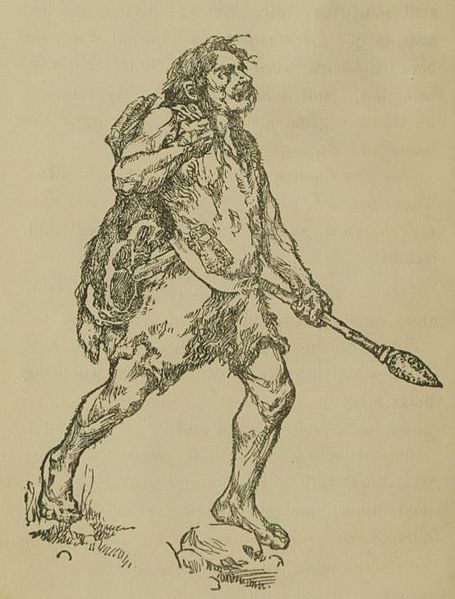
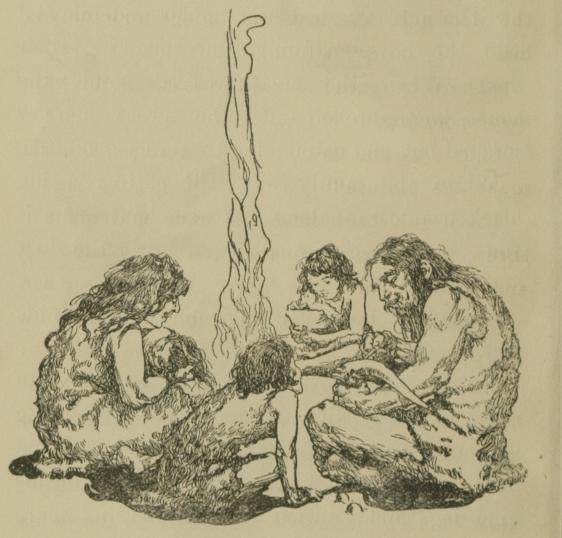
Paleo assumes early humans were mostly hunter, partly gatherer. Women (the gatherers) get little credit and macho hunting men become responsible for catapulting cavemen into civilization. Hunting without modern weapons is difficult and gathering was likely a big part of their diet.cavemen

If early humans were opportunistic hunter-gatherers, doing what they could to survive, they’d surely eat all parts of the animal. No one I know salivates over boar’s eyeballs or deer hearts (but maybe I just don’t know the right people).

The diet also assumes that eating this way was the best choice; it might have been the only choice. And was it healthy? They probably wouldn’t didn’t live long enough to develop heart disease anyway. Back then, life was brutal–and short.

Ignoring what we know

Research about our ancestors is revealing that they were mostly plant-eater, with a bit of opportunistic meat-eating (including cannibalism) thrown in. Leaves, fruit, wood and bark likely made up the biggest portion of their diets.

We also know that diets high in animal protein are unhealthy. And when we cut out carbs, we tend to add in fat. On the contrary, a whole-foods, plant-based diet can give us the most nutrients, antioxidants and fiber, while avoiding cholesterol and saturated fat.

Using diet as an excuse

CavemanAdopting a Paleo diet is a great way to say “I need bacon” and “this burger is the best thing for my body.” It gives people the green light to continue bad habits. I know a few people who eat Paleo, and none of them remember that coffee and alcohol is off-limits too. When it’s convenient, Paleo suits them fine, but the rules get broken.

Funny how people embrace the Paleo diet but also accept modern medicine, technology, and other luxuries. To be Paleo, shouldn’t we eschew antibiotics, anesthetics, dentistry, cars, computers, and central heating? Why is only the food of early humans valued, and not the rest of their simple lifestyles?

Flipping off the environment

I like that the Paleo diet steers people away from factory-farmed meats, but free-range, grass-fed meat is a luxury afforded to the affluent. Plus, we’d need an whole other planet for livestock if we wanted to raise all farmed animals in grassy plains.

Regardless of where animals are sourced, raising them requires vast amounts of water and fossil fuels. Not to mention the enormous piles of feces they produce. The meat industry is a bigger polluter than all transportation combined. Paleo, by encouraging people to increase their meat consumption, is contributing to the destruction of our planet.

Alternatives

From The China Study to PCRM, evidence points to whole-food, plant-based diets as superior to diets that include animal products. Animal-free diets are better for us (reducing risks of heart disease, stroke type 2 diabetes, many cancers, as well as obesity), they’re better for the environment, and they’re much better for animals.

Maybe it’s time to evolve.

Resources

Unknown's avatar

Unglamour shots: Posing with baby animals

What’s wrong with this picture?

cougar

Five points if you said my mullet! Ten if you said the lion cub in my lap.

As a teenager in the 80s, I thought nothing of this. I was in the mall with my brother, a makeshift studio was set up in a corner of an open area, and I got to pick which baby animal I wanted to pose with.

I never thought to question the obvious: Where is this cub’s mother? Why is he being carted around from mall to mall for photos instead of being in his natural environment? Is there a danger to humans? What will happen to him when he’s too big and unruly to be cuddly?

Sadly, animals like this are still being exploited in malls, fairs, and at roadside zoos. When these babies are too big, they end up at shoddy roadside zoos, in the pet trade, in canned hunts, or killed for their meat.

The best thing you can do is never pay for a picture with a wild animal. The Humane Society has a campaign against primates, tigers, lions, and bears being used in photo sessions. These sessions with the public fuel the exotic pet trade, puts animals at risk, and endangers the public.

Please sign it and learn from my mistake. Wild animals are not stuffed toys. Whether at home or abroad, vote with your dollars and say no to animal exploitation.

Unknown's avatar

Visiting Chimpanzee Sanctuary NW

Yesterday I had the privilege of being a guest at Chimpanzee Sanctuary Northwest. The sanctuary, 90 miles east of Seattle in the beautiful Cascade mountains, is home to seven former biomedical test subjects who now live out their days in peace and free from harm. It’s not a zoo (it’s set up for the chimps, not for visitors) and I was lucky to be able to stop by.

Young's Hill

I had a hard time imagining the sad existence these intelligent, curious creatures had to endure for a quarter century. They lived (if you can call it living) twenty-four hours a day in a steel cage like the one I’m standing next to. It’s almost the same as me living in solitary confinement in my bedroom closet.

size of cage

A cold metal cage with slats for waste to fall through was the only environment they had. They were warehoused indoors, away from sun and fresh air–all in the name of science. I’ve written before about why I don’t agree with animal testing, and these chimps are seven more reasons why I want it stopped.

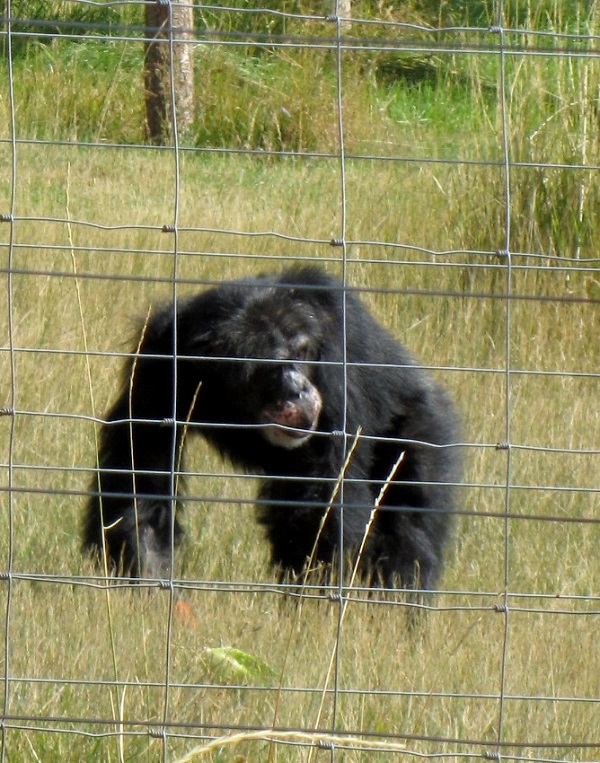
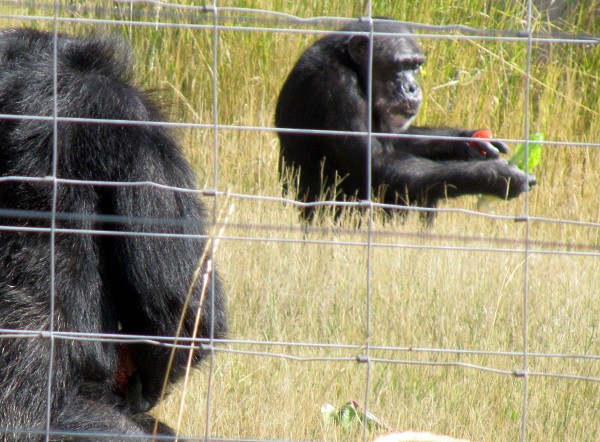
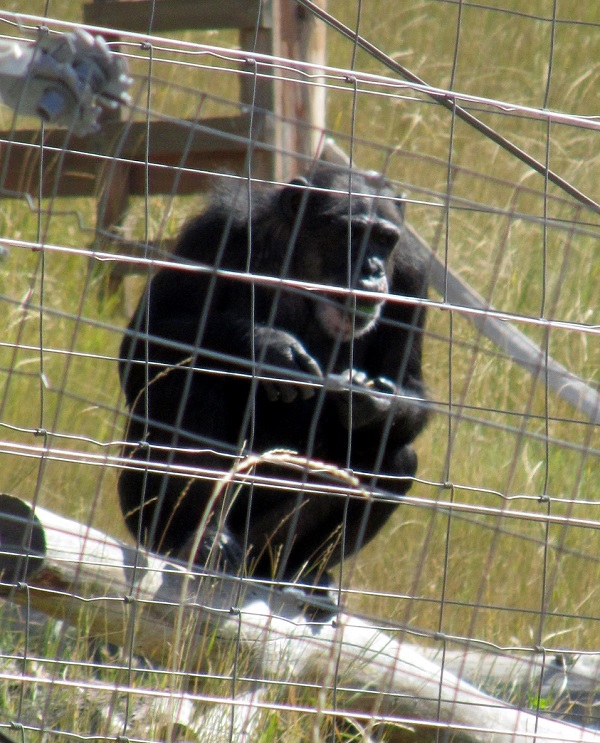
The sanctuary is home to Jamie, Annie, Jody, Foxy, Missy, Burrito, and Negra. I visited over the lunch hour and watched the chimps forage for a meal. Volunteers hide food over Young’s Hill, the chimps two-acre outdoor enclosure, so they have an experience closer to how wild chimps find food.

chimps on termite mound

The chimps enjoy lots of fresh fruit and veggies and they enjoyed the sunny fall day, as they wandered through the grass looking for treats. There’s even an artificial termite mound so the chimps can use tools to pull treats out of tubes in the structure.

lunch on the mound

Some of the chimps, like Negra, and possibly Jody and Annie, were born in the wild, and saw their families get slaughtered so people could take the babies–them–to be used as pets or research subjects.

looking for snacks

Others, like Jamie, Missy, Foxy and Burrito, were born in captivity. Burrito lived in a human home for his first four years, but was then rented out to an animal trainer and later sold to a research lab. He’s the very reason I do not support companies or movies that use primates in their commercials or films. The chimps they use are babies who have been stolen away from their families and will likely end up in research when they’re too old and unruly–or simply warehoused and left to suffer alone.

lunchtime

Jody, Annie, Foxy, Missy, and Negra were all used as breeders and had several babies each taken away from them to be used in experiments too. It’s heartbreaking to think about how they must have grieved over their losses.

hammock

When they’re not enjoying the great outdoors (and safely behind an electric fence), the chimps have a great indoor space to enjoy. They play with toys, color and paint, and make chimp nests out of blankets. They’re making up for lost time.

veggies for lunch

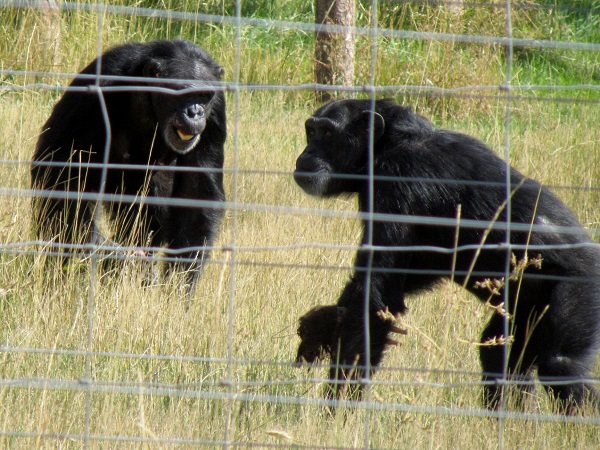
This group of chimps came from the same lab and knew each other in their previous lives. They’re seniors now and deserve to live life at whatever pace they choose. Sometimes that means running around full of energy; other times, it’s relaxing in front of the window and watching the world go by,

social time

The chimps have been deprived their whole lives and are at the Sanctuary to heal and become whole again. They’re still very much wild animals so they’s no direct contact with them. They’re finally free to choose how and where to spend their time, and that’s a valuable thing,

chimp on logs

Over 900 chimpanzees are still in research labs around the USA–down from 3000 at the height of primate research. Only the USA and Gabon still test on chimps. You can help wild and captive chimps by joining Eyes on Apes and participating in action alerts to stop testing, poaching, and using chimps in entertainment.

lab cage

May all chimps one day see blue skies, not barren steel.

Unknown's avatar

Visiting Vaute Couture

One of the highlights of my New York trip was visiting Vaute Couture, a vegan-owned, compassionate clothier in the Williamsburg neighborhood of Brooklyn.

Fellow blogger Jesse Anne O lives in Brooklyn, and although it was a hike from her neck of the woods, she met my mom, dad and I at Food Swings, near Vaute. My mom is a blogger too, so it was great for the three of us to compare notes while my dad, patient as always, enjoyed his coffee.

We loved the vegan fast food at Food Swings. It’s a great diner-style establishment with a terrific brunch menu. We chose from sandwiches, burritos and scrambles. They use Daiya vegan cheese in their recipes too. Yum!

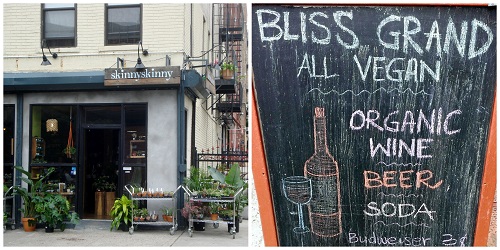
Walking from Food Swings to Vaute Couture, we passed Skinny Skinny, an organic, sustainable bath and body store, and Bliss, a vegetarian restaurant down the street. It’s a veg-friendly ‘hood!

brooklyn collage

Seeing Vaute’s flagship store was a thrill! I’ve been a fan for a while and I finally got to be a customer. Owner Leanne Mai-ly Hilgart is a passionate animal advocate and she’s put her heart and soul into creating sustainable, eco-friendly, made-in-New-York clothes that are free of animal products and oh-so stylish. I didn’t buy my wool-free coat this particular day, but I did jump online a week later for the Fall 2013 presale.

I got a Friends not Fashion tank top and a Vaute necklace. Jesse picked up a dress she had preordered. And of course we had to do the obligatory “blogger pose” on our way out. Sure was nice to have our own personal photographer on hand!

three bloggers

Next door to Vaute Couture is Eco Closet, another sustainable shop. I found a gray and black tunic there. and I’ll be blogging about that on my style blog soon.

The four of us enjoyed walking through Williamsburg. We ended up at a flea market, but that’s a story for another day.

walking through Williamsburg

Unknown's avatar

What’s wrong with dairy?

“I could never live without cheese.”

That’s what a lot of people tell me when they find out I’m vegan. I used to feel the same way. Today, cheese has a different connotation for me and I not only don’t miss it, I loathe it.

For 18 years I was a vegetarian. If people asked me if I ate cheese and drank milk I answered, “yes, because the cows don’t get killed.” I was ignorant and completely clueless to reality. I wish someone had told me the truth.

I don’t eat dairy now because cows DO suffer and die and also because it’s disgusting and unhealthy. Here’s what the dairy industry doesn’t want you to know:

Cows need to be pregnant before they lactate

Just like a human female, cows don’t “give milk” until after they have a baby. And the dairy corporation can’t have all those babies drinking their profits. That milk is for people! In order to keep milk in production, cows are kept pregnant.

Norman was rescued from the veal industry and lives at Farm Sanctuary

Norman was rescued from the veal industry and lives at Farm Sanctuary

Calves are stolen away from their mothers

Cows don’t give us their milk. We take it away from them. Just like we take away their babies. Normally a calf nurses for up to a year, but usually within a day, calves are either killed or auctioned off for veal (if they’re “useless” males), or separated into pens where they can grow up into milk producers to replace their mothers.

Dairy cows are sold for meat

After four or so years of constantly being pregnant and lactating, a cow’s milk production goes down. She isn’t profitable anymore. She is “spent.” Dairy cows are auctioned off and turned into cheap, ground beef. They’re normal lifespans are closer to 20 years.

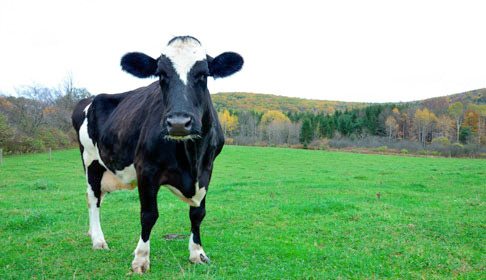
dairy cow

Fanny, a “spent” milker, was rescued by Farm Sanctuary too

Milk doesn’t do a body good

Milk will turn a small calf into a 1000-pound cow. It does the job well, but I don’t want to grow that big. I don’t want to drink hormones and antibiotics. I don’t want to fuel disease. Milk has too much protein, and we excrete the excess–along with calcium from our bones! It taxes our kidneys, and increases our risk of osteoporosis, diabetes, cancer, heart attack and stroke. I get calcium just like cows do: from dark leafy greens. Milk doesn’t have fiber, but it is full of cholesterol and fat. Who needs it (well, besides cows)?

It doesn’t matter if milk comes from a small, organic dairy farm or a large corporation. These things remain constant:

  • Cows are kept constantly pregnant;
  • Calves are taken from their mothers, killed, sold for veal, or raised to be milkers;
  • “Spent” dairy cows end up as hamburgers.

I wouldn’t drink milk from a dog or a monkey so why drink milk from a cow? After infancy, no other animal even drinks milk at all–not even from their own species!

So next time you think about life without dairy, think about the animals who suffer for our taste buds.

Alternatives

With a plethora of dairy-free alternatives, you won’t miss milk. We have choices like dark chocolate, coconut yogurt, hemp, oat, soy, almond and rice milk, non-dairy creamer, sorbet and soy or coconut ice cream, and delicious vegan cheeses from companies like Daiya and Tofutti.

Daiya

Dump dairy and ditch cruelty!

Unknown's avatar

Vegan treats in Chelsea

I visited New York City with my parents a few weeks ago. We had a blast! Between walking the neighborhoods, eating in amazing vegan restaurants, and exercising our wallets, we made full advantage of the city that never sleeps.

Chelsea was no exception. In fact, we found it to be very vegan friendly.

We spent one morning in the Chelsea Market, a multi-story building that used to be occupied by the National Biscuit Company (Nabisco) commercial bakery. When production methods changes required a single-floor layout, the bakery moved out. It’s here, where the Oreo (an accidentally vegan treat) was first created.

Chelsea Market

Inside the market, we found One Lucky Duck. They offer all-vegan, raw organic juices and take-away, and happen to have amazing desserts. It’s part of the Pure Food and Wine establishment so you know you’re going to be wowed.

lemon bar

Next door, Beyond Sushi truly satisfied. This all plant-based sushi establishment incorporated flavor, color and presentation like no other sushi place I’ve seen. Their rolls were scrumptious and fueled us as well.

vegan sushi

I was thrilled to stumble into a popup shop in the market, where several vendors had set up their wares. One of them was designer Lois Eastlund.

Lois Eastlund

While I was trying on a dress, my mom and Lois struck up a conversation and they discovered they’re both vegan! Lois even shared some of her home-baked vegan cookies with us! (And yes, I bought that amazing blue and black zigzag dress.)

Lois and Jean

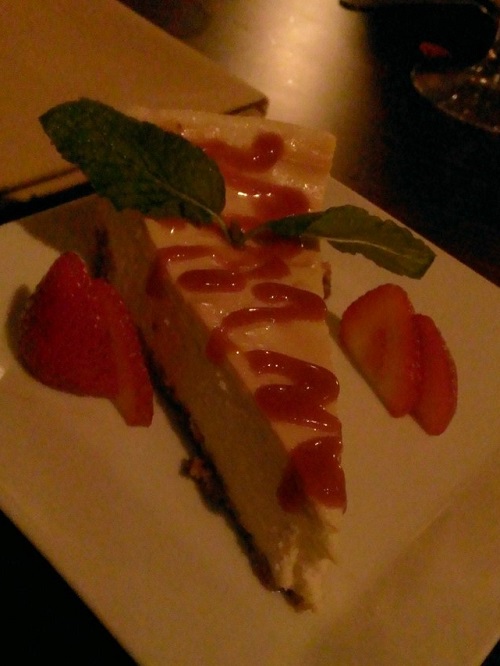
There’s more to Chelsea than just the market. One evening we met my friend Shannon, a recent New York transplant, at Blossom vegan restaurant. We ate delicious food and even had authentic (and dairy-free) New York Cheesecake!

vegan cheesecake

Another Chelsea gem is the popular High Line, an elevated former rail line that was transformed into a greenway. The rail line used to bring animals into the city for slaughter. I prefer its use as a park!

Mom and Jean on the High Line

New York is such a fun place. Have you ever been to Chelsea?

Unknown's avatar

Gearing up for Farm Sanctuary’s Walk for Farm Animals

In less than two weeks, September 21st to be exact, the 2013 Walk for Farm Animals comes to Seattle. The event is organized by Farm Sanctuary, the largest farm animal shelter in North America. Farm sanctuary’s mission is to protect farm animals from cruelty, inspire change in the way society views and treats farm animals, and promote compassionate vegan living.

Walk for Farm Animals T

That’s why I’ve joined the event and have started raising funds for the cause. The purpose of my blog isn’t to solicit money, but if you’re interested in donating to a great cause, I’d love that! Of course if you’re in the area (or in a participating city), you’ll probably have fun joining the event and raising your own pledges.

I’m walking for Mesa, a friendly hen who escaped the brutal world of cock-fighting; for Winston, a scared piglet who escaped a live market in New York City; for Mark, a lamb who was sick and headed to slaughter; and for Michael, a dairy calf who was on his way to becoming veal.

There are many other stories like the ones above, and that’s why I support Farm Sanctuary  (I even have a Farm Sanctuary credit card, so a small portion of my purchases can help animals).

Won’t you walk with me?

Unknown's avatar

Japan Dolphin Day

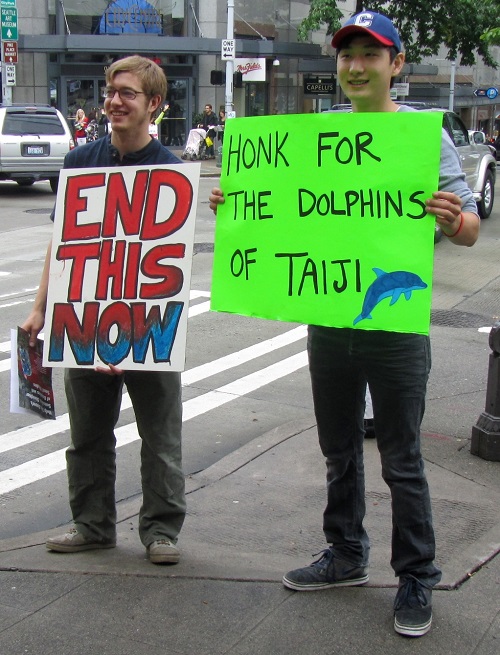
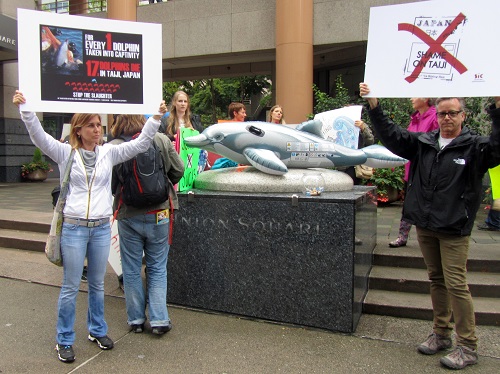
Today is Japan Dolphin Day and more than 16,000 people are joining 117 events all over the world to raise awareness of the annual dolphin hunting season that started on September 1st in Taiji, Japan.

dolphin sign

Every year, thousands of dolphins are captured and slaughtered in Taiji, by a small group of fishermen. For too long, this information was kept from the Japanese public and the rest of the world. The Oscar-winning documentary, The Cove, brought the horrors to light a few years ago.

dolphin demo

We marched from Westlake Plaza, an outdoor square in downtown Seattle, to the Japanese Consulate a few blocks away. At the consulate, we held signs for passers-by and handed out literature to raise awareness of the issue. Some people knew, others were shocked by what they learned.

dolphin slaughter protest

Dolphin meat isn’t a profitable venture, but the fishermen in Taiji can make a killing by selling live dolphins to marine parks around the world. For every performing dolphin, 17 of his friends and family are killed. Incredibly, dolphin trainers are in the boats with fishermen, picking the best candidates for marine parks. The rest are slaughtered.

protesters at Japan Dolphin Day

Dolphin meat, isn’t healthy or safe (it’s loaded with mercury and PCBs) but it’s distributed to children in the school lunch program anyway.

Japanese Consulate

The Japanese public hadn’t been aware of these atrocities until recently. Now that they know, they’re starting to do something. Brave activists from Japan and other countries are in Taiji now, protesting the slaughter. It’s especially significant that concerned Japanese are joining the efforts. Their culture doesn’t encourage speaking one’s mind, protesting in the streets, and questioning the government. But they are, and I applaud them.

Jean and Claudine

Back in Seattle, far from Taiji, we showed our support for the activists in Japan and let the Japanese government know that we do not condone this abuse of our friends of the sea.

Resources

dolphin collage

Unknown's avatar

Making a vegan Egg McMuffin

Da da da da da… I’m lovin’ it!

I haven’t eaten at McDonald’s for eons, but I admit I used to have a weakness for their egg McMuffin. Even after I went vegetarian, I’d order one now and then (and remove the slice of ham).

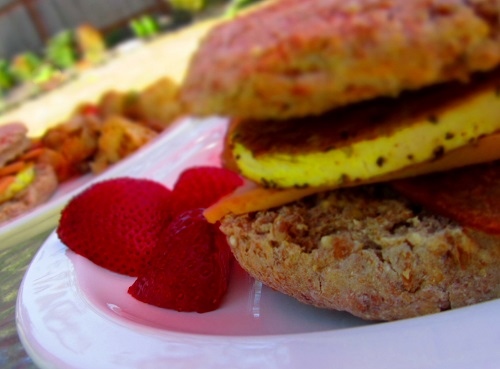
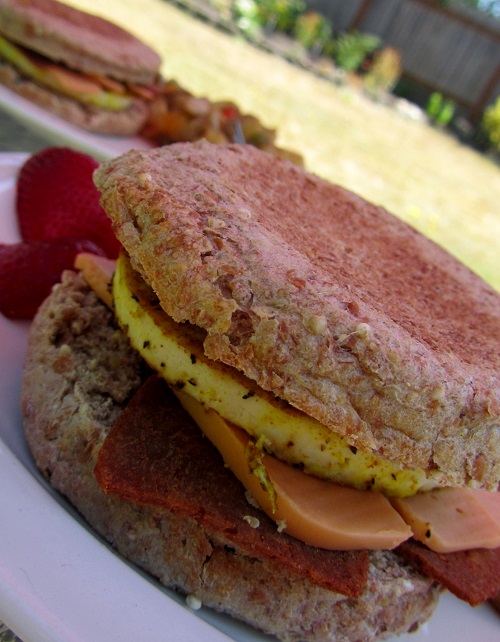
They might be yummy, but all that ham, cheese and egg is neither cruelty-free nor healthy. So after a bit of Internet research (most of the credit goes to Vegangela), I embarked on a vegan version and look how it turned out:

McMuffin

It was delicious and easy to make. Here’s how I did it.

Ingredients:

  • Whole grain English muffins
  • 1 block of extra firm tofu
  • Tumeric
  • Black pepper
  • Black salt (also called Kala Namak)
  • Daiya vegan cheese
  • Upton Naturals seitan bacon

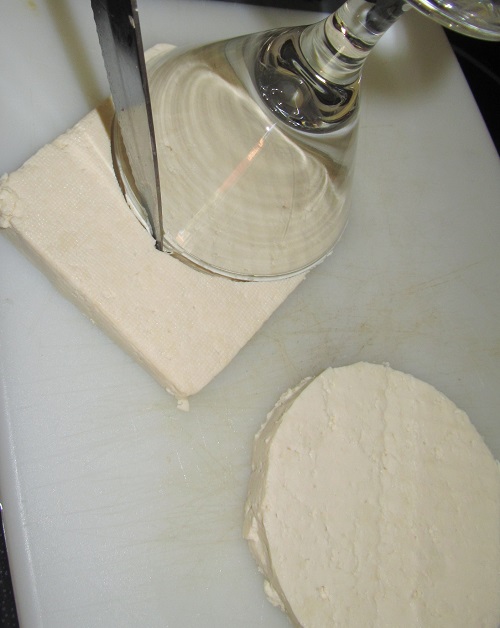
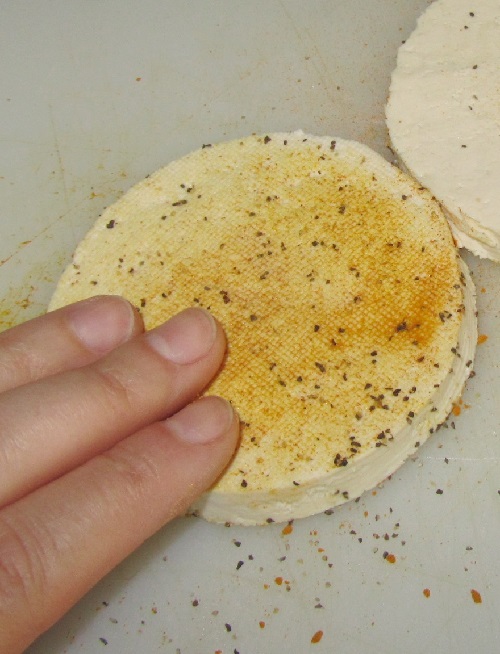
First, drain the tofu and cut it into slices, about half an inch thick. Use a glass and a knife to cut the slices into a circle (I used the leftovers in a stir fry).

tofu circles

Mix together a bit of turmeric, black salt, and black pepper (I didn’t measure, but you won’t need much–a pinch of each for color and flavor). The black salt has a slightly sulpheric smell, and gives food an eggy flavor. You can find it in Indian grocery stores or online. Rub the mixture on both sides of the tofu.

spicing up the egg

Fry up the “eggs” until warmed.

eggs

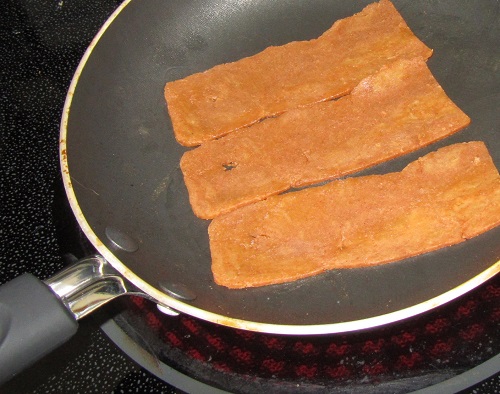
Fry up the “bacon” while you toast the muffins. Upton’s makes fantastic seitan bacon–my favorite–but you can use another brand of veggie bacon if you can’t find Upton’s. Or Canadian veggie bacon if you’d like to be more authentic.

Upton's bacon

Slice up the Daiya and assemble the delicious goodness that is the vegan McMuffin.

Daiya

I served mine with a side of home fries and fresh strawberries for a meal even a non-vegan would love!

the final product