Unknown's avatar

Brunch at The Highline

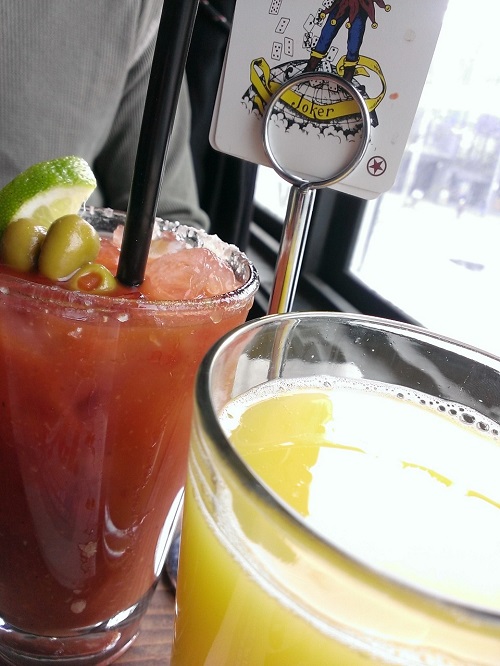
The Highline is a kickass vegan bar with a punk rock vibe in Seattle’s Capitol Hill neighborhood. From house-infused liquor, delicious vegan comfort food, trivia, live bands, and cakearoke, what’s not to love?bloody mary and mimosa

I started going to The Highline when it first opened a couple of years ago. The Crazy Train sandwich soon became my favorite, but my friends were addicted to the pickle chips.

I recently dropped by with my husband for brunch. I love an all-vegan establishment. I don’t have to ask if there’s dairy in the dressing and I know all the drinks are vegan. White Russian with soy creamer, anyone?

I started with a mimosa and the Mister had a bloody Mary. Then we got our food.

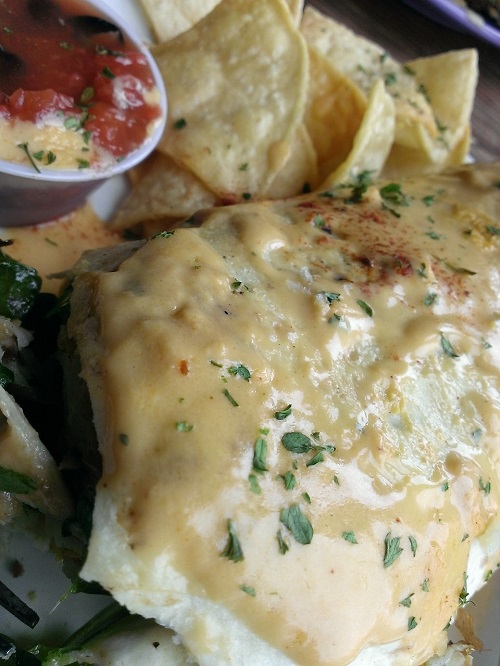
My breakfast burrito was an entire rolled-up breakfast. It’s seasoned tofu with green chilies, onions, garlic, home fries, spinach and “cheese” all wrapped in a giant tortilla and served with chips and salsa.

tofu burrito

My better half had the Free Bird, a house-made seitan chicken-fried steak covered in gravy. He had his with homefries and tofu scramble.

free bird

Best of all, I got to hear The Ramones. Any Sunday that starts with delicious vegan food, a light bevvie, and I wanna be Sedated playing on the sound system is bound to be a good day.

If you’re in the area, check out The Highline. You might see me there!

Unknown's avatar

World Week for Animals in Labs

We’re midway through World Week for Animals in Labs (WWAIL) so I thought I’d put together a little post about a few things that are going on.

wwail dog by MaréWWAIL is a week when activists join forces to be a loud voice for the voiceless. There are millions of animals languishing in laboratories all over the world: rats, mice, cats, dogs, rabbits, primates, and others. Anytime is a good time for activism, but this week is a time when we can stand up together and say “no more.”

It’s a good time to remember to donate only to charities that don’t test on animals and buy household cleaners and cosmetics from companies that don’t test on animals either.

Victories

Just today, Harvard Medical School issued a statement announcing that the New England Primate Research Center will be closing within 24 months! The center has been embroiled in controversy following the negligent deaths of at least four primates. The facility is currently under investigation by the USDA and faces a potentially major federal fine for multiple violations of the Animal Welfare Act. This news couldn’t come soon enough! The animals deserve a chance to live out the rest of their lives at sanctuaries. Read the details at the Stop Animal Exploitation Now (SAEN) website.

Last month the entire European Union–that’s 27 countries and half a billion people–banned the sale of new cosmetic products containing ingredients tested on animals. The ban goes into effect immediately, and will prevent testing on countless animals. Real progress comes from non-animal research such as genomic tests, human cell cultures, medical imaging and clinical trials. Read more about why animal testing is a bad idea.

Action

Look for WWAIL events in your area and join the growing number of people who say no to cruelty.

If you’re in the Seattle area, you can join the Northwest Animal Rights Network (NARN) at a demo this Saturday, April 27th from noon to 2 pm in front of the University of Washington Primate Experimentation facility at 3000 Western Avenue in Seattle, WA.

Hidden inside this dark, unmarked building, 700 primates live and die in the name of research. They are subjected to painful surgeries and traumatic procedures until their usefulness is over. The building is the main facility for the UW National Primate Research Center, the largest of eight across the country.

NARN wants to educate passers-by about what goes on behind the walls of the “blue building” and hold researchers accountable. They need to know that what they are doing to animals is not going unnoticed and that it will be challenged until it stops.

Unknown's avatar

What’s wrong with leather?

I recently wrote about vegan shoes and vegan purses. Some people might ask, “What’s wrong with leather?” Up until recently, I was one of those people. So let me share with you what I’ve learned:

Leather is not a byproduct of the meat industry. It’s a co-product. When I was a vegetarian I wore leather shoes, jackets, belts and bags. I thought leather was a byproduct that would be wasted if no one turned it into things I could wear.

Then I learned that the profit margins on meat are relatively small and that leather brings in a lot of money. Half the value of the animal! So by buying leather, I was supporting the meat industry.

That’s when I switched to buying only second-hand leather. But I’ve stopped that too. I’m grossed out now at the idea of wearing someone else’s skin. It’s a little too Hannibal for me. I also realize that I’m promoting leather when I wear it. Others might not know I bought that jacket used and go out and buy a brand new one.

I still have a few pair of leather shoes and I’m in the process of selling them. With the money I made selling my other leather shoes and jackets I bought a few awesome pair of leather-free shoes. My favorite so far are the Novacas booties. They’re an all vegan company that focuses on workers’ conditions, ethically sources materials, and environmentally friendly business practices.

novacas

Faux suede booties by Novacas

Which brings me to the other problem with leather: It’s not green.

The reason leather shoes don’t rot away like roadkill is because of chemicals. Leather is tanned with an acidic chemical compound that preserves it. Leather is soaked in biocides and fungicides to prevent mold, and it’s treated with nasty concoctions like sodium sulfide to remove the hair. Even chemicals like arsenic and formaldehyde are used.

pile of leather

Stack of tanned leather

In places where leather production is prevalent (such as India and China), water and air pollution is high. Workers (and nearby residents) also face high instances of cancer from all the chemicals.

Finally, not all leather is a co-product. Kangaroos in the outback are shot for their skin. Exotic animals are turned into leather goods too–and they’re terribly mistreated in the process. Snakes are often nailed to trees and skinned alive. Lizards are clubbed to death, and alligators are crowded in filthy pens on farms killed when they are big enough to be marketable.

Fortunately, there are lots of cruelty-free leather alternatives out there. Sure, some are made from petrochemicals, but I doubt they’re worse than the environmental impact of leather. Some are made with good environmental practices in mind and use green (and even recycled) materials. My resources page is a good place to start looking.

Unknown's avatar

Leather-free purses and bags

When going vegan, leaving hamburgers off the menu might not be difficult but if the thought of finding leather-free bags sounds daunting, I’m here to help. It’s actually fun and simple to find leather-free purses and totes.

Here are some examples that I’ve picked up over the years.

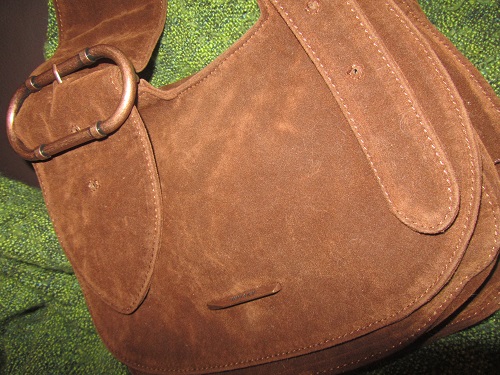
Matt & Nat is an all-vegan line that has really stylish laptop bags, messenger bags, purses, and wallets. There’s something for everyone–men and women. So far, I have only one piece from Matt & Nat: a faux-suede cross-body bag made using recycled plastic bottles.

Matt & Nat

Shiraleah also sells cute, affordable vegan bags. I have a couple of their crossbody bags. Hands-free and cruelty-free! Like Matt & Natt, this company is ethical and green.

Shiraleah

Sometimes the fact that a purse is vegan is obvious. Cute fabric purses are all over the stores. And in spring, you’ll find straw and canvas totes everywhere. Have a look on Etsy for unique, handmade bags like these three that were given to me.

fabric bags

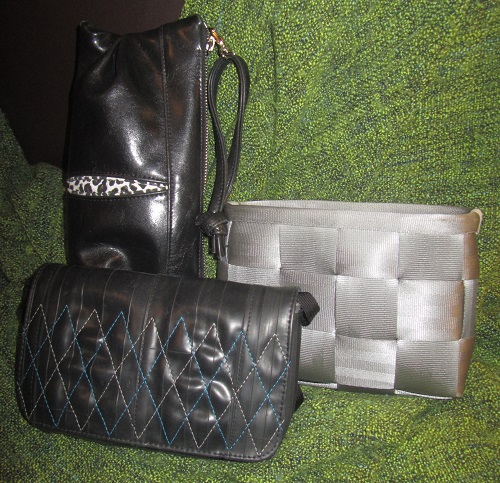
Here are three more small bags. In the top left, you’ll see a clutch by Crystalyn Kae. She has an amazing line of vegan purses. They’re glazed fabric, look like leather, and are really durable. My Alchemy Goods purse (in the lower left) is made of old bicycle inner tubes. They’re a Seattle company that makes wallets, laptop sleeves and purses. Seatbelt Bags weaves bags from seatbelt fabric. They’re also made in the USA.

three hand-made bags

I have a range of clutches in faux leather. Three of these are label-less, but the orange one is Shiraleah.

three hand-made bags

I’ve bought a few Nine West purses over the years–all thrifted, and all non-leather. They’re not a vegan company but there’s a good selection if you look.

nine west

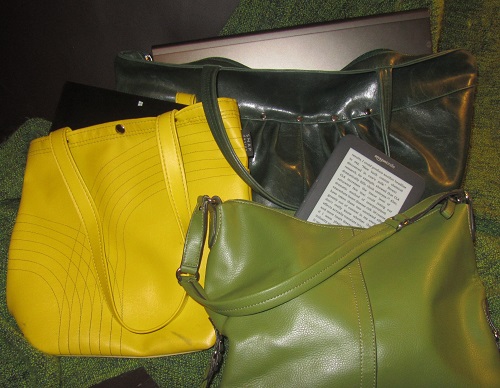
When I carry my electronic devices, I need a bag that fits them. The large, Crystalyn Kae tote fits my huge laptop. I put my Surface in a smaller tote like this one by Snap Designs. My Kindle will fit in almost any bag, but I like this one from JC Penney.

bags for my electronics

I’ve even found some fun, specialty purses. These are from a few places. The Valentino-inspired flower purse is from a street fair in Florida, the alligator embossed bag is from Target, and the clear PVC bag is from Forever 21.

fancy bags

From Payless to Stella McCartney, there are vegan bags at every price point. I want to get my hands on a Gunas. They’re an all-vegan line and have unique, trendy bags. Do you have a favorite vegan bag?

Unknown's avatar

Burger and fries the healthy way

Sometimes I just crave simple, tried and true favorites. Like a burger and fries. I haven’t had a hamburger in 30 years, but with so many vegan patties on the market (not to mention the ones you can make from scratch), what’s to miss (besides cholesterol, fat, and cruelty)?

I made this quick meal using prepackaged ingredients. (I’ve never professed to be a chef!) But this is proof that you can have delicious, healthy premade meals in a snap.

masala burger

I baked up a batch of sweet potato fries from Trader Joe’s. I love the color they add to the plate. And the flavor is unique too. Sweet potatoes are a good source of vitamins B6, C, D, as well as iron and magnesium.

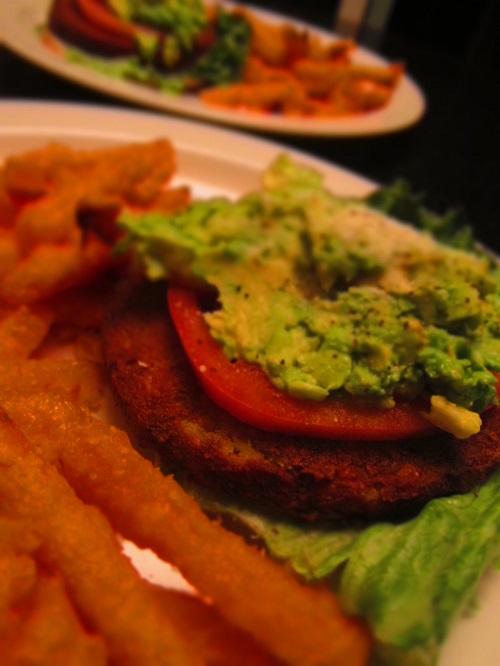
Then I made masala burgers, also from Trader Joe’s. These don’t look like fake meat. They’re full of veggies and have a nice spicy taste. I added lettuce, tomato and avocado, and sprinkled on vegan parmesan and a bit of black pepper.

The whole thing took 10 minutes–perfect for a quick, healthy meal at the end of a busy week.

I joined up with Veggie Nook for Healthy Vegan Fridays. Have a look at all the other delicious meal ideas!

Unknown's avatar

Is there such a thing as humane slaughter?

Humane (adj.) – Marked by compassion, sympathy, or consideration for humans or animals.

Slaughter (verb) – To kill animals for food (butcher); To kill in a bloody or violent manner;  To kill in large numbers.

The words humane slaughter seem oxymoronic to me. One can either be compassionate and considerate, or one can kill animals violently and in large numbers.

painting of pigs

I recently read an article in OnEarth.org about Russ Kremer, a man they call the Pope of Pork. He’s being held in such high regard for the wonderful ways he treats his pigs–before he kills them. I realize that there are people who treat animals much worse than he does, but I have a few problems with his approach:

As a boy Kremer worked on his dad’s farm and helped nurse pigs back to health. There’s no victory in saving an animal only to send it to slaughter later. The only gain is financial.

As an adult, Kremer operated his own factory farm, where pigs were warehoused in dark, confined buildings. They were sick, pumped full of antibiotics, and lived above their own waste run-off.  Kremer eventually sold all the pigs he owned, but not until after he got injured by a boar and contracted a nasty virus. The virus was the same antibiotic-resistant version that his pigs had. It wasn’t the pigs’ welfare or the meat-eating population that got Kremer to quit. It was his own brush with death and his own sense of self-preservation.

He didn’t quit farming though. He started raising free-range, organic pigs. The new model nets him $50 more per pig. Again, money is at the root of his choices, not the humane treatment of animals.

I dislike the “new” way of farming because it lulls people into thinking they’re doing the right thing. The “new” method is really just going back to the old, pre-factory farm way. That makes it marginally better than a factory farm, but it still involves extensive use of land, feed, and water. Free-range pigs still produce the same amount of waste that their crated cousins expel. They all still get slaughtered. And when they become sausage, their flesh will clog your arteries just the same.

Neither free range or factory farm is an option from a pig’s point of view. It’s like moving from a prison cell to a mansion. The mansion sounds better but if you’re going to be executed in a few months, what difference do your living conditions make? I bet your biggest concern would be avoiding death.

Throughout the article, Kremer’s pigs are compared to dogs. They’re described as “piglets the size of obese beagles,” and “puppy-like.” But if you talked about how your dog was “bred for well-marbled, tasty meat” people would have you committed! And if indeed you did slaughter your dogs, you’d be arrested. Kremer seems well-meaning, but he’s a businessman. He’s marketing faux-compassion–and it sells. There’s a complete disconnect between the way he “lovingly” raises his animals and the fact that he kills them for money. It’s not euthanasia. He’s not alleviating the suffering of a dying animal, he’s killing healthy animals in the prime of their lives.

Kremer’s business model assumes animals are property, that they don’t have the right to live, and that they are meant for our consumption. No slaughter is good slaughter. Animals deserve to live their own lives; they are not ours to profit from or consume. We don’t need meat to be healthy. Pigs don’t need to die in vain. The only humane choice is to be vegan.

Unknown's avatar

Is animal testing ever justified?

Every year millions of animals are subjected to cruel experiments in the name of cosmetics, medicine and even transportation. They are poisoned, burned, gassed, shocked, overdosed, crushed, blinded, operated on, and deprived any semblance of a quality life. Not only is this cruel, it’s unnecessary. It’s outdated, it’s wasteful, and it’s downright dangerous to humans.

bunnyIf animals are so different from us (different enough for us to justify experimenting on them), it also means they’re too different to gather relevant, conclusive evidence that would apply to us. If they’re similar enough that the experiments would actually be useful and relevant, then they’re just like us and it’s unethical to test on them.

The cost of experimenting on animals is high and the benefits are minimal. Non-animal testing is usually cheaper and more accurate than animal tests, which can be unreliable. Animal tests are misleading because they’re not good at showing how humans will respond.

With animal testing, illness is induced, and then a cure is sought. That’s an unrealistic and unnatural environment and doesn’t translate well to humans. According to the AAVS, nine out of ten drugs that appear promising in animal studies go on to fail in human clinical trials.

For example, the polio vaccine was delayed by decades because of animal testing. Monkeys respond differently to the virus. Penicillin almost didn’t see the light of day because it was ineffective on rabbits (and killed guinea pigs). It wasn’t until Alexander Fleming gave it to a dying patient (as a last-ditch effort) and she recovered that it was proven acceptable for human use.

Thalidomide, a drug used in the 1950s to treat morning sickness, was proven harmless in dogs, cats, rabbits, monkeys, and rats, and was cleared for human use. It wasn’t until over 10,000 children were born with severe birth defects that it was pulled from the market. Animal tests didn’t warn us.

More recently, Vioxx, a painkiller for people with arthritis, was taken off the market after it caused up to 320,000 heart attacks and strokes. The drug was tested on animals but those tests never revealed the danger to people.

So if people have felt animal testing is unethical, why has it continued? Animal testing is big business and gets a lot of grant money. Careers depend on it. It’s also based on old laws and older science–both of which are outdated. You can learn more about this “bad science” by watching a video featuring animal testing opponent Dr. Andre Menache.

Just because some progress seems to have been made via animal testing doesn’t mean that the results wouldn’t have been found out without animals. If I take a flight from New York to Los Angeles with a stopover in San Francisco, it doesn’t mean you can’t get there with a stopover in Atlanta. Or maybe just fly non-stop. There are many ways to reach the same result.

We have the technology to use alternatives to animal tests–and there are many! We have mathematic and computer models, genomic tests, human cell cultures, medical imaging, and crash test dummies. Working on human cadavers to train for surgery is more beneficial than practicing on live animals.

We don’t need animal testing. So vote with your dollars: Don’t support companies that test on animals. Here’s a downloadable list of companies that test and don’t test from vegankit.com, as well as a searchable online list from PETA. Before you support a charity, make sure they don’t test by checking out this list from GEARI.

References:

Unknown's avatar

Born to be vegan

At three years old, I first questioned the ethics of eating animals (in a way that a three-year-old can). By ten I went vegetarian.

For the next 15 years, I was happy about my choice and didn’t see the need to do anything else. It doesn’t hurt hens and cows to eat their eggs and milk (or so I thought), and leather is just a byproduct of the meat industry, so why not wear it?

I’d met a couple of vegans, but I thought they were extreme. I remember going on a picnic with friends, one of whom had a vegan girlfriend. I made a salad and put cheese on the side so she could eat the salad and others could add cheese later. How thoughtful of me!

the future is vegan

I’m happy she didn’t judge. She did, however, recommend a book that changed my life: Diet for a New America, by John Robbins. Robbins was next in line to run the Baskin-Robbins empire and walked away from it all to promote a plant-based diet.

He wasn’t the son of a cattle rancher. It was just ice cream! And I didn’t think cows minded if we used the milk they “gave” us. So I dove into the book to see what all the fuss was about. I didn’t expect to change my lifestyle.

The book opened my eyes to the horrors of factory farming, the cruelty chickens and dairy cows endure to produce eggs and milk. Then there was the environmental impact of eating meat, and the heath aspects of veganism.

I switched to soy milk that day, and dropped eggs from my diet. Cheese was harder to give up, and I indulged occasionally. I still wore leather and hung on to my “byproduct” story.

But when I moved to the US a couple of years later, I wiped the slate clean and started fresh–as a full-fledged vegan. Partly because it was a natural turning point and a chance to redefine myself. But I also chose the move as a time to switch because I’d been reading up on rBGH (bovine growth hormone). Canada hadn’t approved it but it was given to dairy cows in the States. So cheese was off the plate.

I also realized that leather is a big part of the meat industry. A big, money-making part. So I started shopping for leather-free shoes. Turns out, there’s no shortage of options! Until recently, I still bought leather shoes at thrift stores, but I’ve stopped that too.

sandwich

Being vegan is about knowing the truth, being aware, and making a difference. Every time I shop, I vote with my dollars. It truly is a journey. And it’s a joyful one! I absolutely love being vegan. It’s been 13 years now and I’ll never go back. I’m healthy and happy and I still smile every time I eat a delicious, colorful vegan meal.

It’s a peaceful, guilt-free way to live. I’ve never felt restricted. If anything, it’s a fun challenge. Good chefs will make special meals, no matter where I travel, I can find a bite to eat, and my kitchen is a fun place to be. I don’t buy fur, leather, wool, feather (including down) or silk, but I don’t miss a thing. For every one thing I’ve given up, I’ve found three amazing alternatives.

I’ve also connected with a lot of vegans (on Facebook, at work, and through groups like NARN). For people who know the cruel realities of the world, they’re an upbeat bunch. Smart, funny, and fun to be around–and they’re all making a difference in the world.

To quote the slogan on my new tote bag, The future is vegan! Care to join me?

Unknown's avatar

Leather-free shoes

For some people, giving up cheese keeps them from going vegan. For others a plant-based diet is a no-brainer, but shoes? You love shoes, right? You might be thinking, “I can’t give up animal products if it means switching to hemp Birkenstocks.” Well you don’t have to! There are tons of stylish vegan shoes out there if you know where to look.

vegan shoes

Proof that cute vegan shoes exist!

Accidentally vegan shoes

This first category of footwear is comprised of shoes that just so happen to be vegan. I doubt the manufacturers had anything other than looks and costs in mind. Often cheaper shoes are vegan. Stores like Payless sell a lot of faux leather and faux suede shoes. Summer shoes in canvas, raffia, and other materials qualify too. They’re not always high quality though. Some are. I’ve had “manmade” boots for several seasons that are stylish, comfortable, and don’t make my feet sweat.

Have a look at zappos.comamazon.com, or DSW. You’ll find vegan shoes from lots of brands like Wanted, MIA, Volatile, and Madden Girl. Aerosoles has a mix of materials. If you look at the product description (or tag, if you’re in the store) you’ll find non-leather options. Here are a few of my “accidentally vegan” shoes and boots.

Velvet and sparkles

Poetic License velvet and sparkle booties (from amazon.com)

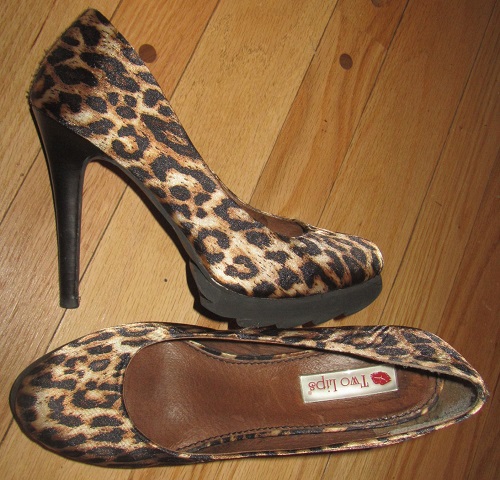
Satin leopard platforms

Satin leopard platforms by Two Lips (from DSW)

faux nubuck

Fioni faux nubuck peep-toe pumps (from Payless)

Kimchi Blue

Kimchi Blue velvet desert boots (thrifted)

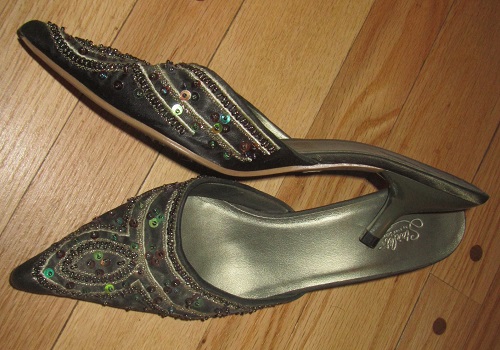
Starlet by Payless

Satin and sequined kitten-heel mules (from Payless)

Guess boots

Guess faux leather boots (from T.J. Maxx)

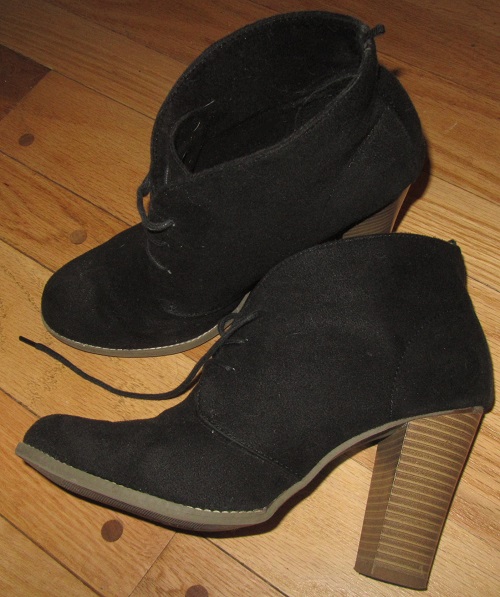
faux suede booties

Faux suede stack-heel booties (from Old Navy)

silver boots

Dirty Laundry faux leather engineer boots (from amazon.com)

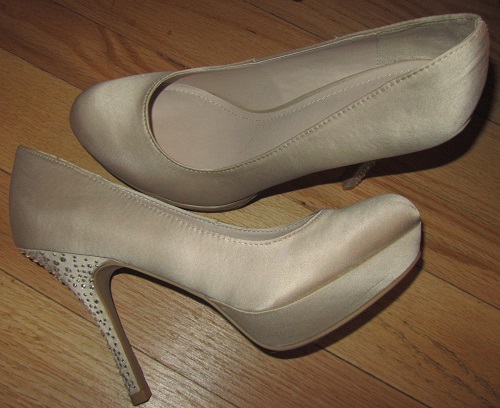
satin and stones

Satin and rhinestone pumps (from JC Penney)

Intentionally vegan shoes

This category is made up of vegan companies who have worker conditions, environmental impact, animal rights, and of course style, in mind. The shoes will cost as much as leather versions but the quality is high, the materials are stellar, and you’re supporting a vegan business. I’ve only just started to splurge on quality vegan shoes so I can show you only a few. After the images, have a look at the list of vegan shoe companies. There’s no shortage!

novacas

Faux suede booties by Novacas

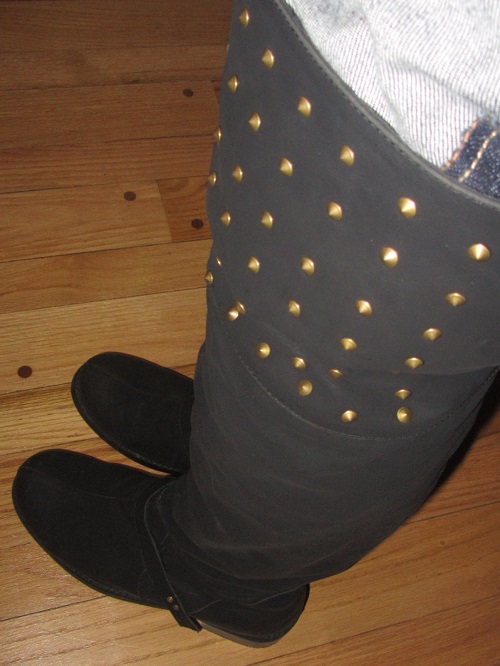
Cri De Coeur

Faux suede OTK boots by Cri De Coeur

Some of the vegan shoe companies out there:

Additionally, stores like Moo Shoes, Vegan Chic, Compassionate Couture and Alternative Outfitters carry all-vegan men’s and women’s shoes and boots from a bunch of companies. I’ll keep my resources page updated with the latest, growing list.

Second-hand leather

Some people buy used leather shoes. The thinking (at least what I used to think) is that I wasn’t adding to the demand of new leather shoes and I wasn’t supporting the leather industry financially. In fact, buying second hand meant I kept things out of the landfill!

However, I’ve grown uncomfortable with leather. First, it creeps me out. When I saw footage of a slaughtered cow being de-skinned, it really hit home. Second, other people don’t realize I bought my leather shoes at a thrift shop so I’m not sending a good vegan message. If they like my used shoes, they might buy a new pair. I don’t want to be that kind of trend setter! Finally, I like proving that I can live a vegan lifestyle. If I make an exception with my shoes, I’m saying it’s good to be cruelty-free…but it’s impossible to live without animal products. And that’s not true.

So now that you have more info on vegan shoes and leather alternatives, vote with your dollars, and be stylish and cruelty-free!

Do you have a favorite brand of vegan shoes?

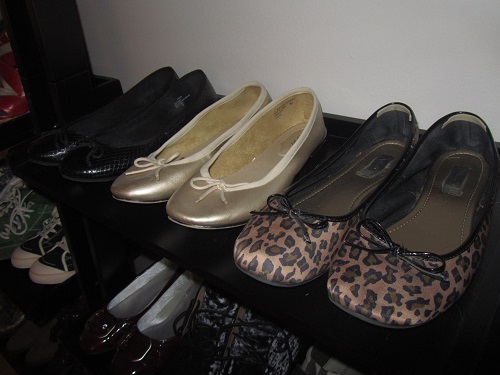
ballet flats

Ballet flats come in lots of different materials

sandals

Sandals are often vegan

vegan boots

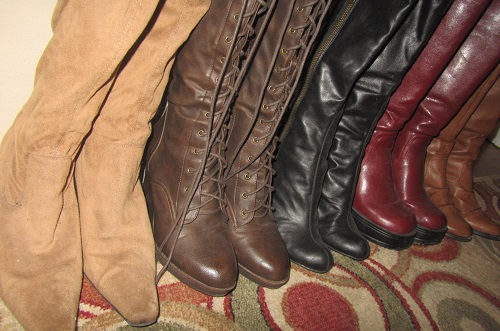
Boots can be vegan too

Unknown's avatar

Roasted veggies and Gardein

I’m a bit of a rogue in the kitchen. Here’s another recipe-less meal I recently made: Roasted veggies and chipotle-lime “chicken” strips by Gardein.

roasted veggies

First I diced potatoes, a rainbow assortment of carrots, cauliflower, and broccoli. I tossed them into a glass dish with garlic and a bit of soy sauce for flavor and baked it until done. It took about 40 minutes to cook the veggies. The Gardein instructions called for a 10-minute bake so I added them to the oven (on their own rack) 3/4 of the way through.

dish of veggies

I based this meal around some fascinating carrots I found at the grocery store. Have you ever seen such wonderfully colorful carrots?

carrots

I’ve joined up with Healthy Vegan Fridays at The Veggie Nook. Be sure to check out all the other delicious meals that people have made.