Unknown's avatar

Help protect chimpanzees

Good news on the horizon: The US Fish and Wildlife Service is proposing that chimpanzees in the US be added to the federal endangered species list.

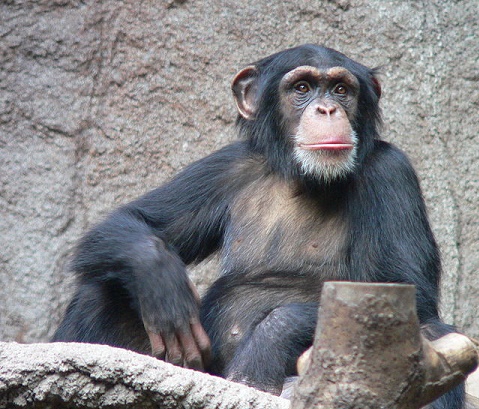
chimp on wikimediaRight now, wild chimps are listed as endangered while their captive cousins are listed as only threatened. This means people can breed, sell, ship, and experiment on captive chimps in the US.

Adding captive chimps to the endangered species list would change that and would help chimps in zoos, circuses, and in the entertainment industry.

Changing their status will prevent chimps from being used in invasive medical testing procedures and from being taken across state lines. It would also ban the international commerce of chimps.

The Humane Society, Chimpanzee Sanctuary NW, and The Jane Goodall Institute all back the proposal.

You can read the press release from Chimpanzee Sanctuary NW and an article by the Washington Post for more about the chimps’ plight.

Take Action!

The US Fish and Wildlife Service is taking public feedback about the issue. Please visit this Humane Society page, add your comments, and sign the petition asking US Fish and Wildlife Service to help all chimpanzees by applying Endangered Species Act protections to captive chimpanzees.

Thank you!

Unknown's avatar

Protesting primate research at the UW

This past Saturday The Northwest Animal Rights Network (NARN) held a demo outside the University of Washington National Primate Research Center. We organized the event to coincide with World Week for Animals in Labs.

Hidden inside this dark, unmarked building, 700 primates live and die for research, subjected to painful surgeries and traumatic procedures until they aren’t useful anymore. The Blue Building at 3000 Western Avenue downtown Seattle is the main facility for the UW National Primate Research Center, the largest of eight across the country.

About a dozen of us spent a few hours with signs and fliers and shared info with passers-by. Many people were shocked to learn that wasteful and cruel experiments were happening in their neighborhood. The beautiful Seattle sculpture park is across the street, and no one suspects cruelty is around them.

blue building

The University of Washington spends millions of taxpayer dollars conducting needless tests that haven’t resulted in any contribution to humans or animals. Harvard recently decided to close its primate research center and it’s time for UW to do the same.

The UW has even been cited with safety and cruelty violations including performing unauthorized surgeries and letting a monkey starve to death. The university breeds monkeys too and removes babies from their mothers soon after they’re born.

wwail collage - group photo by Pam Pulver

We demo to let the public know about these atrocities but we also demo to let animal abusers know their deeds aren’t going unnoticed. As I’ve written about before, animal research isn’t good science.

What can you do?

Send a polite letter requesting the UW reevaluate its policies regarding animal experimentation and commit to long-term reduction of the use of any animals for science.

Michael Young, President
301 Gerberding Hall, Box 351230
Seattle, WA 98195
206-543-5010
pres@uw.edu

The University of Washington Board of Regents
139 Gerberding Hall, Box 351264
Seattle, WA 98195-1264
206-543-1633
regents@uw.edu

If you’re a UW grad, you can also contact the alumni association and tell them that you won’t join them (or that you’ll be cancelling your membership) unless the university agrees not to use live animals in their research.

UW Alumni association Box 359508
Seattle, WA 98195-9508
206-543-0540 or 1-800-AUW-ALUM
uwalumni@uw.edu

Unknown's avatar

World Week for Animals in Labs

We’re midway through World Week for Animals in Labs (WWAIL) so I thought I’d put together a little post about a few things that are going on.

wwail dog by MaréWWAIL is a week when activists join forces to be a loud voice for the voiceless. There are millions of animals languishing in laboratories all over the world: rats, mice, cats, dogs, rabbits, primates, and others. Anytime is a good time for activism, but this week is a time when we can stand up together and say “no more.”

It’s a good time to remember to donate only to charities that don’t test on animals and buy household cleaners and cosmetics from companies that don’t test on animals either.

Victories

Just today, Harvard Medical School issued a statement announcing that the New England Primate Research Center will be closing within 24 months! The center has been embroiled in controversy following the negligent deaths of at least four primates. The facility is currently under investigation by the USDA and faces a potentially major federal fine for multiple violations of the Animal Welfare Act. This news couldn’t come soon enough! The animals deserve a chance to live out the rest of their lives at sanctuaries. Read the details at the Stop Animal Exploitation Now (SAEN) website.

Last month the entire European Union–that’s 27 countries and half a billion people–banned the sale of new cosmetic products containing ingredients tested on animals. The ban goes into effect immediately, and will prevent testing on countless animals. Real progress comes from non-animal research such as genomic tests, human cell cultures, medical imaging and clinical trials. Read more about why animal testing is a bad idea.

Action

Look for WWAIL events in your area and join the growing number of people who say no to cruelty.

If you’re in the Seattle area, you can join the Northwest Animal Rights Network (NARN) at a demo this Saturday, April 27th from noon to 2 pm in front of the University of Washington Primate Experimentation facility at 3000 Western Avenue in Seattle, WA.

Hidden inside this dark, unmarked building, 700 primates live and die in the name of research. They are subjected to painful surgeries and traumatic procedures until their usefulness is over. The building is the main facility for the UW National Primate Research Center, the largest of eight across the country.

NARN wants to educate passers-by about what goes on behind the walls of the “blue building” and hold researchers accountable. They need to know that what they are doing to animals is not going unnoticed and that it will be challenged until it stops.

Unknown's avatar

Is animal testing ever justified?

Every year millions of animals are subjected to cruel experiments in the name of cosmetics, medicine and even transportation. They are poisoned, burned, gassed, shocked, overdosed, crushed, blinded, operated on, and deprived any semblance of a quality life. Not only is this cruel, it’s unnecessary. It’s outdated, it’s wasteful, and it’s downright dangerous to humans.

bunnyIf animals are so different from us (different enough for us to justify experimenting on them), it also means they’re too different to gather relevant, conclusive evidence that would apply to us. If they’re similar enough that the experiments would actually be useful and relevant, then they’re just like us and it’s unethical to test on them.

The cost of experimenting on animals is high and the benefits are minimal. Non-animal testing is usually cheaper and more accurate than animal tests, which can be unreliable. Animal tests are misleading because they’re not good at showing how humans will respond.

With animal testing, illness is induced, and then a cure is sought. That’s an unrealistic and unnatural environment and doesn’t translate well to humans. According to the AAVS, nine out of ten drugs that appear promising in animal studies go on to fail in human clinical trials.

For example, the polio vaccine was delayed by decades because of animal testing. Monkeys respond differently to the virus. Penicillin almost didn’t see the light of day because it was ineffective on rabbits (and killed guinea pigs). It wasn’t until Alexander Fleming gave it to a dying patient (as a last-ditch effort) and she recovered that it was proven acceptable for human use.

Thalidomide, a drug used in the 1950s to treat morning sickness, was proven harmless in dogs, cats, rabbits, monkeys, and rats, and was cleared for human use. It wasn’t until over 10,000 children were born with severe birth defects that it was pulled from the market. Animal tests didn’t warn us.

More recently, Vioxx, a painkiller for people with arthritis, was taken off the market after it caused up to 320,000 heart attacks and strokes. The drug was tested on animals but those tests never revealed the danger to people.

So if people have felt animal testing is unethical, why has it continued? Animal testing is big business and gets a lot of grant money. Careers depend on it. It’s also based on old laws and older science–both of which are outdated. You can learn more about this “bad science” by watching a video featuring animal testing opponent Dr. Andre Menache.

Just because some progress seems to have been made via animal testing doesn’t mean that the results wouldn’t have been found out without animals. If I take a flight from New York to Los Angeles with a stopover in San Francisco, it doesn’t mean you can’t get there with a stopover in Atlanta. Or maybe just fly non-stop. There are many ways to reach the same result.

We have the technology to use alternatives to animal tests–and there are many! We have mathematic and computer models, genomic tests, human cell cultures, medical imaging, and crash test dummies. Working on human cadavers to train for surgery is more beneficial than practicing on live animals.

We don’t need animal testing. So vote with your dollars: Don’t support companies that test on animals. Here’s a downloadable list of companies that test and don’t test from vegankit.com, as well as a searchable online list from PETA. Before you support a charity, make sure they don’t test by checking out this list from GEARI.

References:

Unknown's avatar

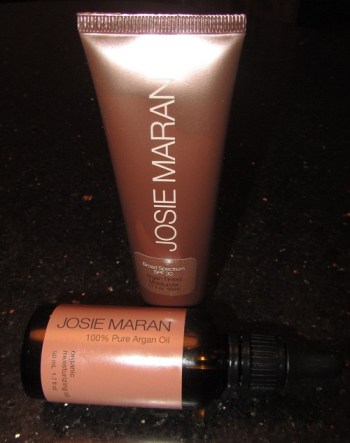
Josie Maran argan oil and moisturizer

A few weeks ago, while poking around the shelves at Sephora, I discovered Josie Maran Argan Oil. I’ve been on a quest to find vegan beauty products. I thought I was shopping cruelty-free but I was horrified to discover a few items in my stash are by companies that still test on animals. Shameful!

Hundreds of thousands of animals are poisoned, blinded and killed every year for cruel and unnecessary tests. It’s not required by law and there are better alternatives. Check for the cruelty-free bunny logo, a vegan logo, or look at PETA’s database to make sure the companies you support don’t make animals suffer in the name of beauty.

The woman at Sephora (edit: was wrong when she) explained that the entire Josie Maran line is vegan and cruelty-free, meaning no animal ingredients and no animal testing. (Update 4/7/15: I found out from a reader that the line isn’t all-vegan. When I checked on the JM site–which I should always do instead of trusting sales people–I found out that not all of the products are vegan. They use beeswax, lanolin, and carmine in some of their products. Check the label for the V to be sure).

argan oil

Josie Maran sources argan oil from co-ops that help women in rural Morocco earn a decent living in good labor conditions, while working toward improved literacy. I love that and I’m willing to pay more for a product with those values.

Besides, the oil is great! It’s not greasy and it absorbs quickly. I use it on my face, the dry ends of my hair, my cuticles, and my elbows. I told my friend Karthik about it and she said she uses Josie Maran products too–specifically their tinted moisturizer. So we planned to stop by Sephora and see if I could get some too.

I was surprised to see that there are only five shades. I chose crème. Karthik wears desert. To find a product that we can both wear–with our different skin types and colors–was pretty impressive (Karthik was born in India and has wonderful, warm brown skin. My light skin is a reflection of my German and Scottish roots). We both love that it’s got SPF 30. No more greasy sunscreen on our faces! (And yes, skin cancer and wrinkles affect all skin types, so slather up!)

Karthik’s issue with sunscreens is that most leave a whitish residue on her face. The Josie Maran moisturizer doesn’t. My issue is that even the lightest tinted moisturizer looks orange on my skin and you can see where the product stops and my natural color begins.

This moisturizer is tinted just right. It blends in, it’s lightweight, and left us glowing, not greasy. I’ve even stopped wearing pressed powder. I really only ever used it to hide the shine of sunscreen. I can’t wait to try their cosmetics too. Argan oil mascara? Sign me up!

We also tried products by other cruelty-free companies (Tarte and Stila) and popped into Lush, so come on back for more of our reviews!

Note: This isn’t a sponsored post. I wasn’t compensated to review these products. I just really like them. Also, the content of this post was originally published on my other blog, Jean of all Trades.