Unknown's avatar

Decorating Easter eggs

People are creatures of habit. We love rituals and traditions. Sometimes though, our old ways don’t work. If you’re a vegan and you’ve decorated eggs in the past, you might feel like you’re missing out on a family tradition.

Well, for every old way, there’s a new version. Egg decorating doesn’t have to be done on real eggs. You can use wooden, foam, or plastic eggs instead. They’re less fragile, and you might even have some lying around (all those plastic eggs you couldn’t bear to toss will come in handy now).

Wooden eggs

You can dye wooden eggs just like you can dye real eggs. They come in lots of sizes and last year after year. White vinegar, boiling water and food coloring is all your need. The awesome folks at Goose Grease Shop will show you how.

dyed wooden eggs

If detailed designs are more your style, you can go for a Persian or Ukrainian look by following the info at eHow. With acrylic paints and a small brush, you can add stripes, waves, checks, swirls and dots until you get a pattern you like.

wooden painted eggs

Ceramic eggs

There’s a specialty company called Eggnots, that sells ceramic eggs that you can paint and decorate. Their site says Eggnots are perfect for people with egg allergies, and vegan households. Love that! They even come in their own eggnot carton, complete with dying instructions.

Plastic eggs

The best part about plastic eggs is you might already have a bunch lying around. They’re nice because they often are made in two parts so you can open them and put some Easter treats inside. But first, grab a few Sharpies and color your plastic eggs with stripes, circles, bunnies, or whatever your heart desires. Squidoo.com will show you how. Plastic eggs looks great wrapped in yarn.
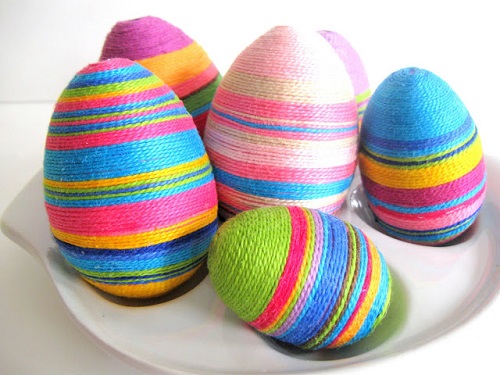
yarn-wrapped eggs

Styrofoam eggs

Styrofoam eggs aren’t the best choice, environmentally, but if you have some lying around–or find some at a garage sale of thrift store–snap them up for decorating. You can wrap Styrofoam eggs with yarn, cover them in paper, add fabric and ribbon to them, or embellish them with pushpins and other bling. Prefer monochromatic? Spray your eggs a solid color. Or cover them in glue and dip them in glitter!

fabric-wrapped eggs

Get creative

No matter what type of eggs you use, use your imagination. You can stamp words on your eggs, give them a patina finish, a crackle look, cover them in newsprint or tissue paper, or dip-dye them. If you need inspiration, go to Pinterest and search for wooden Easter, plastic Easter eggs or styrofoam Easter eggs and see why you find.

Have you decorated vegan eggs before? How did they turn out?

Unknown's avatar

Horse racing: dying to win

If the Kentucky Derby and other horse races conjure up images of fancy hats and mint juleps, it’s time to take off the blinders.

Horse racing is big business, with no regard for the well-being of the horses.

Kentucky Derby

On average, 24 horses die on racetracks in the US every week. Even more are injured and killed before they ever see a race. About 30,000 foals are born every year, in the hopes that they’ll be a winner. Not all have what it takes. As a result, 10,000 thoroughbreds are sent to slaughter in Canada and Mexico every year. The situation in other countries, like the UK, Australia and Israel, is just as grim.

Horses are routinely doped up on performance-enhancing medications and pain-masking drugs. For example, many horses are given thyroxine, a thyroid medication that amps up metabolism–whether they have thyroid issues or not. Lasix, meant to prevent bleeding in the lungs during extreme exercise, is used to dehydrate horses and make them lighter on race day. Conveniently, it masks other drugs in the horses’ systems too.

These young horses are exhausted, overworked, and often train and race with painful injuries. They aren’t rewarded for winning–even though their owners can pocket over a million dollars in a big race. One sad example is Ferdinand, the 1986 Kentucky Derby winner. He died in 2002, in a Japanese slaughterhouse, after an unsuccessful stint as a stud. Horse Racing: Where winners are eaten.

The horse racing industry enslaves these horses and forces them to be athletes. Some don’t make the cut, but even the fast ones face a short, miserable life.

As with so many industries that exploit animals, humans are exploited too. Stable workers are often undocumented and work long, hard hours for little pay and often sleep in the barns and tack rooms, not the staff quarters.

What to do?

  • NEVER attend or bet on a horse race!
  • Support humans events (where people choose to compete) like track and field.
  • Watch this short exposé by PETA (warning: graphic language).
  • Read about the similar plight of horses in the UK.
  • Use this form to send a letter to your US representatives and senators urging them to increase penalties for doping. (Please click here if you live in the UK, here if you live in Canada, and here for all other international locations.)
Unknown's avatar

Nacho time!

Why haven’t I made vegan nachos before? This meal wasn’t even planned, but you can bet I’ll make it again.

I had company last weekend and was left with an abundance of tortilla chips. I “lamented” to a coworker today that I had too many chips. He said, “why not make nachos?” Best idea ever!

vegan nachos

And by a stroke of luck, I had all the ingredients I needed for my 8-layer nachos:

  • Tortilla chips
  • Pico de gallo salsa (mine was store-bought but you can make your own)
  • Daiya vegan cheese shreds
  • Vegan ground “beef” (I used Tofurky Chorizo style)
  • 1 avocado, mashed
  • 1 tomato, diced

Place a layer of tortillas on a plate, sprinkle tomatoes over them. Add a layer of ground “beef” and top with Daiya shreds. Add another layer of chips, sprinkle with salsa or pico de gallo, add a layer of ground “beef” and top with Daiya.

Microwave for 1.5 minutes or until cheese is melted. Use avocado as a dip.

I made individual portions, but you could make one platter and serve as a side dish. You could also stick a load of these in the oven and bake them. They’d be perfect for book club or watching the game.

This would be great with other things on it as well, like green peppers or black olives. Tofutti Better Than Sour Cream would be a nice, cool dip.

You can’t go wrong with nachos. Super easy and delicious!

nachos for dinner

Unknown's avatar

Speciesism: The Movie

A few months ago, I got tired of waiting for Speciesism: The Movie to come to Seattle so I ordered the DVD from the Speciesism website.

speciesism imageWell, the joke is on me, because on Thursday, April 3rd, the Seattle premier of Speciesism: The Movie will be showing at Varsity Theater.

I’m going to the premier anyway. Director and star, Mark Devries, will be at the screening and will be leading a Q&A session afterward.

The film follows Devries across the country, as he sets out to figure out why humans see ourselves as the most important species and how we decide which animals are “food” and which are “pets.”

Devries was a college student when he made the film. He wasn’t a vegan; just a curious young man. He learned a lot on his journey, and you’ll get see his awakening as he talks to animal rights experts, people on the street, and people in the “food animal” industries. It’s an eye-opening film–sometimes harrowing, and surprisingly funny.

You won’t want to miss it! Hear first-hand how making this movie shaped and changed his ideas. Maybe it will change yours too!

When: Thursday, April 3rd at 7 pm
Where: Varsity Theatre, 4329 University Way NE, Seattle, Washington 98105

You can get tickets online.

Not in the Seattle area? Check out the Speciesism website for upcoming screenings or to get a DVD.

Unknown's avatar

Simple ravioli lunch

Ravioli is a delightful food. Little pockets stuffed with yummy goodness. A lot of times, though, ravioli is filled with meat or cheese. Boo! That’s not good at all. I made this meal with Rising Moon vegan ravioli. It’s stuffed with butternut squash. Mmm. So delicious!

ravioli

Rising Moon Organics is a Portland-based vegetarian pasta company. They’re not all vegan, so check the package before you buy. Luckily, they do carry several flavors of vegan ravioli, including spinach, veggie, and garlic-herb. They also offer vegan lasagna and manicotti.

I found this package at my local Whole Foods, in the refrigerated section.

I topped my ravioli with a garlic and Merlot red sauce, also from Rising Moon, and paired it with a delightful Washington Riesling.

Unknown's avatar

Slaving for your seafood?

Human rights and animal rights are often interconnected. Animal rights is a social justice movement and its participants are often involved in helping people too.

The dirtiest jobs in the animal food industries are often done by people who are abused like the animals in the system. They’re undocumented workers, undereducated and lacking in resources or language skills and they can’t speak up for themselves and their situations.

Most of the time, people have the option of walking away–the animals don’t. So I feel for the animals, not the perpetrators. Sometimes, however, the dire situations people find themselves in, ties their hands too.

One example of this interconnectedness is in the fishing industry. In Thailand, men from neighboring countries are tricked into working on fishing ships. Of course I wish people wouldn’t entertain the idea of decimating the ocean for a paycheck, but I haven’t walked in their shoes. I don’t know the poverty they face. I don’t know about their struggles to feed their families. I can’t judge.

fishing boat

With over 25,000 legal fishing vessels in Thailand, and a vast ocean at their shores, the illegal boats easily blend in. Like any seedy underworld activity, they go unnoticed. Migrant workers can be bought for about $600, but their lives are worth even less.

The slaves on fishing ships are smuggled from nearby countries like Cambodia and Myanmar, with the promise of a good job. Once on the ships, they’re overworked, denied pay, beaten and sometimes even killed.

It goes on because the money is lucrative, because the demand for cheap fish is high, and authorities don’t prosecute. Victims who escape and speak up are often punished.

Thailand is the second largest importer of seafood to the USA. It’s going to take consumers to stop slavery. We need to take a stand and say no to an industry that is relentlessly cruel to the environment, animals and people.

References:

Unknown's avatar

Simple tabouli and grilled cheese lunch

Mealtime doesn’t have to be complicated. I don’t always have time to make an elaborate meal–and sometimes I don’t even want one. Simple comfort foods are always welcome.

tabouli and grilled cheese

Grilled cheese is one of my favorite comfort foods. I hadn’t had grilled cheese for several years after going vegan. Then I found vegan slices. Perfect for melting. More recently, I discovered Daiya vegan cheese. It melts really well and is delicious too.

I like my grilled cheese on whole grain–I’m not a carbophobe, but I do value complex, carbs over simple ones. Whole grains have B vitamins, protein, fiber and are really healthy.

In addition to the sandwich, I nibbled on grapes and a hearty tabouli salad. Tabouli is a bulgar and is high in protein and fiber. This one was from a box, complete with parsley and seasonings. I added beans to it for flavor and nutrition.

A meal like this provides a variety of flavors and health benefits and can be made in under 15 minutes.

Do you have any quick and easy vegan meal ideas?

Unknown's avatar

On declawing

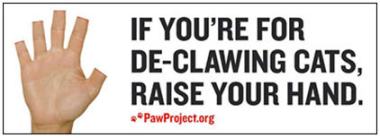
I’ve never liked the idea of declawing a cat–claws are part of who they are. That’s why my cats have theirs. I recently watched a riveting documentary called The Paw Project and it builds an airtight argument against declawing.

anti-declaw billboard

But my first cat–a kitten I’d found in my late teens–was declawed. I sent her in to have the procedure and I can share first-hand why I’d never do that again.

I wasn’t planning to get a cat. She found me I guess you could say. I lived in an apartment that didn’t encourage pets and if cats were to be allowed, they had to be declawed. I couldn’t afford to move, and I was too selfish to rehome the cat. For her best interests, I should have found a home where she’d be allowed to remain whole.

When I brought my cat back from the vet, she was in a lot of discomfort. To see her limping and favoring her front paws broke my heart. She left bloody footprints around the apartment for a week too–my first realization that declawing isn’t a simple procedure; it’s an amputation.

Declawing consists of removing the first joint of each toe–because cat’s claws grow from the bone. My cat endured ten amputations for no good reason. She couldn’t scratch carpets, walls, or furniture, but she also couldn’t stretch and climb like a normal cat. She was indoors-only, but one afternoon I had her on a harness and leash when a dog rushed onto the property and tried to maul her. She climbed the nearest tree, but without a grappling-hook grip, she fell back toward him. By sheer luck she reached a horizontal branch on her second try.

In her old age, she wobbled on arthritic feet and stopped using her litter box. I didn’t know it at the time, but that’s common with declawed cats.

Cats need to scratch. It’s a territory marker (with both scent and visual clues). It’s good for their muscles too. I have a tall cat tree for my cats to climb and strategically placed scratching posts around my house. My cats prefer their posts to my furniture. In a few cases, I’ve had to put double-sided tape on sofa corners until they got the hint that the furniture isn’t for scratching. I trim my cats’ claws regularly too. No matter what, my cats’ wellbeing is more important than my sofa!

fistful of clawsCats’ claws are important for self-defense. They use them to fend off attackers and to make a quick getaway. Cat scratches hurt, but cat bites are more dangerous. If a cat loses her toes and claws, she’ll be more likely to bite. It’s better to adopt two kittens together (so they can roughhouse and learn about boundaries) or use toys–not hands–to play with an energetic cat.
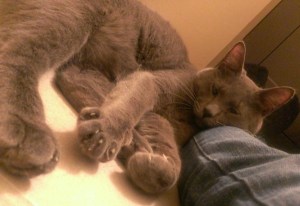
If a cat experiences pain in the litter box (from a UTI or painful feet), he’ll likely associate the location as the source of the pain and change his behavior. With age, amputated toes often become arthritic and painful. Many cats who experience this will develop litter box issues.

Basically, removing claws doesn’t benefit the cat; it benefits only the owner. That’s why it’s unnecessary and uncalled for. If a piece of furniture is more important than a cat’s well-being, then maybe a cat isn’t the best choice. If someone is worried about junior being scratched, then adult supervision is needed. Teaching kids to play appropriately with cats, and never leaving little kids unattended with cats is the most sensible option.

Many countries and (as you’ll learn in The Paw Project) some cities in the USA have banned declawing. It’s barbaric and should be banned nationwide. I wasn’t educated on the risks and dangers of mutilating my cat with a declaw procedure. At the bare minimum, people need to know what they’re subjecting their cats to and what the outcomes are. I’m happy to report that my current vet is very anti-declawing. She won’t do the procedure. Instead, she educates cat guardians and works on changing problematic behavior.

I hope that’s the norm and that declawing will be sent to the history books.

Unknown's avatar

The humble goldfish

Most people probably don’t give goldfish a lot of consideration, but I think the humble goldfish represents a lot of the animal issues vegans and animal activists are trying to solve.

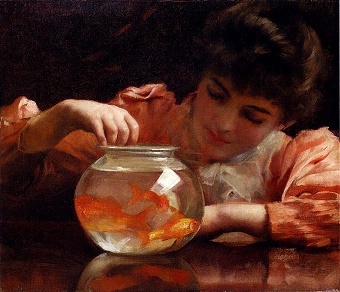
Thomas Benjamin Kennington FishbowlFirst domesticated in China in the 10th century, goldfish aren’t captured, killed and eaten like their wild cousins, the carp. But pet goldfish don’t always have it easy either.

For a lot of kids, a goldfish is a first pet–the “test” animal to see if they’re ready for a dog or cat. Goldfish are seen as a simple creature with minimal needs, but the reality is they are smart and complex. They can recognize people, be trained to perform tricks, and can identify shapes and colors.

They are social creatures who enjoy other goldfish, and need at least 10-20 gallons of water with an enriched habitat and water filter, but they often languish alone in small, dirty fishbowls.

It may seem like goldfish are short-lived animals but they will live up to ten years if looked after properly. Inadequate care is likely the cause of most of their early deaths.

Unlike other pets, when a goldfish dies, he or she is often simply flushed down the toilet. Why grieve such a “disposable” pet? Some people don’t even wait for their pet fish to die. The toilet or local pond is seen as a good way to deal with an unwanted fish.

There are very few animals that a person can win at the fair, and the goldfish is one of them. It’s easy to see why people wouldn’t give proper care to a fish they didn’t plan on having.

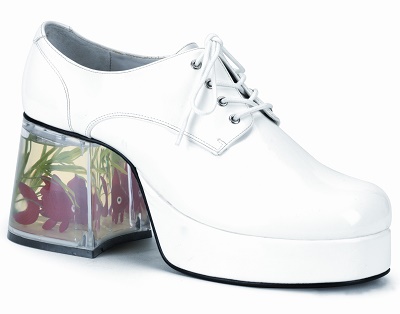
Goldfish swallowing contests might conjure up frat prank from the 1950, but it’s still sometimes practiced. And though I think it’s an urban legend or attempt at humor, the goldfish platform was supposedly a style in the ’70s. Fortunately I’ve seen only replicas, complete with plastic fish.goldfish shoes

A large percentage of goldfish are raised as feeders for bigger fish and other animals like turtles. So while we might not eat them, goldfish are still raised for food.

Selectively bred for color, shape, and other unique characteristics. Like other domesticated animals, turkeys for example, some types of goldfish have been so modified that they cannot breed on their own. Humans have intervened to such an extent that they need to keep intervening for certain subspecies to continue to exist. Ironic, eh?

It’s not just goldfish who are mistreated, ignored and trivialized. Our attitudes toward all animals should be questioned. The goldfish symbolizes a bigger problem with our relationship with animals.

Unknown's avatar

Beyond Meat: Chicken-free strips

I spiced things up in the kitchen recently with Southwest style chicken-free strips by Beyond Meat.

I first learned about this company when I read a blog post about the future of food by Bill Gates. Gates is financially backing Beyond Meat, in part because he recognizes that increasing meat consumption is bad for the environment. The global population is growing, and as people become more affluent, they often transition to western-style diets. That’s neither healthy nor sustainable.

I searched for Beyond Meat at my local Whole Foods and ended up getting a couple of ready-made wraps for a picnic. So yummy! Until now, I hadn’t cooked with it, so I gave it a whirl.

ingredients

I made a simple stir-fry using red pepper, broccoli and zucchini, added spices and the Beyond Chicken strips, which I’d cut into cubes.

stir-fry in progress

Beyond Chicken is made primarily with non-GMO soy and peas. It’s a complete protein, has plenty of fiber, and isn’t loaded with fat or cholesterol (in fact, it has no cholesterol, saturated or trans-fat and is just 5% fat).

I served my stir-fry over a rice pilaf for a quick, simple, and delicious meal. I’m going to try their beef-free crumble next for a taco meal!

simple dinner

I like that technology is helping reinvent meat and that through technology we can harness plants to create healthy delicious meat alternatives. It has a lot of potential in developing nations too, not just on the plates of people in the developed world.

Biz Stone, vegan and founder of Twitter, is also financially invested in Beyond Meat. Perhaps the future of meat is vegan.