Unknown's avatar

Film review: Blackfish

I was lucky to snag a ticket to a showing of Blackfish at the Seattle International Film Festival. Blackfish reveals the complicated life of Tilikum, an orca born in the wild off the coast of Iceland. As a young whale, Tilikum was forcibly separated from his mother and sent to perform at a marine park in Victoria BC. He’s been in captivity since 1983 and is currently confined at SeaWorld in Florida.

The documentary reveals the frustrations Tilikum has endured and how he’s been picked on by other whales in his pool, cooped up in a dark “garage” of sorts during off seasons, and forced to perform year in and year out.

Orcas similar to Tilikum

Out of his frustrations, grew an aggression that wild orcas don’t display toward humans. Tilikum has killed three people, two of which were trainers.

The movie shows the horrors of wild capture and captive breeding. It documents the unnatural acts orcas are forces to perform in front of clueless audiences. The charade SeaWorld conducts is shameful. They lead people into believing these beautiful whales somehow enjoy their time in captivity and are safe and happy.

On the contrary, an orca’s life in captivity is extremely short. They live on average for 9 years from the time they are captives–regardless of how old they were when they entered captivity. In the wild, male orcas can live about 60 years; females up to 100.

Orcas, also called killer whales, live in family units called pods. Each pod speaks a different “language.” They live with or near their pod for their whole lives and travel about 100 miles a day. They are extremely social and have highly developed emotions. To see families separated and grief-stricken and captive whales isolated in concrete pools was heartbreaking. But the film is an important movie to watch.

Blackfish will be released in NY and LA later this summer, and more widely after that. CNN Documentaries is distributing the film on TV in the fall.

It’s a terrific resource and the things you’ll learn apply to all captive marine animals. Sadly, SeaWorld is one of the better marine parks. There are many more orcas who languish is worse conditions, including many at Canada’s Marineland.

What to do

First of all, never go to a marine park like SeaWorld or Marineland. Ask your friends not to go and talk to schools about canceling field trips to marine parks. Marine parks exist for one reason, and one reason alone: making money. Vote with your dollars and spend your time and money somewhere else.

Look at the websites below for information about how to help. Two orcas, Morgan and Lolita, are great candidates for release.

Resources

Blackfish website – Information about the movie, including the trailer and upcoming screenings.

Orca Network – Information about whales in the Pacific Northwest, creating safe whale habitats, and the Free Lolita campaign.

Voice of the Orcas – Interview and current event about conservation and activism.

Miami Sea Prison – Information about captive orcas and the fight to release Lolita, the last surviving whale from the L Pod hunt in 1970.

Free Morgan Foundation – The campaign to release Morgan, an orca currently in captivity in The Netherlands.

Marineland Animal Defense – A campaign to end animal captivity at Marineland in Niagara Falls Canada.

Unknown's avatar

Vida Vegan Con 2013

I already wrote about the nine-hour Portland bloggers pre-funk, but what about the actual event?

Well, it began unofficially with a supermodel scramble at one of Portland’s original vegetarian restaurants, Paradox Café. I had breakfast there with Vegan Score before heading to registration.paradox cafe

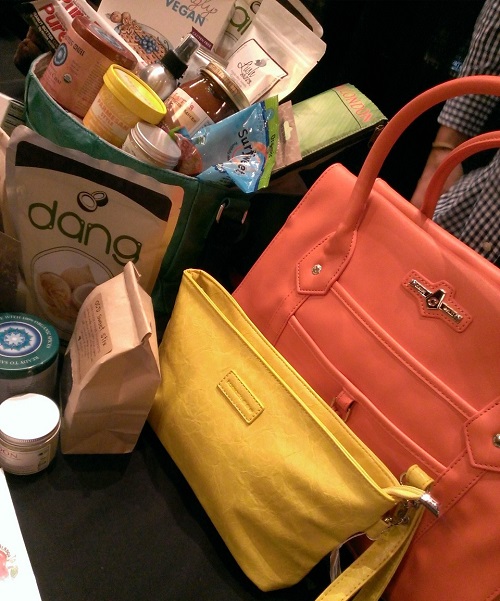
The conference was at the Portland Art Museum. Registration was all morning long, which gave people time to check in without long lines, grab a latté, explore the museum, and find long-lost friends. We grabbed swag bags and checked out the exhibitors hall, both of which were filled with vegan goodies.

swag

merch

On Friday I attended the following sessions: Blogging as Writing, Monetizing Your Blog, Expanding Your Message to Include Animal Rights, and the MoFo (Month of Food) Workshop. All the sessions were helpful and I gained the most from the animal rights one. I learned that through gentle suggestions, reminders–even humor–I can let people know about how to eliminate cruelty. Jasmin Singer from Our Hen House said something as simple as, “I made this recipe without eggs because I don’t like how hens are mistreated” goes a long way to getting people to think about their impact on the world.

After the sessions, Veggie Grill hosted a delicious reception and then a lot of us headed over to the world’s only vegan mini mall. I met up with Vegan Moxie, Vegtastic, Vegans Don’t Bite, and whole bunch of others. I am in the habit of calling bloggers by their blog names, but I assure you, they all have proper names too! We had vegan gorditos at Food Fight, vegan s’mores at Herbivore Clothing, and lattés at Sweet Pea vegan bakery. After filling our bellies I went to Hungry Tiger, a vegan-friendly bar, for a drink with the Fat Gay Vegan, Vegan Score, and The Messy Vegetarian Cook.

vegan mini mall

Saturday started with a scrumptious breakfast buffet at the conference, followed by these sessions: Ethics Beyond the Plate, Vegan Invasion, Finding Balance, and International activism. Mind you, these are only the sessions I attended. There were three going on at any given time–from iPhone Photography to Vegan Parenting. There was something for everyone.

snacks by Peanut Butter & Company

We broke for lunch halfway through the day and I was still full by the time I got to the gala. We had lots to choose from: a vegan sundae bar, vegan artisanal cheese table, drinks, dancing, and of course, the silent auction to benefit Chimpanzee Sanctuary NW. We raised over $4000 for them!

gala

sundae bar

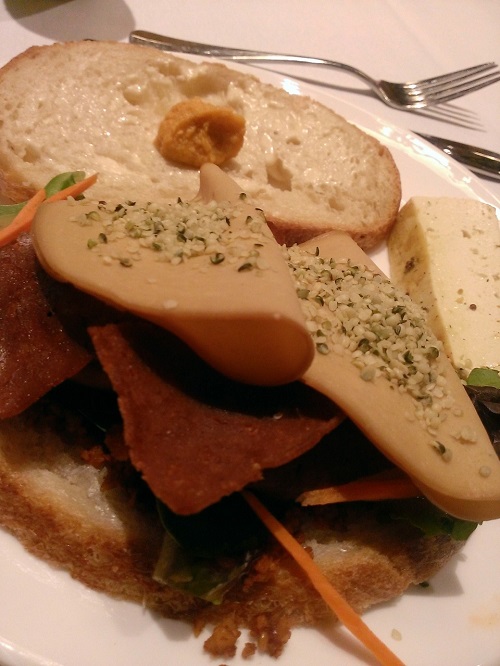
Sunday began with another great breakfast. I attended four sessions: Publishing, Body Image, Social Media, and Interdietary Co-habitation. Of course we had another great lunch–a sandwich bar!

sandwich

I was sad when things wrapped up for the day, weekend, year. I’d made new friends, got to know acquaintances from online and in Seattle, and reveled in the company of kind and compassionate people. Everyone had a different story. There were 20-year-old bloggers and 60-year-old ones. We came from all walks of life, but we were united in our love of animals, health, the earth, and of course food.

I’m excited for the next event and I have a lot of blogs to read in the meantime.

Unknown's avatar

Heading to the vegan bloggers conference

I just came back from a terrific weekend in Portland, where I attended Vida Vegan Con, a vegan conference. Over 300 vegan bloggers spent three days in Rose City. Most of our days were in the Portland Art Museum conference rooms. Evenings were a mix of events–from vegan bars to a gala and auction. It’s impossible to sum up such a rich event in a simple post, but I hope to give you a glimpse of what went on.

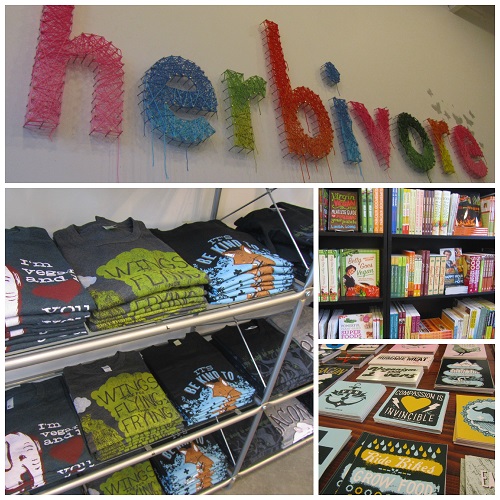
I drove down to Portland on Thursday and headed straight to Herbivore Clothing for shirts, a poster, jewelry, and stickers. Other bloggers were in the shop too, and I was so excited to be part of the action.

herbivore collage

A bunch of bloggers met at The White Owl Social Club. I walked in around 4:30 pm and the place was abuzz. The White Owl isn’t all-vegan, but the menu had vegan items, including the special of the day: The Greatest American Gyro. Yum!

After happy hour, I went to see a screening of the first episode of The Intrepid Herbivore’s first travel show. If you’d like to see a vegan-themed travel show on TV, go “like” them on Facebook so producers know that there’s a fan base for this type of show. The episode was great! Host Sadie is funny, lively, and teaches viewers where to go for vegan food and cooking classes, and how to be an ethical traveler. Show One focused on Thailand.

Instead of paying for a hotel, I booked a room in a private home through airbnb. I took a gamble–and it paid off. My host sounded great in her profile and was as busy as I was. The Sweet HereafterWe never actually met! We were both gone all the time.

She came home later than I did and I left before she got up. It was a perfect arrangement. I had a clean, quiet place to sleep, shower, and keep my things, and I saved a bunch of money.

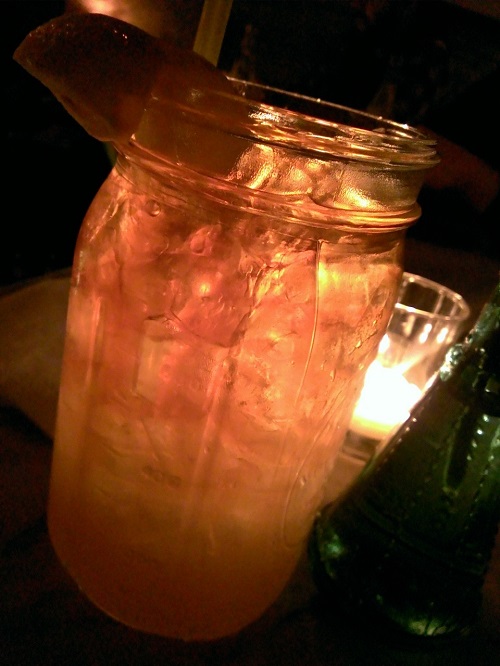
The first night, I had to find the key she’d hidden. Then I checked in, settled down for a moment, and went out to meet up with my friend from Seattle Vegan Score. We went to a vegan bar, The Sweet Hereafter, for a drink and to get acquainted with some of the other bloggers we’d be seeing at the conference.

I had a fun day–and the conference hadn’t even started. I learned that Portland has a thriving vegan community. I’ll share more with you soon.

Unknown's avatar

Violet Sweet Shoppe

I may have just died and gone to vegan heaven. I visited Seattle’s newest bakery–and the only all-vegan one. Oh my!

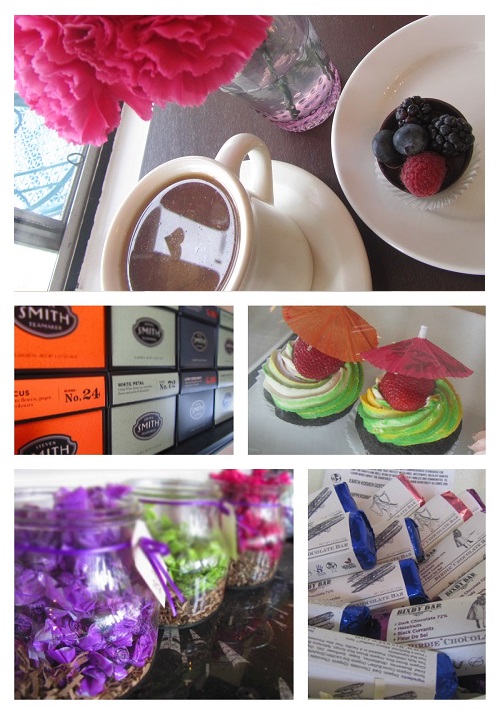
Violet Sweet Shoppe is adorable. It’s decorated in pastels with vintage-inspired shadowboxes and packaged sweets. And who wouldn’t want to take that ambience in?

violet collage

I got to meet Mike and Crystal, the shoppe’s owners, during my visit. They’re the nicest, most talented pastry chefs this side of San Francicso (which is where they learned the craft and where the business originated). Now, Seattle is the lucky city!

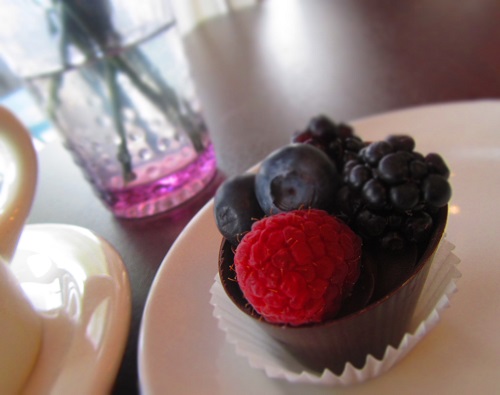
coffee and chocolate

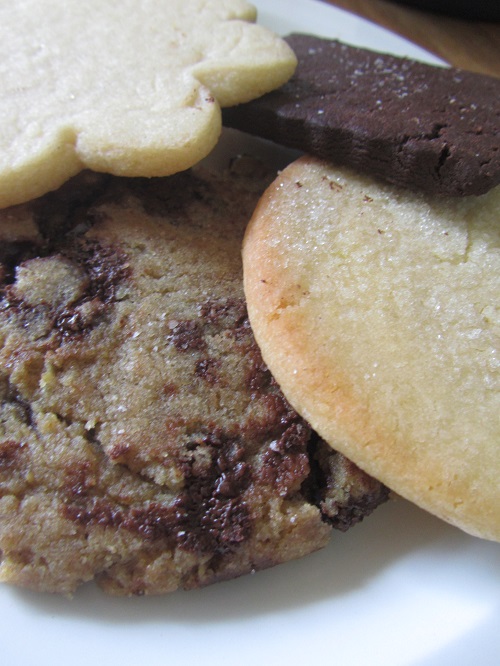
I ordered a coffee and chocolate cup (complete with fresh berries) and enjoyed them in the store. And I also took with me what turned out to be the world’s best chocolate chip cookie. I tried the shortbread too (something that isn’t usually vegan). I had a chocolate one, a lemon one, and a vanilla one. What? I had to try them for this review!

cookies

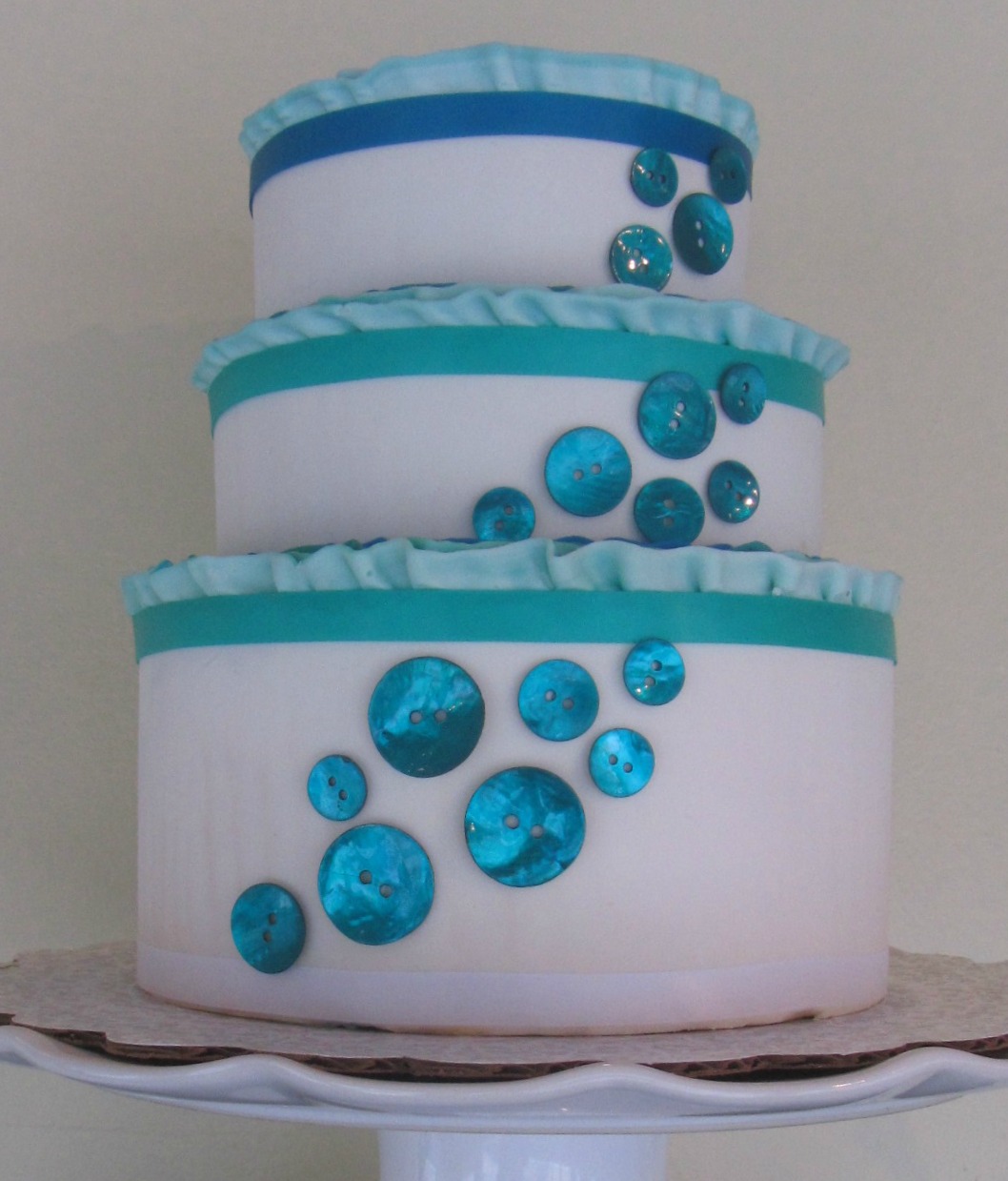
I might renew my wedding vows just so I can order a cake.

button cake

For daily eye candy, “like” Violet Sweet Shoppe’s Facebook page. For the real deal, head over to 3612 NE 45th Street (just east of U Village).

Unknown's avatar

Vegan motorcycle gear

This post is about safety gear for riders. For fashion, check out my post on vegan motorcycle jackets.

In a previous life (well, circa 2006), I was very much a sportbike rider. For five years, a motorcycle was my main form of transportation. I commuted (in the HOV lane) on my bike, did weekend trips with hubby and friends, and took my bike to the racetrack. What a fun hobby–and an efficient way to travel!

vegbiker

Jacket: Fieldsheer (I think)
Pants: Dainese
Boots: Sidi
Gloves: Tourmaster (I think)
Back protector (not shown): Dainese
Helmet (not shown): HJC

It wasn’t until I adopted Frankie, my dog, that I started to use a car more and spent time at the dog park instead of on the twisties (that’s motospeak for curvy roads for you non-riders out there).

My handle (name) on motorcycle forums was vegbiker so I’d like to think I know a thing or two about vegan motorcycle gear. I outfitted myself with head to toe non-leather gear. Safety is paramount so I wore it all, rain or shine, summer or winter. I’ve racked up over 40,000 miles on sportbikes and I’ve been in two accidents (caused by someone else).

I believe non-leather gear is best for a few reasons. Mainly because I don’t want to wear an entire cow. But also because leather is cold in the winter and hot in the summer. It absorbs sweat and other smells. If it gets wet it stinks, and more importantly, it loses its strength after being wet. With cordura, lorica, and kevlar as options, I wouldn’t choose leather. The Cadillac of motorcycle suits, the Aerostitch Roadcrafter is cordura, a non-leather material.

Jackets – Fieldsheer, Joe Rocket, Dainese, Tourmaster, Icon, and similar brands all offer jackets made of cordura, a tough, tear-resistant fabric that helps keep out the rain and wind. The jackets often have zippered flaps to let air through if it gets warm outside, and they usually have removable linings, making them great all-season jackets. There are even mesh summer jackets available that are still strong in a crash. When you buy a jacket, get one with armored elbows and shoulders–and make sure the sleeves are long enough when you reach forward.

Pants – The same companies that make jackets make pants. Again, get a pair with armor. If you buy cordura pants from the same manufacturer as your jacket, you can zip them together at the waist for a snug fit. I always wore riding pants over my jeans because denim will last about five feet on the cement before it rips to shreds. The goal is not to crash, but if you do find yourself sliding across asphalt at 50 miles an hour (as I once did), you’re going to want more between your skin and the road than cotton. Trust me!

Gloves – A lot of gloves are made of leather–but some aren’t. I wore armored gloves with Clarino and Kevlar with carbon fiber knuckles to protect my hands. Even a bug bouncing off your finger will hurt when you’re at highway speeds. You can find warm winter gloves as well as airy summer ones from companies like Spidi, Alpinestars, Aerostitch and Scorpion.

Boots – This might be the toughest category to shop vegan but it’s not impossible. I wore lorica boots by Sidi that kept out the rain and protected my foot. The main things to look for is a boot that is sturdy, covers the ankle, and has a slim toe profile (so you can get your foot under the shifter. Try to get a pair without laces. If yours are lace-up, always tuck the laces into your boots so they don’t get caught on anything. Don’t wear steel-toe boots. They’re usually too bulky to shift smoothly and I’ve heard bad things about how the steel can cut if your boot is bent back (as could happen in a collision).

Helmets, unless the chin strap is leather, are vegan, as was the back protector I always wore under my jacket. Like I said, safety first!

I wore my vegan gear to track days, which is a track environment for race enthusiasts but isn’t an actual race. I’m not sure what the official rules are for races. Tracks might require leather. You could always scour Craigslist and eBay for used gear if you need leather as a track requirement. There are a lot of Rossi-wannabes who quit riding and sell their almost-new gear.

For the 98% of riders who don’t race, the vegan route is completely possible–even for fun on the track. Check out online stores like Motorcycle Superstore and Motosport.com to get started. Your local bike shops probably carry popular brands as well (or can order them).

I always wore all my gear–even on a quick run to the grocery store. The saying, “better sweat than bleed” is true. Motorcycle gear isn’t cheap, but walking away from a crash is priceless.

Unknown's avatar

In-vitro meat becomes a reality

I’ve been wanting to write about the sci-fi notion of in-vitro meat for a while now. In-vitro meat (also called cultured, test tube, or lab-grown) is meat that is “grown” from cells in a petri dish, not from a living animal.

This week, however, the New York Times reported on this phenomenon. So sci-fi is becoming reality. Time to take a look at what the meat of the future could look like.

test tube

In the prototype, beef muscle tissue is grown into a piece of meat. This isn’t vegan, of course, since the source is from a cow. Future versions could be non-animal based.

Would you eat meat grown in a lab? I still stand by the loads of scientific research that shows how unhealthy meat is. It clogs arteries, provides no fiber, turns on cancer cells, and promotes diabetes, heart disease, and obesity. But if mainstream America doesn’t jump on the vegan bandwagon, I’d rather they buy lab-grown meat than support the slaughter of sentient beings.

Eating in-vitro meat bypasses the factory farm and slaughterhouse. It skirts around issues such as dehorning, debeaking, castrations without anesthetic, transportation, water and grain consumption and land use. It’s environmentally much better.

For me, going vegan was about reducing suffering so I’m personally on board with in-vitro meat. I’d still like to see people adopt whole food plant-based diet though.

This technology might also be able to “grow” leather in a lab, so there really are a lot of possibilities.

Unknown's avatar

Vegan purses by Crystalyn Kae

Sometimes when people become vegan, they’re at a loss about their fashion choices. So many shoes and bags are made of leather. I recently wrote about leather shoe alternatives and leather-free purses. But I have to call out one amazing company: Crystalyn Kae.

I met the woman behind the name when I was at Urban Craft Uprising, an alternative craft bazaar, a couple of years ago. I loved that the bags are handmade of sustainable materials. Crystalyn even has an all-vegan collection on her website. These bags are made of wool-free tweed, glazed fabric, and non-leather microsuede. Some of the other bags are made with reclaimed leather and vintage wools. That’s why the entire brand isn’t vegan; none of the leather is sourced new though.

Crystalyn Kae purses

I’m most impressed with the glazed fabric. It’s a leather-look material created by painting rubberized glaze onto fabric. I’ve had my bags for a while now and they show no signs of wear. The glaze doesn’t crack or fade. The black Matinee shoulder bag is my daily purse, and after two years of throwing it around, it’s still photo-worthy! The green Troubadour tote is strong enough for me to lug around my heavy, ancient laptop, and roomy enough for my gym clothes. The clutches are great for evening but are practical too. They easily hold my cell phone, lipstick, keys and wallet. And the wrist strap makes it easy to hold–even when I’m dancing!

Remember that all the bags are designed by Crystalyn and handmade by her in Seattle and New York (Crystalyn recently relocated to NYC). You can buy them on her website or from over 40 boutiques across the country, including one of my favorite vegan stores, Moo Shoes.

Unknown's avatar

Quick quinoa dinner

By the time I thought about dinner this evening it was 8 pm. I’d been so busy enjoying the rare Seattle Sun, walking my dog, and hanging out with hubby, that time just got away from me.

I whipped up a couple of bowls of quinoa from a package that included spices. The box recommended letting the quinoa sit covered after it was done absorbing the water I’d boiled it in. Before I set it aside, I chopped up a bunch of cherry tomatoes and added them (and a dollop of olive tapenade) to the pot.

quinoa, tomatoes and beefless tips

As the quinoa mix was sitting aside, I fried up a few “beefless tips” by Gardein and threw them in the mix. The result was a tasty, easy dinner that was filling, satisfying, and nutritious.

Hubby (a not-yet-vegan) wanted to see Forks Over Knives so we sat down with our plant-based meal and watched the documentary. It was even better than I’d remembered. If you haven’t seen it, I highly recommend it.

Unknown's avatar

An Apology to Elephants

HBO An Apology to ElephantsWhat’s the problem with the elephant in the room?” asks veterinarian Mel Richardson rhetorically in the new HBO documentary An Apology to Elephants. He answers his own question: “the room.”

The problem of elephants in captivity is the heart of this film, narrated by Lily Tomlin. It guides viewers through our complicated relationships with elephants. It shows beautiful footage of wild herds and contrasts them with heartbreaking scenes from circuses and zoos.

The documentary interviews several elephant experts, including the late Pat Derby, co-founder of the Performing Animal Welfare Society (PAWS). Her sanctuary in California is a refuge for elephants.

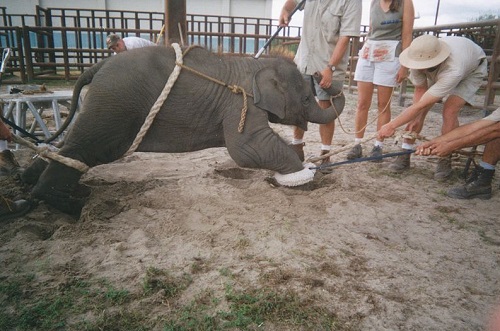
The film is difficult to watch. Elephants in circuses and zoos are trained through forced submission and physical violence. The bull hook is an instrument of torture and the elephants learn to fear whoever bears one. But it’s important to know about the plight of captive elephants. How they’ve been ripped away from their families in Africa and Asia just to entertain us.

baby elephant training (PETA)

The performances that these majestic elephants are forced to participate in seems to mock their very elephant-ness. The ringleaders have stench of colonialism on them. Conquer, dominate, exploit, profit.

Ringling Brothers Circus (Amy n Rob)

Elephants have been exploited for a long time. They’ve been used to perform hard labor, as instruments of war, as objects of entertainment, as transportation–not to mention being killed for their meat and ivory. Humans have been unkind to pachyderms and we owe them a better future.

Elephants in the wild form tight social bonds. Male babies stay with their mothers for up to 15 years. Females never leave the matriarchy.

The Oakland Zoo is featured prominently in the film as an example of a zoo that is changing. They’ve increased the enclosure (it’s still just 6 acres, but that’s six times bigger than Seattle’s paltry enclosure). Instead of direct contact (which involves bull hooks), they use indirect contact so trainers are never in the same area as the elephants. When they do interact with elephants, it’s through a fence and with positive reinforcement.

bullhook (IDA)

The trainers acquired the elephants through other, sub par zoos, and to my knowledge they aren’t breeding them. They acknowledged that the wild is the best place for elephants but since these ones can’t be released into the wild, improving their living conditions is the next best thing.

I don’t support zoos and I would like to see the Oakland Zoo elephants to go a sanctuary like PAWS too. Profiting from animals, whether in a zoo or circus, isn’t right. But on the spectrum of elephant treatment, Oakland is doing a whole lot more than most places.

After seeing this film, you can bet I’ll be at the circus the next time it comes to town–protesting it! In this area, Ringling has learned to stay out of Seattle, but they still come to Everett and Tacoma. I’ll be there, speaking up for the elephants who can’t. Elephants as old as I am who see nothing but the inside of trucks, the sharp end of a bull hook, and the jeering crowds in a circus tent.

I’ve written the Woodland Park Zoo in Seattle and asked that their elephants be released to a sanctuary. I encourage you to do the same. Write to the officials in Seattle or your local zoo.

Resources:

Have you seen An Apology to Elephants? What did you think? Do you know of other captive elephants who have campaigns to help them?

Unknown's avatar

Protesting primate research at the UW

This past Saturday The Northwest Animal Rights Network (NARN) held a demo outside the University of Washington National Primate Research Center. We organized the event to coincide with World Week for Animals in Labs.

Hidden inside this dark, unmarked building, 700 primates live and die for research, subjected to painful surgeries and traumatic procedures until they aren’t useful anymore. The Blue Building at 3000 Western Avenue downtown Seattle is the main facility for the UW National Primate Research Center, the largest of eight across the country.

About a dozen of us spent a few hours with signs and fliers and shared info with passers-by. Many people were shocked to learn that wasteful and cruel experiments were happening in their neighborhood. The beautiful Seattle sculpture park is across the street, and no one suspects cruelty is around them.

blue building

The University of Washington spends millions of taxpayer dollars conducting needless tests that haven’t resulted in any contribution to humans or animals. Harvard recently decided to close its primate research center and it’s time for UW to do the same.

The UW has even been cited with safety and cruelty violations including performing unauthorized surgeries and letting a monkey starve to death. The university breeds monkeys too and removes babies from their mothers soon after they’re born.

wwail collage - group photo by Pam Pulver

We demo to let the public know about these atrocities but we also demo to let animal abusers know their deeds aren’t going unnoticed. As I’ve written about before, animal research isn’t good science.

What can you do?

Send a polite letter requesting the UW reevaluate its policies regarding animal experimentation and commit to long-term reduction of the use of any animals for science.

Michael Young, President
301 Gerberding Hall, Box 351230
Seattle, WA 98195
206-543-5010
pres@uw.edu

The University of Washington Board of Regents
139 Gerberding Hall, Box 351264
Seattle, WA 98195-1264
206-543-1633
regents@uw.edu

If you’re a UW grad, you can also contact the alumni association and tell them that you won’t join them (or that you’ll be cancelling your membership) unless the university agrees not to use live animals in their research.

UW Alumni association Box 359508
Seattle, WA 98195-9508
206-543-0540 or 1-800-AUW-ALUM
uwalumni@uw.edu