Unknown's avatar

Vegan new year’s resolution

The new year is a time to celebrate with loved ones, to start fresh, and to make resolutions.

If you’re already a vegan, now is a great time to make a resolution to stay vegan and perhaps add something extra to your vegan journey. Join (or start) a vegan supper club and meet other vegans, raise funds for an animal organization, or maybe step out of your comfort zone and get involved with activism.

If you’re not vegan yet, try it for a month. Veganuary.com is a great place to start. You can also look at Amazon.com for vegan cookbooks (my first was How it all Vegan and I still use it) or go to websites like the Post Punk Kitchen or Engine 2 Diet. A web search will result in a ton of links to vegan recipes. The China Study Cookbook has simple recipes with common ingredients.

book ideas

You might find being vegan is fun, easier than you thought, and makes you feel good about your health and all the animals your not eating. On a trial run, take the time to read about the plight of animals. Often, the easiest time to learn about what animals endure for our taste buds is when you’re not partaking in them. No guilt. No excuses. Just learn and be the change.

If you’re not ready to dive in, get your toes wet with a transition plan.

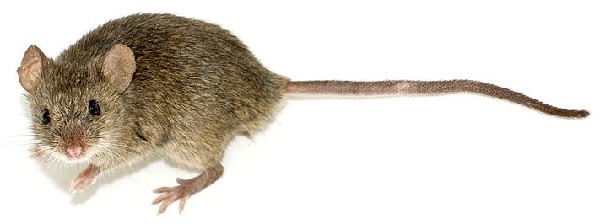
On New Year’s Eve, as you’re singing Auld Lang Syne, a song by Scotland’s national poet Robert Burns, think about another poem he wrote. To a Mouse was written after Burns upturned a mouse’s nest in a field. The original poem, in Scottish vernacular, is harder to understand (even though it sounds great), so here’s a link to the original along with a modern translation.

The first two stanzas especially, share a message that we are all in this together:

Small, sleek, cowering, timorous beast,
Oh, what panic is in your breast!
You need not start away so hastymouse from wikimedia
With a hurrying scamper!
I would be loath to run and chase you,
With a murderous spade!

I’m truly sorry that Man’s dominion
Has broken Nature’s social union,
And justifies that ill opinion
Which makes you startled
At me, your poor, earth-born companion
And fellow mortal!

Burns feels empathy for a tiny creature who is now homeless in the coldest season. He relates to the mouse as a fellow being on the planet. He tells the mouse that they’re alike, because “The best laid plans of mice and men / Go oft awry.”

We can plan, but things change. If you have great plans for the new year and they don’t fall into place, you’re not alone. If you try to be vegan and fail, pick up and keep at it. Be like the mouse who is forward-looking, and not like humans, who often dwell on the past.

The future is vegan! Happy New Year!

Unknown's avatar

Heavenly potatoes

When a vegan friend of mine told me that she misses deviled eggs, I saw an opportunity. I believe in the saying, “anything you can eat, I can eat vegan” so I set off to find a vegan recipe. Sure enough, I found one on the Post Punk Kitchen–and it’s divine! Maybe these should be called angelic potatoes. No matter what, they’re a fantastic vegan deviled egg alternative.

deviled potatoes

First, I sliced a bunch of baby potatoes in half. I put them on a baking sheet and baked them in a bit of olive oil and salt, flat side down, at 350 degrees for 30 minutes. I didn’t put them on parchment paper first (like I was supposed to) and they came out slightly crispy.

No worries! As I cut out the centers with a grapefruit knife, I ate, or gave to my dog, the crispy “skins.” I saved the potato “innards” because I needed to add it to the filling.

Filling:

  • 1/2 a cup of cashews, soaked in water for at least two hours
  • 3/4 cup vegetable broth (I used 1/2 a bullion cube to make the broth)
  • 1/2 teaspoon turmeric (for flavor and color)
  • 1 teaspoon kala manak black salt (very important if you want an eggy flavor)
  • 2 teaspoons lemon
  • a pinch of black pepper

I drained the cashews and blended them with my electric mixer, along with the broth and tumeric, until it was creamy. I added the lemon, salt and pepper and the potato centers and mixed it well. I chilled the mixture in the fridge for half an hour and then scooped it into the potatoes. If you have a pastry tool, you can get fancy.

deviled potato collage

Finally, top with paprika and a bit of dill.

I brought these to a vegan Christmas dinner and they were a huge hit! We ate them at room temperature while the main dishes–green bean and mushroom casserole, “beef” fried rice, and a fiesta bake with Daiya vegan cheese–were cooking. Everyone loved them an I’ll definitely make them again! I’ll be sure to serve them to my deviled-egg-craving friend too.

Christmas Dinner Collage

To see the original recipe, and pictures of how Isa Chandra made them, check out the details on the PPK.

Unknown's avatar

Shopping at Vegan Haven

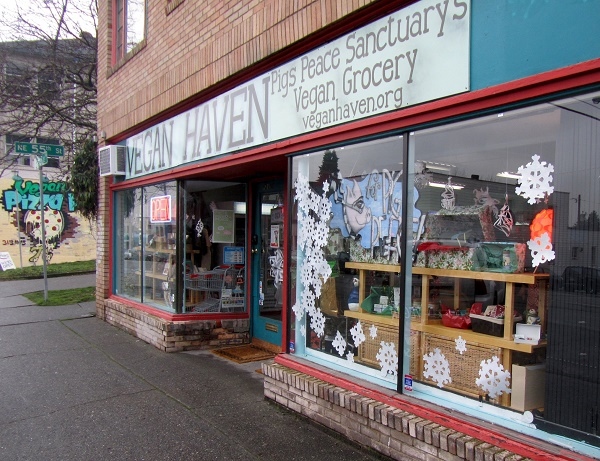
Seattle is a great place to be vegan. We even have our very own all-vegan grocery store, Vegan Haven. The store is owned by Pigs Peace Sanctuary, and 100% of proceeds go to the pigs. Gotta love that!

vegan haven storefront

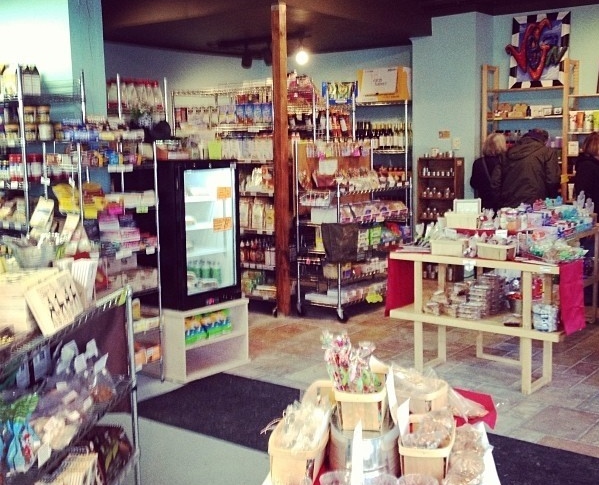
Vegan Haven is all volunteer-run, with the exception of its sole employee, manager Demarie, a compassionate vegan who keeps the store stocked and the variety growing. Vegan Haven recently expanded by taking over the empty space next door and the place looks amazing!

expanded store

I love that when I shop at Vegan Haven, I don’t need to read labels religiously. Everything is “safe” to eat. This is where I buy V-Dog, my dog’s kibble, and staples such as Daiya cheese, Upton’s seitan bacon.

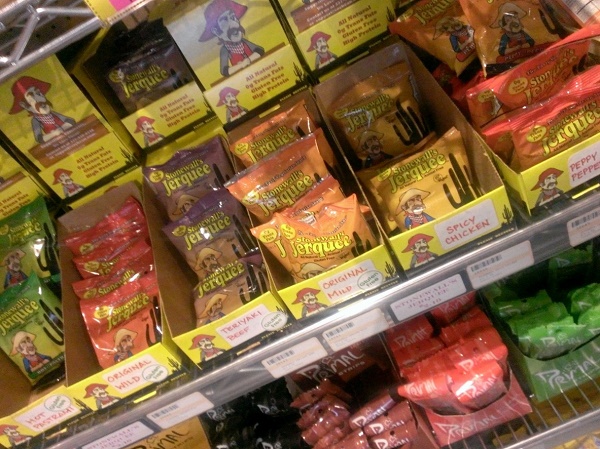
Need vegan marshmallows? Vegan Haven’s got ’em. Wine? Check. There’s even a whole section devoted to vegan jerky!

vegan jerky

In addition to food, you’ll find wallets, bags and belts, jewelry, books, and beauty products. It’s a fun place to shop and even when I think I don’t need anything, I always find something to try. This time, Vegan Haven was having a bake sale, so I bought some baked goodies. I also picked up a Daiya frozen pizza, since I haven’t tried them yet. I bought another pack of crab cakes. I wrote about them earlier and they were my favorite of the Sophie’s Kitchen products.

Vegan Haven is at 55th and University Way, in a part of town with lots of vegan options. Pizza Pi is next door, Araya’s vegan Thai is down the street, and Wayward Vegan Café is across the street.

Have you been to Vegan Haven? Is there a vegan grocery near your place?

Unknown's avatar

No warm fuzzies with angora

I’ve often wondered about angora production. The soft, fuzzy sweaters, mitts and hats that pop up in stores each fall seem so cozy. I’ve never bought angora though.

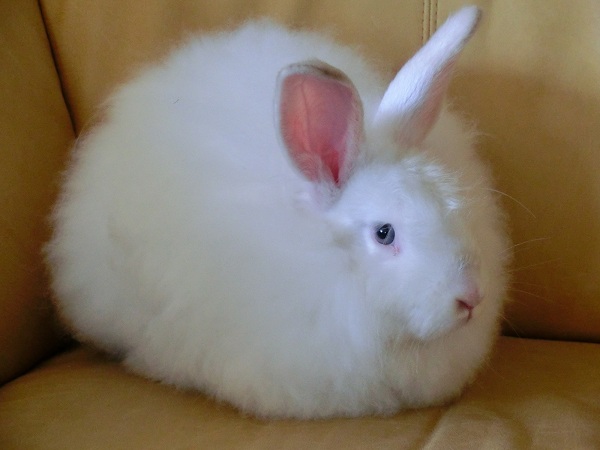
Angora can refer to cats, goats, ferrets, but it’s the angora rabbit that people use for wool. To get angora, the animals don’t need to be killed, which is why many people don’t think about it as a cruel industry. Angora can be combed, shorn, or plucked.

What? Yes, I wrote that. Plucked! Shearing results in shorter hair, so often plucking is preferred. Angora molt every few months, and in theory, pulling loose hair from a rabbit shouldn’t hurt, but as with everything, care and welfare is abandoned when volume goes up and there’s money to be made.

Angora Rabbit from http://commons.wikimedia.org/wiki/File:White_Satin_Angora_Rabbit.jpgNinety percent of angora comes from China, where there are no animal welfare standards and no oversight into the angora industry. Recent undercover video shows rabbits screaming in pain as they’re plucked. I didn’t even know rabbits could scream. It’s heartbreaking. And after being plucked, they lie in shock in their filthy cages. After 3 to 5 years of this abuse, they’re killed). You can read more about the developments here (the video is embedded but won’t play automatically, so you don’t have to watch it).

If 90% of angora comes from these conditions, it makes sense that 90% of the angora in the stores is cruelly sourced. Frankly, even shearing doesn’t look humane to me. In this video, a woman boasts about how well her rabbits are treated, but she ties up one rabbit’s legs, stretches him and rotates him like a spit pig (minus the skewer).

The video isn’t graphic per se, but it’s not how I would like to be handled on a quarterly basis. Kind or cruel, why should they live in cages to be wool-making machines? Rabbits need to forage and burrow. It’s another example of commodification. These rabbits are slaves for our fashion and treated like nothing more than money-making machines.

animals are not fabric

To quote the slogan on my new favorite sweater (from The Tree Kisser’s website), animals are not fabric.

If you want to help, here’s how:

  • Don’t wear or buy angora.
  • Ask the stores you shop at not to carry angora.
  • Sign the petitions linked to in this article and tell stores like The Gap and Zara to stop carrying angora

(Update: Zara and The Gap, along with Tommy Hilfiger and Calvin Klein, suspended further angora purchases pending investigation. H&M and ASOS have vowed to stop selling it permanently. Pressure works! Keep on these retailers. They make money from us, so we have a say!).

Unknown's avatar

The cult of protein

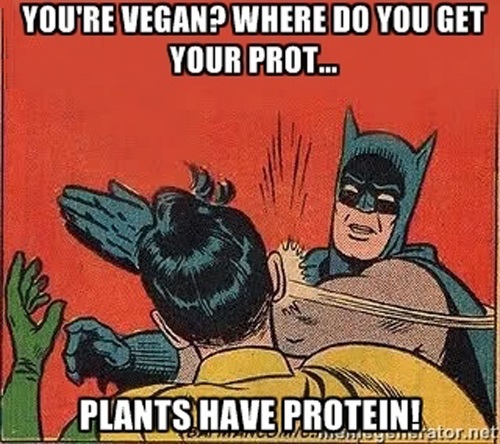
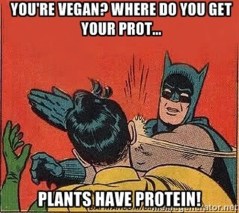
In the early 19th century in America, women couldn’t vote, slavery was legal, and blood-letting was a legitimate medical procedure. Around that time, scientists decided protein was the most important nutrient. We changed our thinking about the first three issues, but protein myths are still being perpetuated–and the meat, egg, and dairy industries want to keep the myths alive.holy protein batman
If you read nothing else:

  • Protein is essential.
  • We get all we need from plants.
  • In developed nations, it’s hard to get too little protein.
  • Too much protein is bad for our health.

History

Protein comes from a Greek term meaning of prime importance–talk about high regard! It was first described by Dutch scientist Gerardus Johannes Mulder in the early 19th century. His German contemporary, Justus von Liebig, called it “the stuff of life itself.”

Carl Voit, a 19th century German physicist, was enthusiastic about protein too. Even after discovering that 52g per day is all an adult man needs, he recommended 120g a day. Protein was regarded as the king of nutrients.

Not everyone was on board, though. in the early 20th century, Russell Henry Chittenden, an American biochemist and professor at Yale, disagreed with the idea that more was better. He tested his theory on himself by cutting his protein intake to 40g a day. He lost weight and felt better!

Chittenden then tested his ideas on his colleagues and school athletes and everyone in the study thrived. He upped the ante and gave ROTC recruits and world-class athletes low protein diets and tested their athletic performance. They all improved!

His colleagues chastised him in spite of his findings and the cult of protein continued.

What is protein?

Protein is a polypeptide (a long chain–or polymer–of about 15 to 20 amino acids). Of those amino acids, 8 or 9 are essential for consumption, meaning our bodies can’t make them. We have hundreds of thousands of different proteins in our bodies, many of which are enzymes. Proteins become enzymes (the catalyst for chemical reactions), hormones, and part of the structure of cells.

That makes protein an essential nutrient. We do need it. Our bodies constantly use new protein molecules, and get rid of old ones.

Myths

Want to be strong as an ox? Eat one! That was the thinking. And that’s why animal-sourced foods were (and still are) seen as higher-quality sources of protein.

Plant protein is referred to as “incomplete” because it doesn’t match our human amino acid profile. However, plant protein isn’t incomplete when it comes to fulfilling our dietary needs.

An early myth encouraged protein mixing. The thinking was that in order to compensate for an inadequate vegetarian diet, people needed to eat the proper combination of foods.

Frances Moore Lappé wrote about it in Diet for a Small Planet. However, she’s since changed her stance: “In 1971 I stressed protein complementarity because I assumed that the only way to get enough protein…was to create a protein as usable by the body as animal protein. In combating the myth that meat is the only way to get high-quality protein, I reinforced another myth. I gave the impression that in order to get enough protein without meat, considerable care was needed in choosing foods. Actually, it is much easier than I thought.”

The American Dietetic Association agrees: “Plant sources of protein alone can provide adequate amounts of the essential and nonessential amino acids. Conscious combining of these foods within a given meal…is unnecessary.”

Reality

Plants have protein too! Without protein, they wouldn’t grow. Protein from a whole food, plant-based diet is all we need, both in amount and kinds of nutrients. In fact, animal-based foods displaces complex carbs and antioxidants while adding unnecessary protein and fat of the wrong kind.

Yes, we need protein! And we should get protein from the places that big, strong, fast animals get them from: plants.

When protein has ratios of amino acids similar to ours, we synthesize it effectively. Animal protein is more likely to have these ratios  because we are similar to animals. While that might be efficient, it’s not necessarily ideal. Farmers want animals to grow big quickly so they can slaughter them sooner. But this fast rate of gain isn’t good for humans. We shouldn’t grow as fast as a farmed animal!

Risks

Higher protein efficiency means faster growth rates, but it also means faster cancer growth rates and earlier menarch (which is linked to increased rates of breast cancer).

Animal protein creates an acidic environment in our blood (metabolic acidosis). Our bodies pull calcium from our bones to neutralize our blood, which can lead to osteoporosis. Then, excess protein is excreted in our waste, and that taxes the kidneys.

Animal protein elevates blood cholesterol levels, promotes heart disease, can initiate type 1 diabetes, is associated with Alzheimer’s, rheumatoid arthritis, cataracts, kidney stones, an increase in the production of growth hormones and rate at which cells divide.

Plant protein has the opposite effect.

How much do I need?

A whole food, plant-based diet with variety will naturally contain enough protein. We don’t need to worry about not getting enough and we don’t need to be concerned just with protein; we need a balanced diet.

If you want numbers, no more that 8-10% of our calories need to be protein–even less as we age. The estimated average requirement (EAR) states that 0.5-0.6g of protein/kg of body weight is needed to replace what our bodies get rid of (4-5%). The recommended daily allowance (RDA) recommends 10% daily protein consumption, right in line with what a whole foods, plant-based diet provides! Broken down, that’s 0.8g/kg or about 48g/day for an average 60kg/132lb woman or 56g/day for an average 70kg/154lb man.

Now, if anyone asks you where you get your protein, you can confidently say, “from plants!”
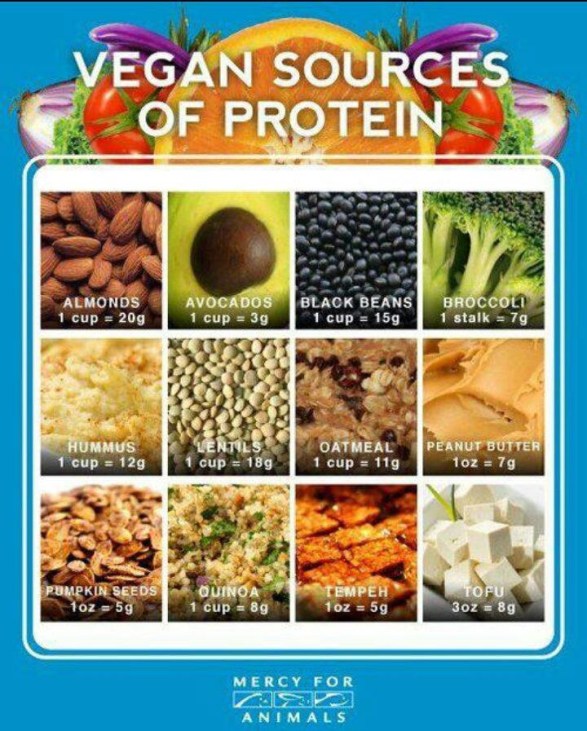
vegan sources of protein

References

Much of this information comes from notes I took during the Plant-Based Nutrition program I completed this past summer. I have to thank Dr. T. Colin Campbell for his stellar lectures and Dr. John McDougall for his guest lecture. I am not a medical professional, but I care about my health and I take care to research carefully. I hope to spread the word and help people take control of their health. Where applicable, I’ve linked to sources.

Unknown's avatar

Pints for Pigs Event

I’m so happy that there’s another animal fundraiser social event in my future. In October I wrote about a vegan wine and cheese tasting I went to. Sadly (or happily) the tickets sold out in less than two days so a lot of people I know couldn’t attend.

pints for pigs

NARN is organizing another fundraiser–this one benefits Pigs Peace Sanctuary. And it’s in a bigger venue! That means that even though tickets are selling fast, there are still tickets available! I say get ’em while you can!

Pints for Pigs Peace is a pig-themed afternoon of fun at Central Cinema. There will be beer, movies, vegan food, brew-themed drawing prizes, and other treats. The cinema will be playing Babe, you know, the sweet, mid-90s movie about a little pig. And they’ll also show a heartwarming documentary about the important work at Pigs Peace Sanctuary.

This will be a fun event for beer lovers, wine lovers, and of course, animal lovers! Unlike the wine tasting, this event is all ages. You’ll be able to buy vegan food too, including Central Cinema’s vegan “pig in a blanket” and vegan pizza.

When: January 11th, 2014 from 2:00 to 5:00 pm
Where: Central Cinema (1411 21st Avenue, Seattle, WA 98122)
Cost: $20 (Get your tickets here)

Check out Facebook to see the event info (but don’t forget your tickets).

Unknown's avatar

Vegan Thanksgiving at Plum Bistro

For Thanksgiving this year, hubby treated me to a four-course meal at Plum Bistro, a vegan restaurant in Seattle. Most restaurants were closed today, but Plum had a special prix fixe menu. Hubby thought it would be nice to eat without cooking or cleaning up. He was right!

We started our meal with roasted heirloom carrots and Brussels sprouts with a maple and thyme glaze. I could have gone home happy at this point, but there was more.

starter

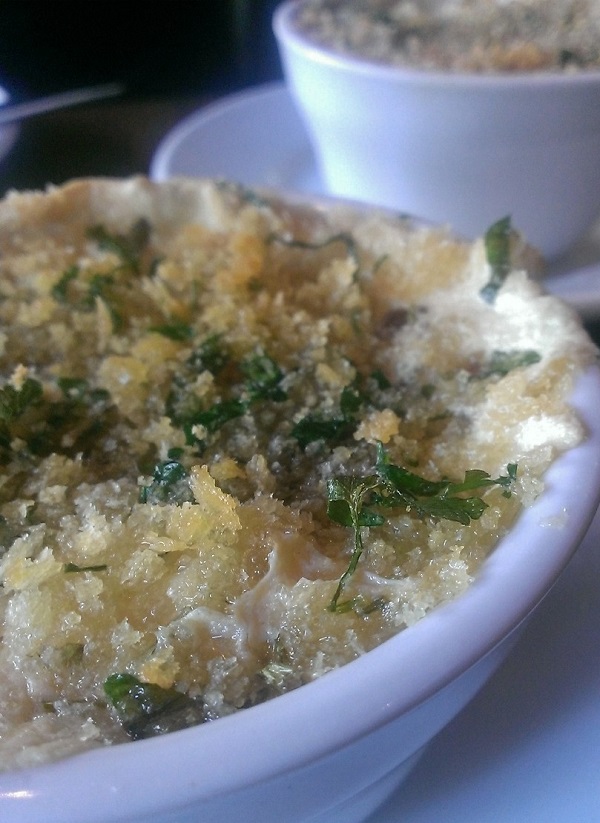
Our appetizer was Plum’s famous smoky mac and yease. It was creamy and delicious–vegan comfort food at its finest.

mac and yease

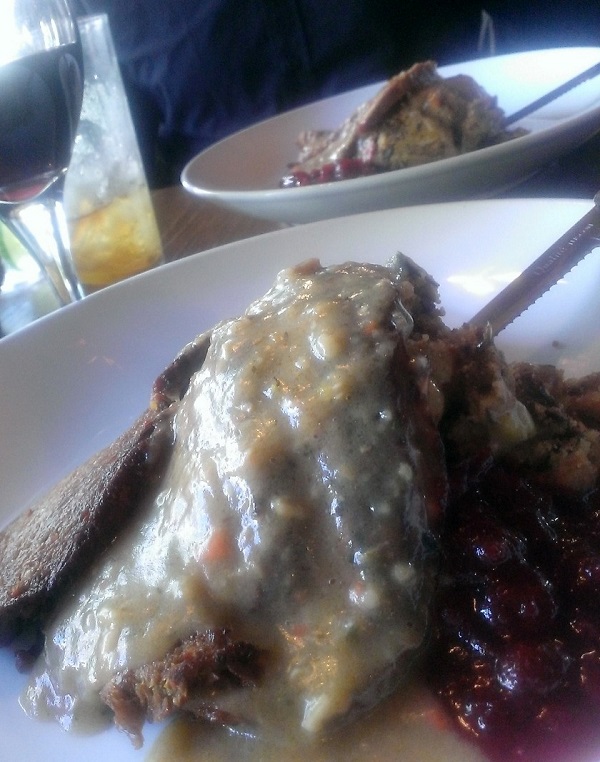
For the main course, we dined on smoked seitan roast with gravy and cornbread stuffing. The stuffing, with cranberry reduction on the side was so satisfying I didn’t need dessert.

main course

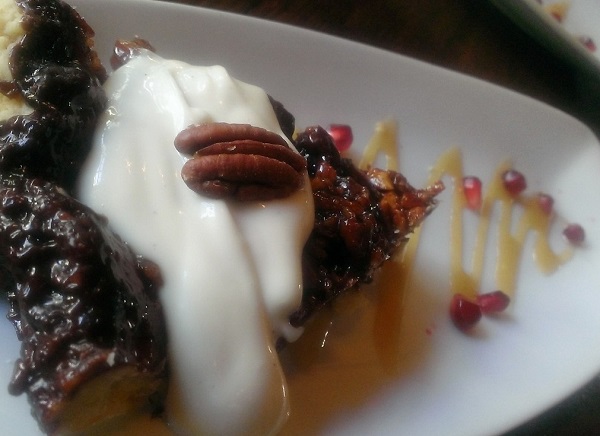
But when dessert came–a bourbon chocolate pecan pie–I didn’t hesitate to devour it. It was drizzled with caramel, covered with a dollop of smooth, dairy-free whipped cream, and garnished with pomegranate seeds and a pecan.

pecan pie

I have a lot to be thankful for, and this meal was no exception! I enjoyed a cruelty-free meal and I loved seeing everyone in the packed restaurant enjoying healthy, vegan food too.

I hope you had a great Thanksgiving. If you’re in Seattle, you’ve got to visit Plum!

Unknown's avatar

Dining at Candle 79

I met up with my parents in New York this past August and every night, for over a week, we dined at terrific vegan places. The city is a wonderful place to eat meat-free.

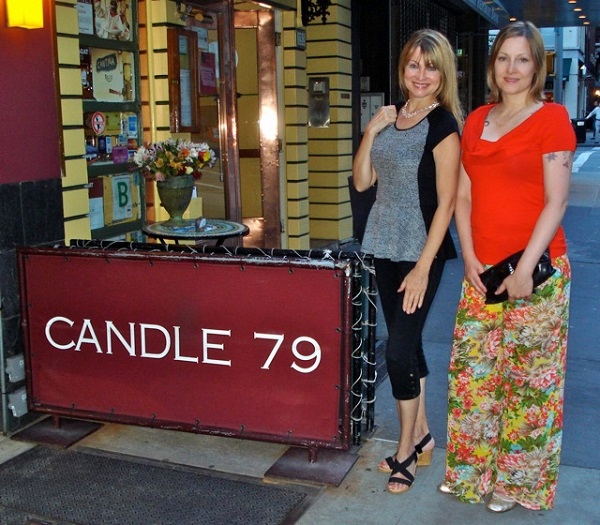
The first thing I did when I started planning my vacation was make reservations for Candle 79, New York’s premier vegan oasis (yes, it says that on their website and it’s so true!). On our first night in the Big Apple. we left our condo in Harlem and went to Candle 79’s two-story location on the Upper East Side.

candle 79

I never thought I’d forget the exact names of what we were eating, but I did. And being an organic, local, seasonal eatery means the menu changes often. So forgive my inaccuracies–and believe be when I share how delicious it all was!

First, we were treated to an amuse-bouche. A delightful teaser and hint of things to come. I tasted chickpeas and cucumber in a smooth creamy sauce.

amuse bouche

My parents split an order of spaghetti and wheat balls. It’s a classic simple dish but Candle 79 put their own unique twist on it and my parents couldn’t get enough!

spaghetti and wheat balls

I ate a seitan (or possible tempeh) cutlet with apples and beans. It was divine. The best part about eating in a vegan restaurant (aside from knowing it’s a cruelty-free place and everyone is not eating animals) is that I can order anything off the menu, no questions asked! So I asked very few questions and now I can’t tell you the specifics of what I ate (except I’d be eating there right now again if I could teleport).

seitan cutlet

Finally, we had chocolate peanut butter bliss for dessert.

pure bliss

Happy, healthy dining!

mom ans Jean

After our meal, we walked toward Central Park along Lexington, took in the quintessential New York streets, and caught a cab back to our place.

What a fantastic way to start a vacation. If you’re ever in New York, don’t miss the Candle 79 experience!

Unknown's avatar

Cruelty-free Thanksgiving

Last year, I attended the Feast for the Turkeys at Pasado’s Safe Haven. This year, the event is already sold out. To make up for disappointment, Hubby surprised me with reservations to a prix fix vegan Thanksgiving meal at Plum Bistro. That’s not until next week though. In the meantime, I’ll show you what last year’s event was like.

guestcard

Instead of having turkey, the turkeys had us! Butterball was the official host, but Stacie, our lovely guide, took us on the tour. First stop: Turkeys, of course!

turkeys

Turkeys are gentle and kind. It’s not true that if it rains and they look up, they drown. On the contrary, they’re smart birds who protect each other, “talk” to their friends (including people), and are loving parents to their little ones. I got to pet Butterball–what soft feathers! As smart as she is, I’m not sure she noticed that I color-coordinated with her today.

At Pasado's

Next, we met these little piggies, who were rescued from a fire. They loved eating the popcorn, carrots, apples, and bananas we brought.

mini pigs

While I was taking their picture, look who snuck up on me! (You might recognize that mug from my banner.)

goat

I gave him a carrot, and he was happy. As we fed the goats and sheep, I spied a rooster, well, roosting.

roosting rooster

I found lots of chickens in the coop next door. The white ones are rescued laying hens. To think they used to live in cages with no more room to move than if they were standing on an iPad. They love their freedom now! And they’ll never end up in a pot.

chickens

They loved eating lettuce and grapes. Look at that blur–she sure was a fast one!

feeding the fowl

This photo doesn’t show how big these two pigs are. They’re each over 600 pounds! Splash, on the left, saw her siblings slaughtered and escaped certain death by swimming across a river where a startled, but loving woman took her in until she could find a proper home for the pig. Nora, on the right, was rescued from a horder and was starving. They’re both happy, healthy, and safe now.

Splash and Nora

The cows loved the carrots I brought for them, but they look a little suspicious of me, don’t you think?

Eddie Cheddar

cow

After an amazing tour, we toasted the animals with a glass of bubbly and went inside for a feast!

I got teary-eyed as our hosts read the menu: Autumn vegetable samosas with plum chutney, carrot miso spread on baguettes, and baked chickpeas; red kuri squash and coconut soup with cashew cream and beet reduction; massaged kale salad with pomegranate, hazelnuts and pears; parsnip apple puree, root vegetable latkes, orange balsamic glazed Brussels sprouts, and maple baked tempeh with apple cider glaze; pumpkin cake with chocolate-hazelnut ganache.

feast

I was overcome with emotion because as we dined on our vegan meal, rescued animals were snuggling in their stalls in the barns next door. Animals that would have been pork chops, turkey cutlets or hamburgers. I wished for peace for all living creatures and longed for every restaurant and household to serve delicious, cruelty-free meals like this.

What a wonderful time! I hope you take a tour of Pasado’s or a similar sanctuary in your area. They’re amazing places.

Unknown's avatar

Wool-free winter wear

Whenever I write about what not to do/eat/wear, I like to provide alternatives so we have ideas for things we can consume. I recently wrote about what’s wrong with wool. Well, I’ve found some great, cruelty-free products that are made of wool alternatives and I have to share!

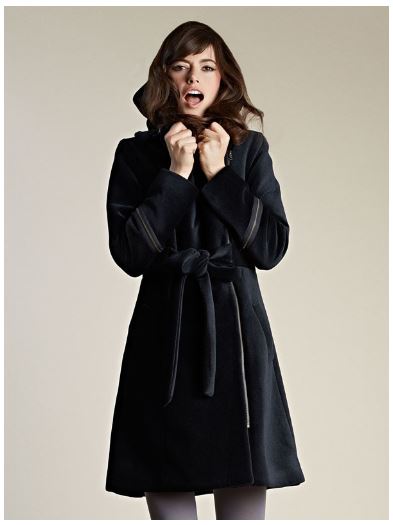
My favorite winter wear company is Vaute Couture. Vegan-owned, Vaute (pronounced vote) is the brain-child of model-turned-entrepreneur Leanne Mai-ly Milgart. Her men’s and women’s designs are made in New York’s garment district using recycled and recyclable fabrics that are windproof, snow- and rain-resistant, warmer than wool, and heat retaining.

Vaute is stylish too. They’re the first all-vegan line to show at New York’s prestigious Fashion Week–and they rocked it! The media picked up the story and vegan fashion went mainstream!

vaute image (c) Vaute Couture

I recently learned about another cool company, Hoodlamb. Based in Amsterdam, Hoodlamb makes men’s and women’s coats and other apparel from hemp–arguably the most environmentally friendly fabric out there. It’s strong and durable and requires no pesticides or fertilizer to grow. Hemp warms you up when you need it and keeps you cool when you’re hot.

Hoodlamb carries stylish, warm winter clothes with a conscience. Love the faux shearling linings!

hoodlamb image (c) Hoodlamb

For budget-conscious fashionistas, I recommend Lulu’s and Modcloth. They both carry a wide assortment of winter coats, many of which are wool-, down-, and leather-free. Not all their products are vegan, so read the descriptions before you buy.

Modcloth and Lulu’s focus on showcasing independent designers from around the world. That might not sit well with localvores, but if you’re like me and are primarily interested in animal-free clothes, you’ll find something adorable at these online retailers.

In fact, if you look around, you’ll find non-wool coats in other stores too. For example, American Apparel, known for their sweatshop-free made in LA clothes, carry some vegan winter items, like a wool-free cape and a unisex parka made with faux shearling.

American Apparel images (c) American Apparel

Do you have any other tips for finding cruelty-free winter wear?